A Portrait of Quiet Strength
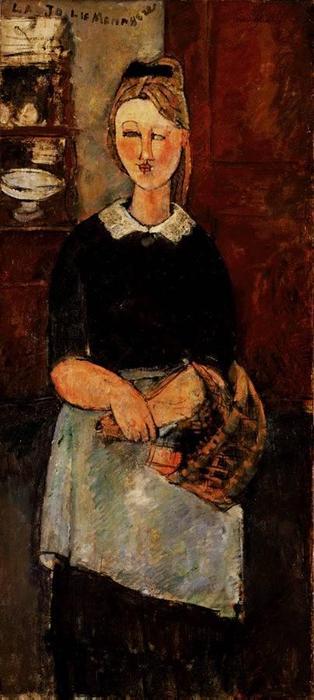
In the evocative realm of Amedeo Modigliani’s oeuvre, few works capture the intersection of domesticity and profound introspection as poignantly as “The Pretty Housewife.” Painted in 1915, this striking portrait presents a woman seated with an unwavering seriousness, her gaze directed outward as if piercing through the veil of the mundane to touch something eternal. The composition is masterfully balanced; while the central figure commands immediate attention, she is accompanied by a thoughtful arrangement of decorative elements—bowls and vases that serve as silent witnesses to her presence. These objects do more than merely fill the space; they enrich the narrative dimension of the piece, grounding the subject within a setting that feels both intimate and timeless.
Modigliani’s signature aesthetic is powerfully evident in every brushstroke of this masterpiece. Eschewing the rigid constraints of academic realism, he embraced an expressive abstraction characterized by elongated figures and simplified, almost sculptural facial features. This stylistic choice allows the viewer to move beyond a mere anatomical study and instead enter a world of mood and emotion. The technique employed—a delicate application of thin oil layers known as “macché chic”—creates a breathtaking illusion of depth and luminosity. As light dances across the subtle gradations of color, particularly around the contours of the woman’s face, one perceives a remarkable sensitivity to shadow that breathes life into her stoic countenance.
Symbolism and the Echoes of an Era
To gaze upon “The Pretty Housewife” is to confront the complexities of its historical moment. Created during the tumultuous period leading up to World War I, the painting subtly reflects the anxieties and uncertainties of a world on the brink of transformation. Yet, Modigliani transcends mere historical documentation. The woman’s stern expression is imbued with deep symbolic significance, conveying an inner fortitude and a quiet dignity that suggests a resilient spirit beneath her composed exterior. This sense of strength is further anchored by the presence of the bowls and vases, which serve as visual anchors referencing notions of domesticity, nurturing, and the stability of the home—themes that resonated deeply within the Art Deco sensibilities of the era.
For the discerning collector or interior designer, this artwork offers an unparalleled emotional impact. It is a piece that does not merely decorate a wall but transforms a room, inviting contemplation and adding a layer of sophisticated melancholy to any space. Whether placed in a contemporary gallery setting or a classic study, the painting’s ability to evoke universal themes of femininity and resilience makes it a timeless acquisition. Owning a high-quality reproduction of this work allows one to bring the haunting beauty and rhythmic grace of Modigliani’s vision into the modern home, serving as a constant reminder of the quiet strength that resides within us all.