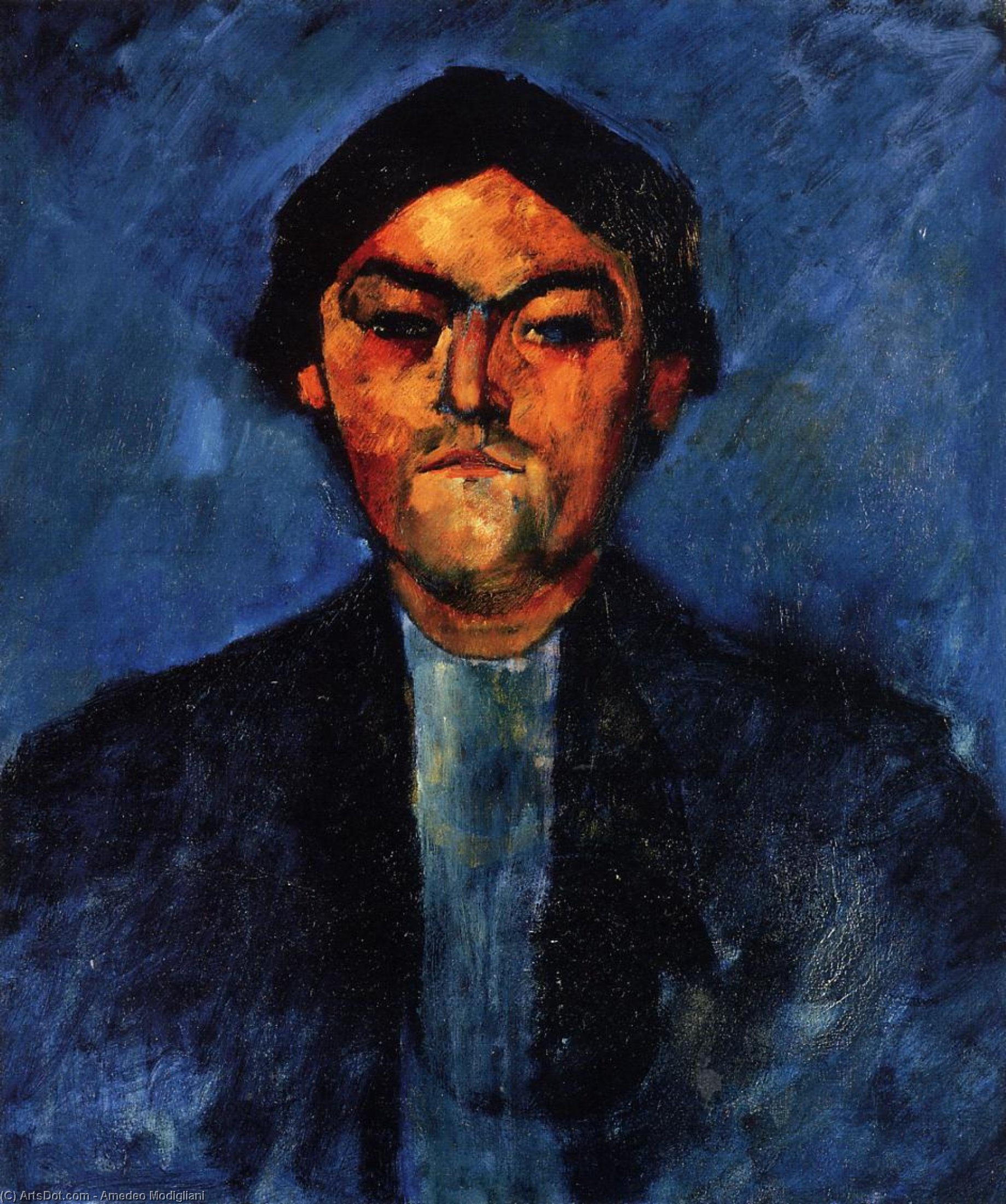
Explore Amedeo Modigliani’s ‘The Typographer,’ a haunting Expressionist portrait of Pedro. Thick impasto & bold lines capture intense emotion. Discover this unique oil painting's symbolic depth.
Explore the captivating art of Amedeo Modigliani (1884-1920): iconic portraits & sculptures defined by elongated forms, expressive eyes, and a hauntingly beautiful style. Discover his legacy! #Modigliani #Expressionism
A Striking Portrait: Unveiling Modigliani’s ‘The Typographer (Pedro)’
This captivating portrait, known as *The Typographer (Pedro)*, offers a compelling glimpse into the unique artistic vision of Amedeo Modigliani. Painted sometime during his prolific yet tragically short career (1884-1920), this work exemplifies his mastery of expressive distortion and emotional depth within the realm of portraiture. The painting currently resides in the Galleria Nazionale d'Arte Moderna e Contemporanea in Rome, a testament to its enduring artistic significance.
Subject & Composition: A Man Defined by Line and Form
The artwork presents a close-up depiction of a man identified as Pedro – presumably a typographer, though the title’s connection to his profession remains somewhat enigmatic. He dominates the canvas, filling nearly the entire frame and establishing an immediate intimacy with the viewer. Modigliani eschews traditional portrait conventions; instead of striving for realistic representation, he employs bold lines and simplified geometric shapes. The subject's jawline and forehead are sharply angled, contrasting with the rounded forms of his cheeks and eyes. This deliberate distortion isn’t a flaw but rather a key element in conveying Pedro’s inner life.
Style & Technique: Echoes of Expressionism
*The Typographer (Pedro)* is firmly rooted in the Expressionist movement, though Modigliani developed a highly individual style within it. The thick application of oil paint – known as *impasto* – creates a rich texture and dynamic surface. This tactile quality isn’t merely aesthetic; it amplifies the emotional intensity of the portrait. The flattened perspective further contributes to the painting's unsettling yet captivating effect, drawing attention to the face and its expressive qualities. Modigliani’s technique is characterized by his ability to convey volume and form through color and brushwork rather than traditional modeling.
Color & Emotional Resonance
The palette is dominated by reddish-orange tones in Pedro's face, contrasted against a deep, solid blue background. This stark contrast serves to isolate the figure, intensifying his presence and drawing the viewer’s eye directly to his expression. The color choices contribute to an underlying sense of melancholy and introspection. While not overtly sorrowful, there is a quiet intensity in Pedro’s gaze that suggests a complex inner world. The blue background isn't merely decorative; it evokes feelings of solitude and contemplation.
Historical Context & Modigliani’s Legacy
Amedeo Modigliani arrived in Paris in 1906, immersing himself in the vibrant artistic milieu of Montparnasse. He was influenced by artists like Pablo Picasso and Constantin Brâncuși, but quickly forged his own path. His portraits, characterized by their elongated necks, almond-shaped eyes, and simplified forms, became instantly recognizable. Modigliani’s work challenged conventional notions of beauty and representation, paving the way for future generations of artists to explore subjective expression. Despite facing poverty and illness throughout his life, he left behind a remarkable body of work that continues to resonate with audiences today.
Symbolism & Interpretation
The symbolism within *The Typographer (Pedro)* is open to interpretation. The subject’s profession – a typographer – might suggest themes of communication, craftsmanship, or the power of language. However, Modigliani's primary focus appears to be on capturing the essence of his sitter rather than providing a literal depiction. The painting invites viewers to contemplate Pedro’s inner life and consider the complexities of human emotion. It is a powerful reminder of the artist’s ability to transform a simple portrait into a profound statement about the human condition.
For Collectors & Interior Designers
A high-quality reproduction of *The Typographer (Pedro)* would serve as a striking focal point in any space. Its bold colors and expressive style make it particularly well-suited for modern or eclectic interiors. The painting’s introspective quality adds depth and sophistication, inviting contemplation and conversation. Its enduring appeal lies in its ability to transcend time and connect with viewers on an emotional level – making it a truly valuable addition to any art collection.