Explore the captivating art of Amedeo Modigliani (1884-1920): iconic portraits & sculptures defined by elongated forms, expressive eyes, and a hauntingly beautiful style. Discover his legacy! #Modigliani #Expressionism
A Meditation on Faith and Simplicity: Exploring Modigliani’s “Two Young Peasants in Prayer”
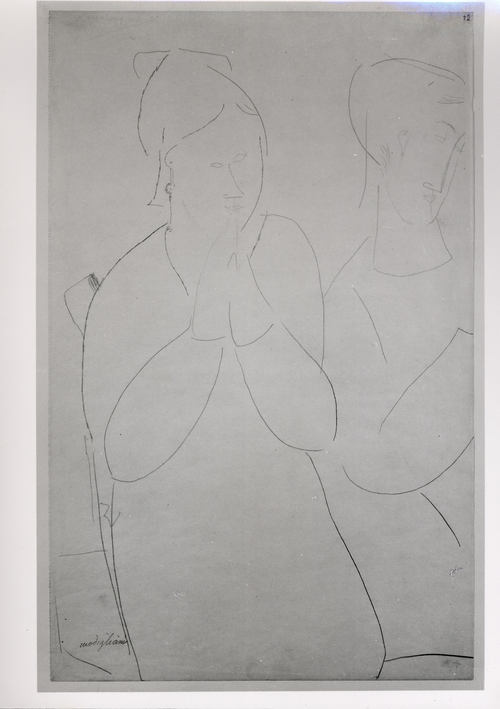
The artwork presents a striking sketch of two young peasants engaged in prayer, executed with charcoal or pencil on paper—a testament to Modigliani's masterful distillation of form and emotion. More than just a depiction of figures, it embodies the artist’s profound engagement with African art and Cubism influences, resulting in an image that transcends mere representation and delves into deeper thematic concerns. The composition is deliberately austere: vertically oriented, emphasizing the elongated necks and contemplative poses of the subjects—a characteristic stylistic choice that speaks volumes about Modigliani's artistic vision.
Composition and Technique: Line as Language
The artist’s technique prioritizes line above all else. Thin, delicate lines define the contours of the figures’ bodies, clothing, and facial features, creating a palpable sense of fragility and introspection. These lines aren’t merely delineating shapes; they are conveying emotion—a quiet reverence for something beyond the visible world. The background is largely absent, directing the viewer's gaze entirely to these central figures, reinforcing the artwork’s minimalist aesthetic. Geometric shapes – ovals and rectangles – serve as foundational elements of the human form, mirroring Modigliani’s fascination with simplified forms derived from African sculpture and Cubist explorations. Subtle tonal variations within the charcoal strokes suggest a gentle roughness, hinting at the artist's meticulous process in capturing the essence of human presence.
Historical Context and Artistic Influences
Amedeo Clemente Modigliani (1884-1920) emerged from the vibrant artistic milieu of early 20th century Italy, profoundly impacted by avant-garde movements like Expressionism and Cubism. His stylistic innovations stemmed partly from his exposure to African art—particularly sculptures depicting stylized human figures—which instilled in him a desire to move beyond academic realism toward conveying psychological states through simplified forms. The elongated necks and almond eyes that characterize Modigliani’s portraits are not accidental; they represent a deliberate departure from traditional artistic conventions, reflecting a broader cultural shift towards exploring inner landscapes rather than outward appearances.
Symbolism: Humility and Contemplation
The artwork's subject matter—two young peasants in prayer—holds significant symbolic weight. It evokes themes of faith, humility, and rural life, portraying individuals stripped bare of worldly concerns and focused solely on spiritual contemplation. The bowed heads and clasped hands are universally recognized gestures of reverence, conveying a profound sense of peace and devotion. Modigliani’s ability to capture this intangible emotion—the quiet dignity of human experience—solidifies his legacy as one of the most emotionally resonant artists of his era. “Two Young Peasants in Prayer” remains an enduring symbol of simplicity, introspection, and the pursuit of spiritual truth.