A Portrait of Quiet Longing
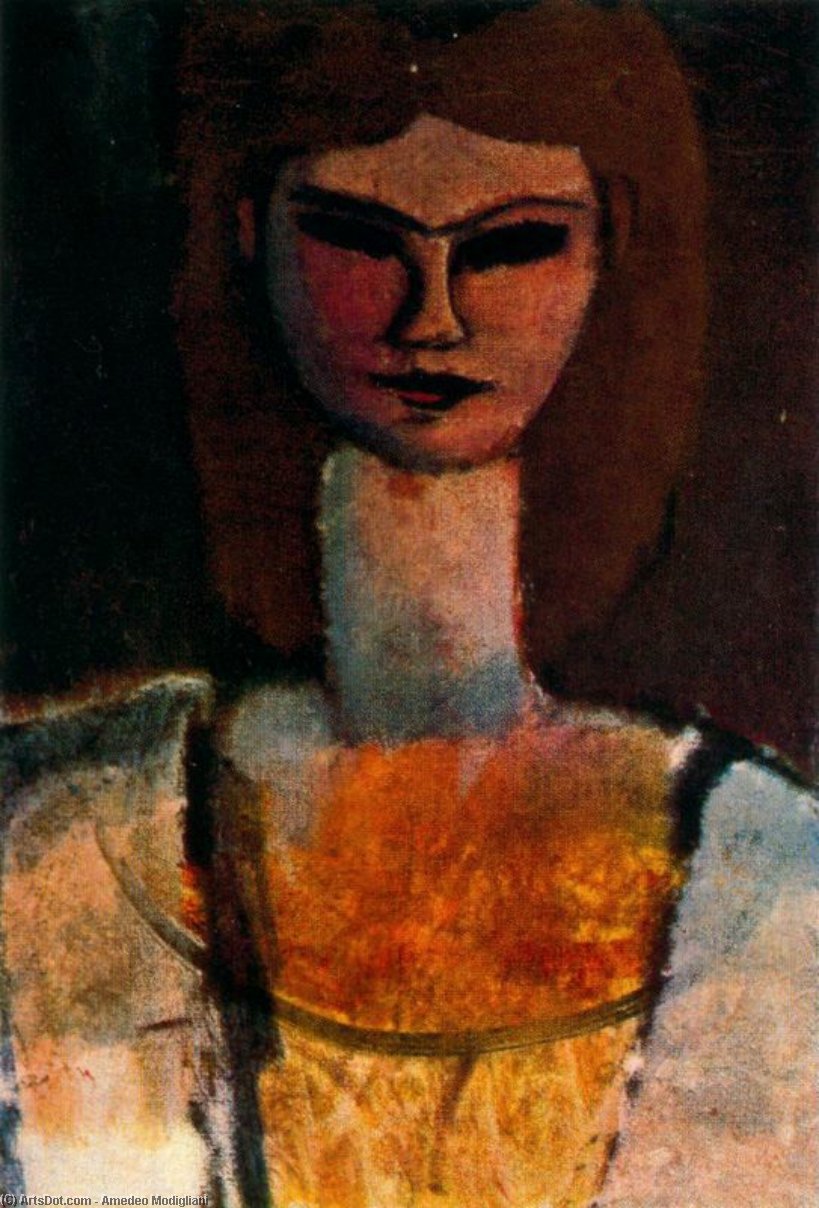
In the hauntingly beautiful depths of Amedeo Clemente Modigliani’s “untitled (2922),” we encounter more than just a painted face; we enter a profound dialogue with melancholy. This evocative oil on canvas serves as a window into the artist's soul, capturing a woman whose features seem to vibrate with an unspoken, quiet longing. As one gazes upon her, the subject transcends mere representation to become an emblem of contemplative sorrow. Her pouting expression and slightly turned head suggest a moment of introspection caught in time, inviting the viewer to share in her silent, melancholic state. For the discerning collector or interior designer, this piece offers a powerful focal point—a work that does not merely decorate a space but breathes life and emotional depth into it.
The visual language of the painting is defined by Modigliani’s signature surreal elongation. Eschewing the rigid constraints of academic realism, the artist deliberately distorts proportions to achieve a higher poetic truth. The neck and skull are subtly lengthened, creating a rhythmic, sculptural grace that defies anatomical accuracy yet feels deeply human. This technique, much like the soaring lines of Gothic architecture, draws the eye upward, lending the subject an ethereal, almost otherworldly quality. Through this deliberate manipulation of form, Modigliani transforms the human silhouette into a vessel for psychological complexity, making every line and curve a conduit for emotion.
Mastery of Technique and Parisian Spirit
The technical execution of “untitled (2922)” reveals the meticulous hand of a master. Modigliani employed thin, incremental layers of oil paint to build a velvety surface texture that enhances the illusion of depth and softness. This glazing technique allows for subtle shading, capturing the delicate nuances of light as it dances across the woman's skin. The vibrant pop of her yellow dress provides a striking contrast to the more muted, blurred background, ensuring that the viewer’s focus remains anchored to the subject's expressive features. It is this balance of bold color and soft, atmospheric depth that makes a high-quality reproduction of this work so captivating for modern interiors.
To understand this masterpiece, one must also look toward the vibrant, avant-garde atmosphere of the École de Paris circa 1920. Living and working in the heart of the Parisian bohemian scene, Modigliani was part of a collective that rejected tradition in favor of experimentation, influenced by the raw energy of African sculpture and the burgeoning Surrealist movement. This painting is a quintessential product of that era—a time when artists sought to strip away the superficial to reveal the spiritual. Owning or displaying such a piece is an homage to this pivotal moment in art history, bringing the sophisticated, experimental spirit of early 20th-century Modernism into the contemporary home.