A Gaze Through Time: The Soul of Modigliani’s Untitled (7976)
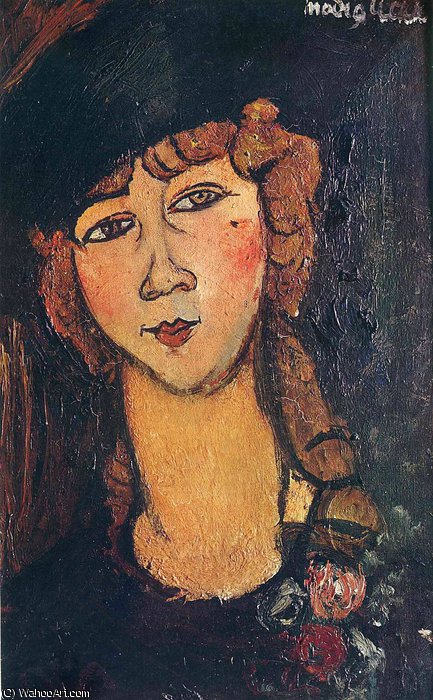
In the quiet corners of art history, few portraits command the room with as much haunting grace as Amedeo Modigliani’s Untitled (7976). To encounter this work is to be met by a gaze that transcends the canvas, pulling the viewer into a profound dialogue of contemplative seriousness. The subject, a woman rendered with the artist's signature rhythmic elegance, possesses an aura of stillness that feels both intimate and eternal. Her elongated neck and stylized facial features serve as unmistakable hallmarks of Modigliani’s hand, drawing the eye toward an expression that oscillates between strength and vulnerability. It is not merely a depiction of a face, but a window into a psyche, captured in a moment of deep introspection.
The technical mastery behind this piece lies in its ethereal luminosity. Modigliani employed a sophisticated approach known as macché mezzotint, a method involving the delicate layering of thin pigment washes onto a toned canvas. This technique allows for subtly shifting hues and a soft, velvety texture that breathes life into the skin tones, creating a sense of depth that feels almost sculptural. By blending elements of Cubism’s structural geometry with the raw emotionality of Expressionism, Modigliani defies easy categorization. The result is a painting that possesses a palpable weight, where the muted palette and masterful shading invite the observer to linger on the nuances of light and shadow.
Historical Resonance and Symbolic Depth
Created in 1920, during the final, feverish year of Modigliani’s short but brilliant life, this portrait stands as a testament to the shifting tides of early 20th-century modernism. The influence of African sculpture and the burgeoning Surrealist movement can be felt in the simplified, almost primordial forms that reject the rigid academic realism of previous centuries. There is a deliberate departure from tradition here; every line is an intentional gesture toward a new way of seeing. The elongated neck, often interpreted by scholars as a yearning for transcendence or a poignant acknowledgment of human fragility, imbues the figure with a sense of otherworldly dignity.
For the discerning collector or interior designer, this artwork offers more than mere decoration; it provides an emotional anchor. The woman's gaze—direct yet laced with a certain melancholic wisdom—suggests a profound awareness of the inner experience, making it a piece that resonates deeply within a sophisticated living space. Whether placed in a sunlit gallery or a moody, private study, Untitled (7976) acts as a focal point for contemplation. It embodies a signature blend of beauty and sorrow, a timeless aesthetic that continues to inspire those who seek art that speaks to the complexities of the human condition.