A Gaze Through the Veil of Time
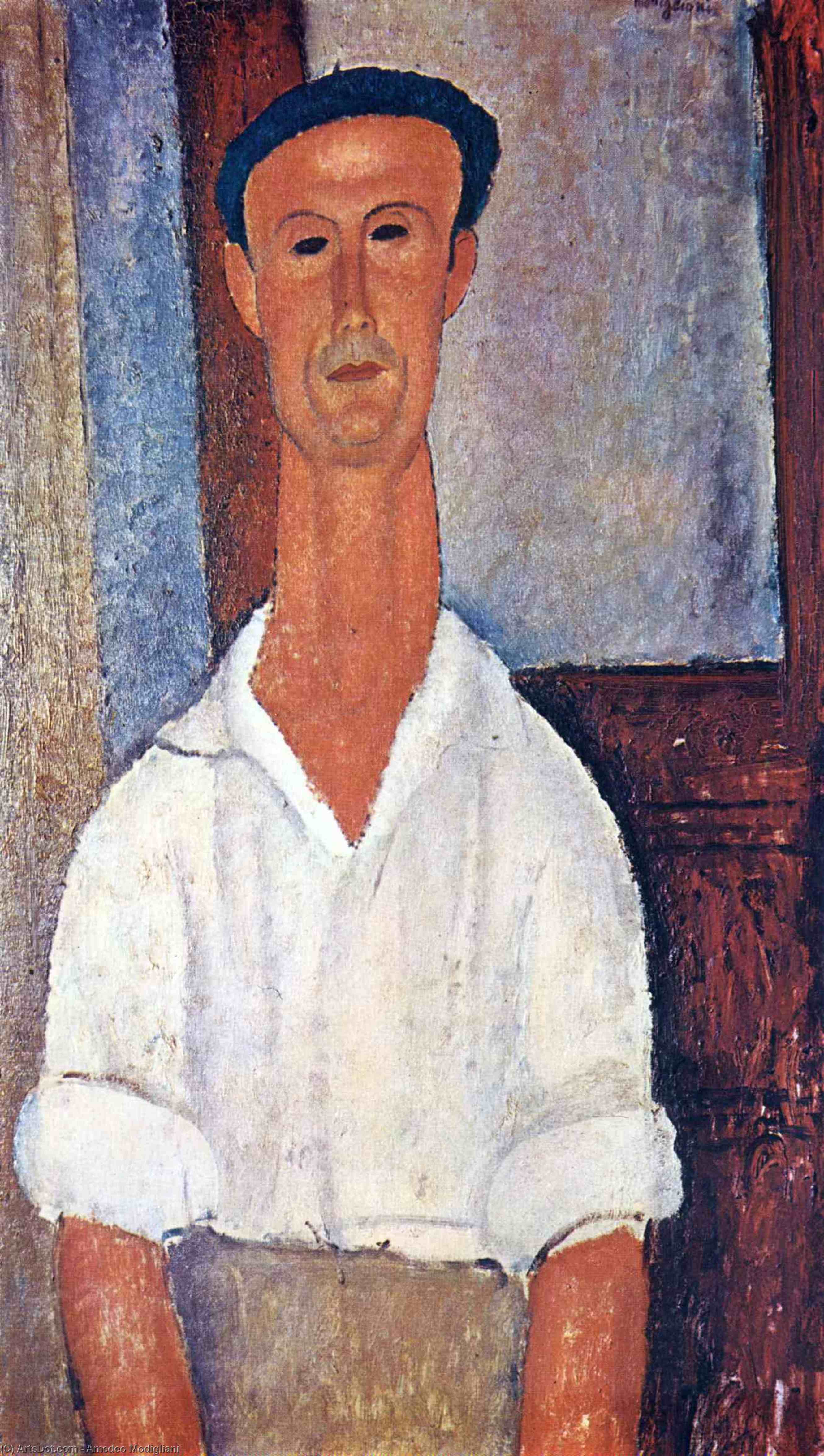
In the quiet, evocative realm of Amedeo Modigliani’s "Untitled (8127)," viewers are invited into a space where the boundaries between the physical and the psychological dissolve. Painted during the transformative years of 1916-1917, this portrait serves as a profound window into the artist's soul during his Parisian exile. The central figure, characterized by an arresting and elongated nose, commands the composition with a presence that is simultaneously confrontational and deeply vulnerable. There is a haunting quality to his gaze; it oscillates between a playful, almost mocking amusement and a heavy, introspective sorrow. This duality captures the very essence of the human condition—the mask we present to the world versus the silent turmoil we carry within.
The technical mastery of Modigliani is on full display through his signature mask-like portraiture. Eschewing the cluttered realism of the academic tradition, he utilizes flattened planes of color and sweeping, stylized contours to distill his subject to its most essential, rhythmic form. The palette is a masterclass in subdued elegance, relying on earthy ochres, creamy ivories, and deep, resonant browns. These muted tones do more than just define the physical features; they cultivate an atmosphere of melancholic stillness, making the painting feel less like a captured moment and more like an eternal state of being. For the discerning collector or interior designer, this piece offers a sophisticated anchor for a room, providing a sense of historical weight and contemplative calm.
The Echoes of Montmartre and Modernity
To understand the depth of "Untitled (8127)," one must look toward the vibrant yet turbulent artistic milieu of Montmartre during the Belle Époque. Modigliani was a man navigating a world in flux, heavily influenced by the structural innovations of Cézanne and the raw, expressive power of African sculpture. This synthesis of influences is evident in the way he manipulates space and form, stripping away the unnecessary to reveal a spiritual truth. The presence of two subtle figures in the background adds a layer of narrative complexity, suggesting a domestic intimacy that contrasts sharply with the subject's intense, singular focus. It is as if Modigliani is attempting to find stability within a family unit while his own internal world remains beautifully, tragically unmoored.
For those seeking to adorn a space with art that sparks conversation and emotional resonance, this reproduction offers more than mere decoration. It is an invitation to engage with the history of modernism and the enduring power of the human spirit. The painting’s ability to harmonize with both contemporary minimalist settings and classic, opulent interiors makes it a versatile choice for any curated collection. Owning a piece that embodies such profound psychological depth allows one to bring a touch of Modigliani's legendary grace and haunting beauty into the everyday, turning a living space into a sanctuary of thought and feeling.