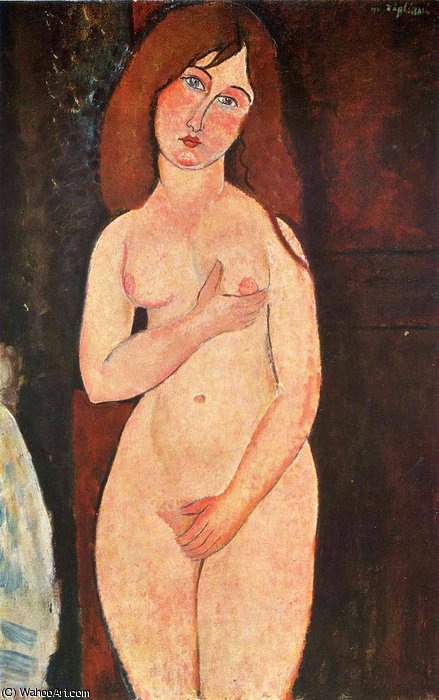
Admire Amedeo Modigliani’s iconic portrait ‘untitled (8528)’ – a hauntingly beautiful depiction of a nude woman with elongated features and expressive eyes, capturing the essence of Expressionism.
Explore the captivating art of Amedeo Modigliani (1884-1920): iconic portraits & sculptures defined by elongated forms, expressive eyes, and a hauntingly beautiful style. Discover his legacy! #Modigliani #Expressionism
A Portrait of Quiet Intensity: Decoding Modigliani’s “Untitled” (8528)
Amedeo Clemente Modigliani's "Untitled" (8528), a striking portrait rendered in muted reds and blues, transcends mere representation; it embodies the very essence of Expressionist aesthetics. Painted circa 1916-1917 during his formative years in Paris—a city teeming with artistic ferment—the canvas captures a woman’s gaze with an unnerving stillness that speaks volumes about inner contemplation. The artist's masterful manipulation of elongated forms and simplified features, hallmarks of Modigliani’s distinctive style, contributes to the painting’s profound emotional resonance. This isn’t simply a depiction of flesh; it’s an exploration of vulnerability and unspoken longing—themes central to Modigliani’s artistic vision.
The Style of Long Lines and Subtle Color Palette
Modigliani's technique is characterized by deliberate simplification, prioritizing expressive gesture over meticulous detail. The elongated neck and stylized facial features – a stylistic choice influenced heavily by African sculpture – are not merely decorative elements but serve as conduits for conveying emotion. He eschewed academic conventions, favoring instead a palette of subdued hues—primarily reds and blues—that heighten the melancholic atmosphere. These colors aren’t vibrant or celebratory; they're muted shades that subtly illuminate the subject’s face and torso, creating an illusion of depth without resorting to traditional chiaroscuro techniques. This restrained color scheme underscores the painting’s contemplative mood and invites viewers to linger on the subtleties of expression.
Historical Context: Parisian Modernism and Artistic Influences
“Untitled” (8528) emerged during a pivotal moment in European art history—the rise of Parisian Modernism. Artists like Modigliani were actively rejecting Impressionistic ideals, seeking instead to capture psychological states and emotional truths. He drew inspiration from Nietzsche’s philosophy of will and suffering, alongside the poetic explorations of Baudelaire and Lautréamont, artists who championed darkness and disillusionment as sources of artistic creativity. These influences are palpable in Modigliani's preoccupation with themes of isolation and melancholy—a reflection of his own personal struggles during a period marked by illness and hardship. The painting stands as testament to the burgeoning avant-garde movement’s desire to confront uncomfortable realities and delve into the complexities of human experience.
Symbolism Beyond Appearance: Eyes That Speak Volumes
The woman's eyes dominate the composition, conveying an arresting gaze that seems to penetrate beyond mere visual perception. They are rendered with exceptional detail—a deliberate departure from naturalistic representation—and hold a palpable intensity that captures the essence of introspection. The artist’s masterful use of shading and highlighting emphasizes their luminosity, suggesting a profound awareness of inner life. In Modigliani's oeuvre, eyes frequently symbolize consciousness and soulfulness – qualities he sought to elevate above superficial beauty. They invite contemplation on themes of identity, emotion, and the elusive nature of truth—elements that resonate powerfully with viewers today.
Emotional Impact: A Haunting Beauty
Ultimately, “Untitled” (8528) achieves its enduring appeal through its ability to evoke a visceral emotional response. The painting’s quiet stillness is punctuated by an unsettling gaze—a gesture of defiance against conventional notions of femininity and beauty. It captures the melancholic spirit of Modigliani's era, reminding us that art can transcend mere visual pleasure to communicate profound psychological truths. Like many works of Expressionism, it confronts viewers with uncomfortable realities while simultaneously offering solace in its exquisite aesthetic qualities. Its haunting beauty continues to captivate audiences worldwide—a testament to Modigliani’s unparalleled talent and his unwavering commitment to exploring the depths of human emotion.