The Poetics of the Human Form
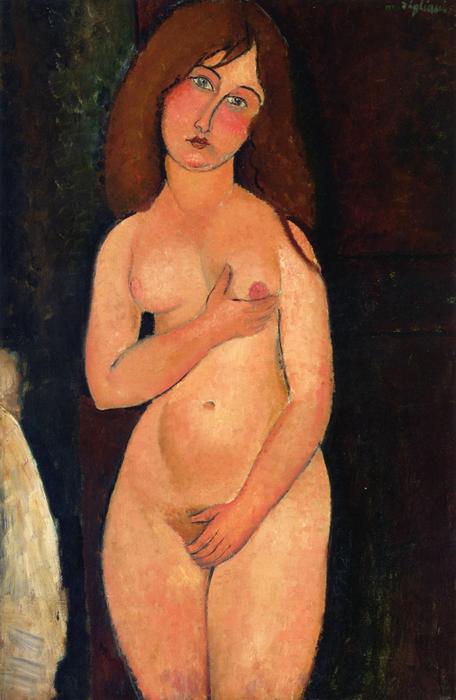
In the hauntingly beautiful 1917 masterpiece Venus, also known as Standing Nude, Amedeo Clemente Modigliani invites the viewer into a private, melancholic sanctuary. The painting presents a solitary female figure, her form rendered with the unmistakable, rhythmic grace that defined the artist's unique contribution to early 20th-century modernism. As she stands in a moment of quiet introspection, one hand rests gently upon her breast, a gesture that oscillates between vulnerability and a profound, self-contained strength. Modigliani does not merely depict a body; he sculpts it with light and line, creating a presence that feels both ethereal and deeply grounded in the physical world.
The subject matter, while rooted in the classical tradition of the female nude, is stripped of any academic pretension. Instead, Modigliani infuses the figure with an expressionist soul. Her gaze, though often averted or shrouded in a dreamlike haze, suggests a pensive interiority that resonates with anyone who has ever sought solace in solitude. For collectors and lovers of fine art, this piece offers more than just a visual feast; it provides a window into the human condition, capturing that delicate tension between our outward appearance and our hidden, emotional depths.
A Symphony of Line and Expression
Technically, Venus is a triumph of the expressionist style, executed with the masterful touch of oil on canvas. Modigliani’s technique is characterized by a deliberate, almost sculptural approach to painting. He utilizes elongated forms—a hallmark of his oeuvre—to create a sense of verticality and elegance that draws the eye upward, much like the soaring lines of Gothic architecture. The artist's use of line is both fluid and structural, defining the contours of the woman's neck and torso with a precision that feels both modern and ancient.
The color palette is often subtle, allowing the interplay of shadow and light to define the flesh tones and create a sense of three-dimensional volume on a flattened plane. This manipulation of perspective creates a rhythmic, musical quality within the composition. For interior designers seeking to anchor a room with a piece of profound character, the painting’s ability to command attention through subtle nuance rather than loud color makes it an incomparable choice for sophisticated, curated spaces.
Historical Resonance and Emotional Depth
Created in 1917, during a period of immense global upheaval, this work reflects the shifting artistic landscape of Paris. Modigliani, a central figure of the École de Paris, was navigating a world where traditional beauty standards were being dismantled by the rise of Cubism and the influence of African and primitive sculpture. In Venus, we see the synthesis of these influences: the classical subject matter meets a radical, modern simplification of form. The painting embodies the "melancholy of modernism," a sense of longing and fragility that was prevalent in the bohemian circles of Montparnasse.
To possess a reproduction of this work is to bring a piece of art history into one's personal environment. It serves as an emotional anchor, evoking feelings of peace, introspection, and timelessness. Whether placed in a sunlit gallery or a quiet study, the painting’s enduring impact lies in its ability to speak to the universal experience of beauty and the quiet dignity of the human spirit. It is a masterpiece that does not merely decorate a wall; it enriches the very atmosphere of a home.