Discover Amrita Sher-Gil’s ‘Sleep,’ a poignant nude portrait reflecting her unique artistic vision. Explore this iconic 1933 masterpiece & learn about the artist.
Discover Amrita Sher-Gil (1913-1941), a pioneering Hungarian-Indian painter who bridged Eastern & Western art styles. Explore her evocative portraits and legacy as a modern Indian art icon.
A Glimpse into Rural India: Amrita Sher-Gil’s 1935 Portrait
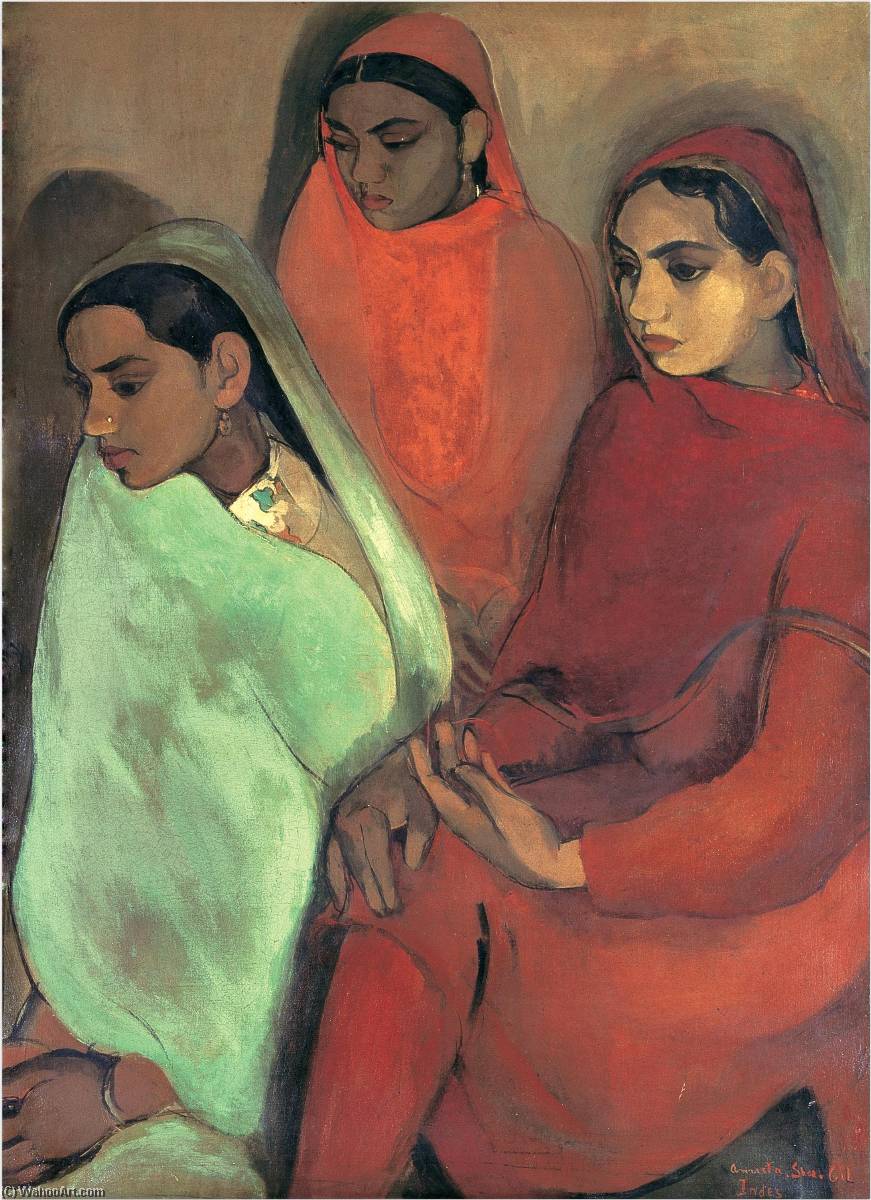
This captivating painting by Amrita Sher-Gil, created in 1935, offers a poignant and intimate portrayal of three Indian women adorned with vibrant red headscarves. The composition centers on their collective presence – a study in quiet dignity and shared experience. A fourth woman sits behind them, adding depth to the scene, while two further figures are subtly placed in the background, suggesting a broader social context. The inclusion of a handbag, casually positioned, grounds the image in everyday life, hinting at the routines and possessions that define these women’s worlds. Sher-Gil masterfully uses composition to convey a sense of unity and communal strength amongst her subjects.
Style & Technique: Bridging East and West
Amrita Sher-Gil was a true pioneer, forging a unique artistic language that blended European Modernism with the rich traditions of Indian art. This work exemplifies this synthesis. While influenced by Post-Impressionist styles – particularly in her use of flattened planes of color and strong outlines – she rejects purely Western aesthetics to create something distinctly *Indian*. Her brushwork is deliberate, creating a textured surface that emphasizes form and volume. The palette, though restrained, is impactful; the red headscarves immediately draw the eye, symbolizing vitality and perhaps auspiciousness within the cultural context. Sher-Gil’s technique isn't about illusionistic realism but rather capturing the essence of her subjects – their inner lives and social standing. She often employed a somber tonality, which lends a gravity to her portraits, reflecting her deep engagement with the realities of rural Indian life.
Historical Context & Symbolism
Painted during a period of significant socio-political change in India, this artwork reflects Sher-Gil’s fascination with and empathy for the lives of ordinary people. She deliberately chose to depict subjects often overlooked by mainstream art – women from rural communities. The red headscarves are not merely decorative; they carry cultural significance, potentially indicating marital status or regional identity. The very act of portraying these women with such dignity was a radical statement in an era marked by colonial influence and societal hierarchies. Sher-Gil’s work challenged conventional representations of Indian life, offering instead a nuanced and deeply personal perspective. Her travels throughout India exposed her to diverse cultures and traditions, which profoundly shaped her artistic vision.
Emotional Resonance & Lasting Legacy
This painting evokes a sense of quiet contemplation. The women’s gazes are direct yet reserved, inviting the viewer into their world without revealing all their secrets. There's a palpable feeling of resilience and inner strength emanating from the group. Sher-Gil’s ability to capture the psychological depth of her subjects is what sets her apart. Though she tragically died young at age 28, Amrita Sher-Gil left behind a remarkable body of work that continues to inspire artists and captivate audiences today. Her paintings are now highly sought after, representing not only artistic excellence but also a powerful statement about identity, culture, and the human condition. A reproduction of this piece would bring a sense of timeless elegance and cultural richness to any interior space.