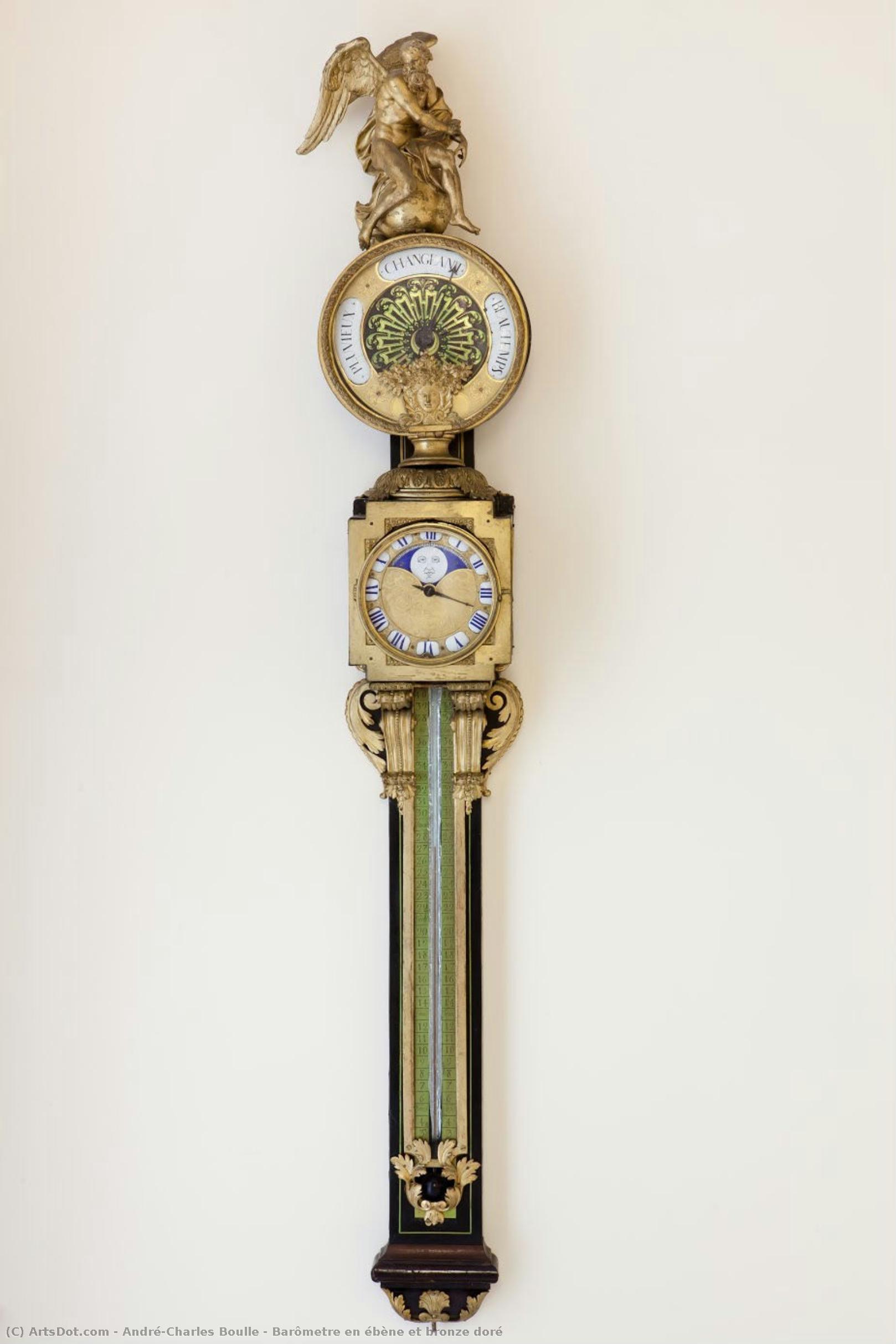
The image is a close up of a clock with a gold frame and a bird statue on top. The clock has a blue face and the hands are black. The clock is mounted to a wall and appears to be an antique piece. There is also a painting in the background, which features a bird statue as well.
Barômetre en ébène et bronze doré
Admire André-Charles Boulle's masterpiece – a gilded bronze barometer clock reflectin
André-Charles Boulle: The Architect of Louis XIV Style
André-Charles Boulle (1642 – 1732) stands as a titan amongst French cabinetmakers, his name synonymous with opulent craftsmanship and the very embodiment of Louis XIV’s grandeur. More than just a furniture maker, Boulle was an innovator who fundamentally reshaped European taste, establishing a distinctive style—the ‘Boulle’ marquetry—that captivated royalty and aristocrats alike for decades to come. His legacy continues to inspire artisans today, cementing his place as one of the most influential figures in 17th-century decorative arts. He wasn't merely producing beautiful objects; he was crafting symbols of power and prestige, reflecting the ambitions of Louis XIV himself.
Early Life and Apprenticeship: Foundations of Mastery
Information about Boulle’s formative years remains scarce, shrouded in the mists of time. Born in Paris around 1642, he descended from a family steeped in artisanal tradition—his father, Jean Boulle, was himself a respected cabinetmaker—providing him with an invaluable grounding in the craft. This familial connection instilled within him not only technical skill but also a deep appreciation for artistic excellence. He began his apprenticeship under Jean Petit Aubry, mastering the techniques of inlay and gilding – skills that would become hallmarks of his distinctive style.
The Boulle Style: A Revolution in Decorative Arts
Boulle’s genius lay in transforming traditional woodworking into an art form unlike any seen before. The ‘Boulle’ marquetry technique—characterized by intricate designs of tortoiseshell, brass & pewter inlay—became instantly recognizable and profoundly influential. Unlike earlier styles that relied on simple carving or painting, Boulle employed a meticulous layering process, combining multiple materials to create astonishing visual effects. This method demanded exceptional precision and patience, elevating cabinetmaking to the level of haute couture. It wasn’t simply about creating functional furniture; it was about crafting immersive experiences for the wealthy patrons who commissioned his creations.
Louis XIV Patronage and Artistic Flourishing
André-Charles Boulle benefited enormously from the patronage of Louis XIV, who recognized his talent and entrusted him with numerous prestigious commissions. The King's unwavering belief in Boulle’s vision fueled an unprecedented period of artistic innovation within France. Boulle’s workshops produced masterpieces that adorned palaces and aristocratic residences across Europe—from Versailles to Dresden—establishing a dominant aesthetic that defined the Baroque era. These pieces weren’t merely decorative; they served as tangible representations of royal authority and grandeur, reinforcing Louis XIV's image as the Sun King.
Symbolism and Emotional Impact: Beyond Aesthetics
The Boulle style wasn’t solely concerned with visual beauty; it carried deep symbolic meaning. Tortoiseshell, chosen for its rarity and association with nobility, represented wealth and status. Brass and pewter inlay conveyed strength and resilience—materials favored by monarchs to symbolize their dominion over both land and sea. The meticulous craftsmanship itself embodied the humanist ideals of the time – a celebration of skill, precision, and artistic excellence. Boulle’s creations evoked feelings of awe and admiration, transporting viewers into opulent spaces that reflected the splendor of Louis XIV's reign. They served as reminders of power, beauty, and enduring legacy.
- Provenance: Musée des Arts et Métiers (CNAM 5612)
- Estimated Value: €5,000 - €8,000
- Material: Tortoiseshell, Brass, Pewter
- Dimensions: Height: 110 cm; Width: 32 cm
A masterpiece showcasing Boulle’s skill in combining marquetry with horological precision. Its elaborate brass framework and delicately inlaid panels exemplify the zenith of Rococo design.