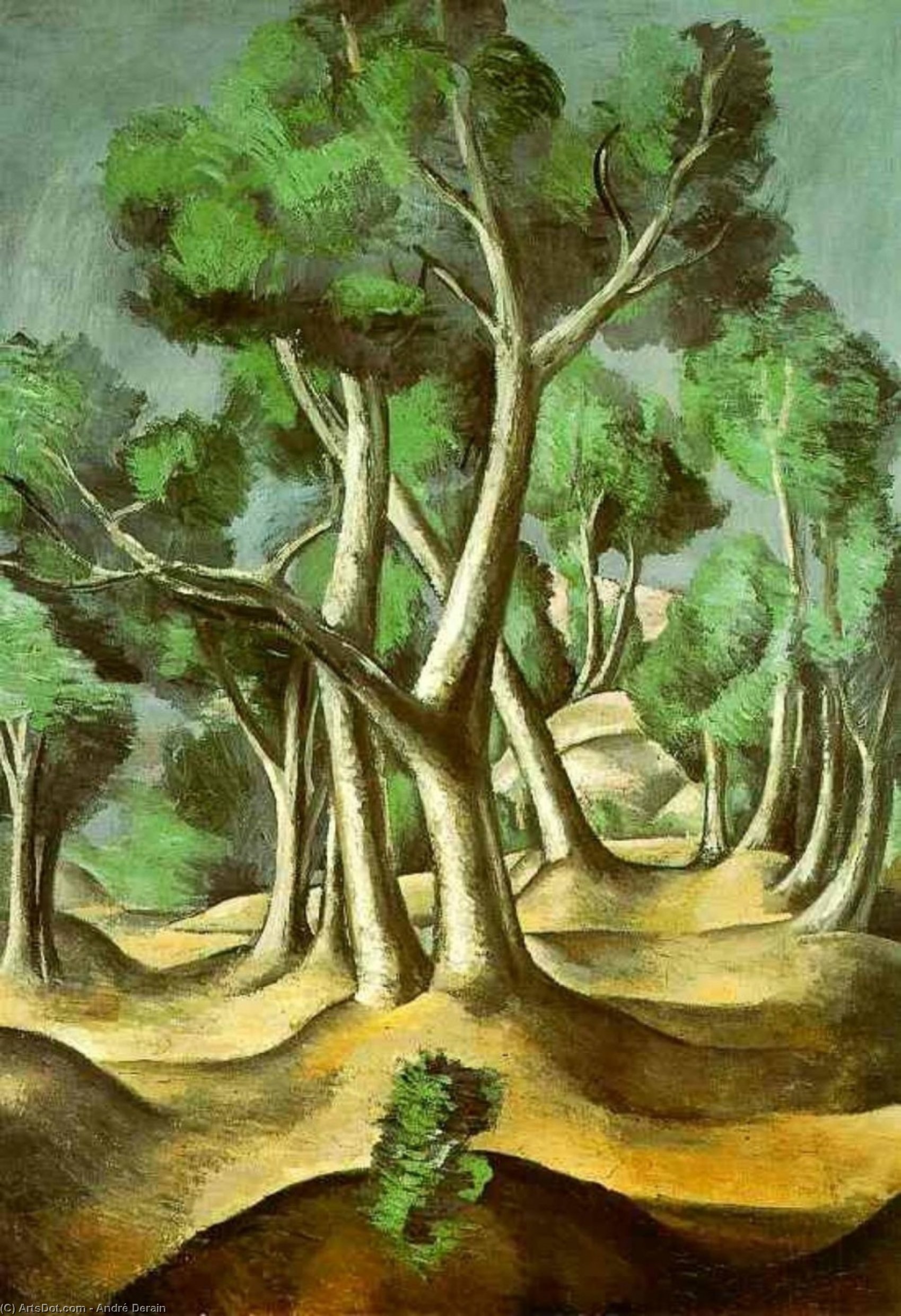
André Derain’s ‘Cubist Grove’: A Fauvist Masterpiece of Light and Form
André Derain's “Cubist Grove,” painted in 1912, is more than just a depiction of trees; it’s a vibrant explosion of color and form that encapsulates the revolutionary spirit of early 20th-century art. Created during his pivotal role as one of the founders of Fauvism alongside Henri Matisse, this oil on canvas offers a profound insight into Derain's artistic evolution and his masterful manipulation of light and space. The painting’s current location within the State Hermitage Museum in Russia underscores its significance within the canon of modern art.
- Subject Matter: A grove of trees dominates the composition, rendered with a deliberate fragmentation of form characteristic of Proto-Cubism – a precursor to the movement Derain helped shape.
- Color Palette: Bold and unapologetic, the painting utilizes a vibrant green palette punctuated by contrasting hues that exemplify the Fauvist approach, prioritizing emotional impact over naturalistic representation.
- Composition: The arrangement of trees creates an intriguing visual dynamic, with figures subtly integrated into the landscape, adding a human element to the scene.
The Roots of Cubism and Fauvism
Derain’s artistic journey was deeply intertwined with the burgeoning movements of his time. His early influences included Proto-Cubism, evident in the geometric shapes and simplified forms within “Cubist Grove.” However, it's crucial to recognize that Derain wasn't simply replicating Cubist principles; he was actively contributing to their development. The painting’s emphasis on flattened perspective and the reduction of detail align perfectly with the Fauvist aesthetic – a movement defined by its intense colors and expressive brushstrokes. This work represents a key moment in the transition from Impressionism towards these radically new approaches to representation.
Technique and Artistic Intent
The application of paint is as crucial to understanding “Cubist Grove” as the subject matter itself. Derain employs loose, energetic brushstrokes that build up layers of color, creating a palpable sense of movement and atmosphere. The artist’s deliberate use of light and shadow – a technique known as ‘Light in painting’ – adds depth and dimension to the scene, guiding the viewer's eye through the composition. The inclusion of two figures within the grove subtly shifts the focus from purely naturalistic representation to one that explores human interaction with the landscape, a common theme in Derain’s work.
Symbolic Resonance and Emotional Impact
"Cubist Grove" transcends a simple landscape painting; it's an exploration of perception and emotion. The fragmented forms invite viewers to actively engage with the artwork, challenging traditional notions of representation. The bold colors evoke feelings of energy, vitality, and perhaps even a sense of unease – reflecting the anxieties and uncertainties of the early 20th century. The painting’s enduring appeal lies in its ability to capture both the beauty of nature and the complexities of human experience.