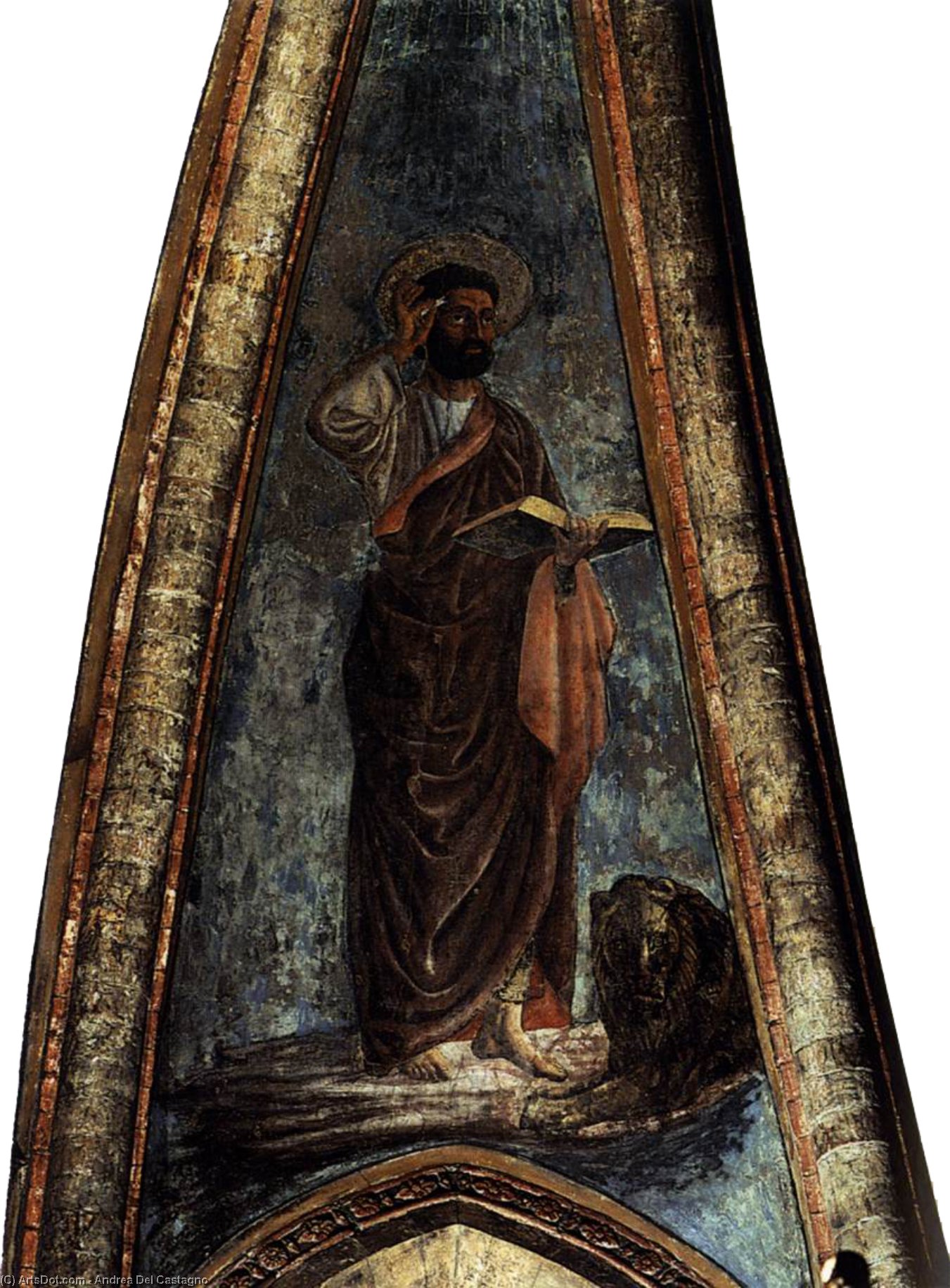
Andrea del Castagno’s ‘St Mark,’ painted in 1442, showcases Saint Mark holding a book on a boat, symbolizing faith and contemplation amidst Venetian culture. This fresco exemplifies early Renaissance artistic style, influenced by Masaccio and Giotto.
Explore the Renaissance world of Andrea del Castagno (c.1419-1457)! Discover his dramatic frescoes, innovative 'Last Supper,' and lasting impact on Florentine art. A master of realism & emotion.
Discover San Zaccaria, Venice: A Renaissance jewel showcasing masterpieces by Bellini & Castagno. Explore its unique architecture—a blend of Gothic and early Renaissance styles—and delve into the city's rich artistic heritage. Relics of Leo V add to this historical treasure.
Andrea del Castagno’s St Mark: A Vision of Venetian Faith
Andrea del Castagno’s fresco depicting Saint Mark, the patron saint of Venice, stands as a remarkable testament to Early Renaissance artistic ambition and spiritual conviction. Executed in 1442 during his time in Venice—a city grappling with papal authority and increasingly embracing humanist ideals—the painting transcends mere depiction; it embodies a profound meditation on faith, pilgrimage, and divine grace.
- Subject Matter: The fresco portrays Saint Mark seated upon a boat, holding a book aloft. Surrounding him are figures representing pilgrims embarking on a journey towards Jerusalem, symbolizing the Christian quest for holiness and salvation.
- Style: Castagno’s style aligns squarely with Masaccio’s influence—characterized by meticulous anatomical realism combined with innovative perspectival techniques. Unlike the stylized depictions prevalent in preceding Gothic art, this work strives for naturalistic accuracy, capturing human form and gesture with unprecedented precision.
- Technique: Fresco painting demanded considerable skill and patience. Castagno skillfully applied pigment to wet plaster, creating an enduring image that retains its vibrancy despite centuries of exposure. The artist’s masterful use of color—particularly the luminous blues and reds—enhances the emotional impact of the scene, conveying a sense of solemn reverence.
The historical context is crucial to understanding St Mark's significance. Venice was experiencing a period of burgeoning artistic patronage under the Medici family, fostering an environment where artists like Castagno could push boundaries and explore new expressive possibilities. Simultaneously, the fresco reflects the anxieties surrounding papal ambition—particularly after the Battle of Anghiari—and underscores the importance of spiritual fortitude in confronting adversity.
Symbolism permeates every element of the artwork. The book symbolizes knowledge and divine revelation, while Saint Mark’s gesture directs his gaze upwards toward heaven, signifying aspiration for God's grace. The pilgrims represent the collective Christian experience—a pilgrimage not merely physical but spiritual—towards Jerusalem, the Holy City revered as the center of Christendom.
Emotionally, St Mark resonates with a palpable sense of solemn contemplation and unwavering faith. Castagno’s depiction captures the essence of Venetian piety during its formative years, inviting viewers to contemplate themes of pilgrimage, devotion, and the enduring power of spiritual belief. It remains an inspiring example of Early Renaissance art—a masterpiece that continues to captivate audiences today.