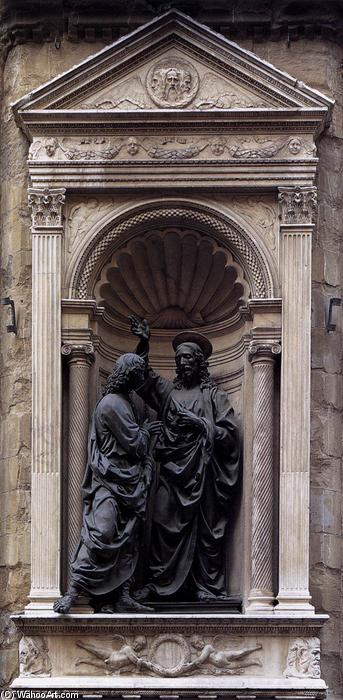
Christ and Doubting Thomas by Andrea del Verrocchio
Andrea del Verrocchio’s “Christ and Doubting Thomas,” housed in Orsanmichele, Florence, stands as a cornerstone of Renaissance sculpture and painting—a testament to humanist ideals intertwined with profound theological contemplation. Completed around 1476, this monumental bronze statue embodies the spirit of its time, reflecting the burgeoning interest in classical antiquity alongside fervent religious devotion.
- Subject Matter: The sculpture depicts the biblical episode recounted in John’s Gospel—Jesus Christ reassuring Thomas, who had doubted his resurrection after witnessing Jesus’s crucifixion wounds. This narrative explores themes of faith, doubt, and divine revelation, central to Christian theology.
- Style & Technique: Verrocchio employed a masterful blend of sculptural realism and expressive dynamism. The statue’s pose—Christ calmly gesturing towards Thomas—captures the moment of profound conviction as Jesus seeks to dispel Thomas’s skepticism. Verrocchio skillfully utilized bronze casting techniques, achieving remarkable detail and textural richness that would have been unattainable with other materials.
- Historical Context: Florence during the Quattrocento witnessed a flourishing artistic environment fueled by patronage from wealthy families like the Medici. The sculpture reflects this cultural dynamism, aligning with humanist ideals championed by figures like Leonardo da Vinci—a testament to Verrocchio's influence as an educator and mentor.
The statue’s composition is carefully balanced, emphasizing Christ’s central position and conveying a sense of serene authority. The drapery folds are rendered with meticulous attention to detail, demonstrating Verrocchio’s mastery of sculptural technique. Light plays a crucial role in illuminating the figures, enhancing their contours and creating an atmosphere of solemn contemplation.
- Symbolism: Christ's gesture symbolizes reassurance and divine compassion—a visual representation of God’s willingness to dispel doubt through tangible evidence of his presence. The sculpture’s placement within Orsanmichele, a civic guildhall adorned with sculptures commemorating Florentine saints, underscores its significance as a symbol of faith and civic virtue.
- Emotional Impact: “Christ and Doubting Thomas” evokes feelings of reverence and contemplation—drawing viewers into the narrative of doubt overcome by belief. Its enduring beauty lies in its ability to convey complex theological ideas through masterful artistic execution, cementing Verrocchio’s legacy as one of Florence's greatest sculptors.
A remarkable achievement of Renaissance art, “Christ and Doubting Thomas” continues to inspire admiration for its technical brilliance and profound spiritual depth. Its enduring presence in Orsanmichele serves as a reminder of Florence’s artistic heritage and the transformative power of faith expressed through sculpture.