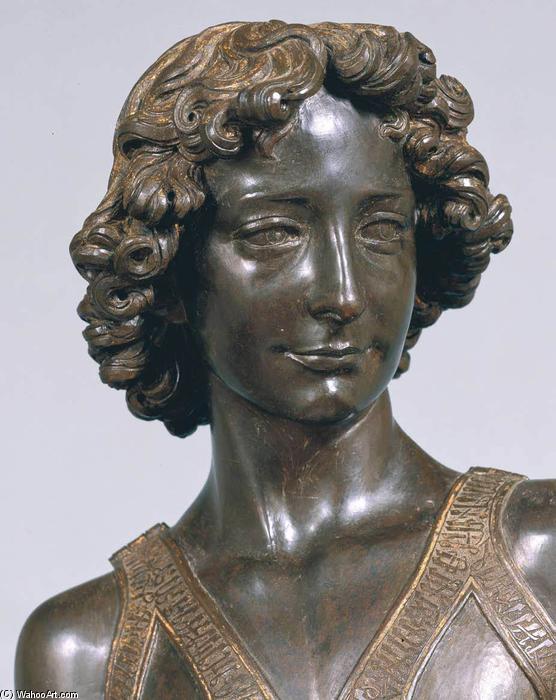
A Moment of Contemplation: Unveiling the Detail of “The Young David”
Andrea del Verrocchio’s “Young David,” a detail from his monumental bronze sculpture, is more than just a depiction of a biblical hero; it's a profound meditation on youth, power, and the nascent potential within. This exquisite study, rendered with an almost unsettling realism, captures a pivotal moment – not of triumphant victory, but of quiet introspection before the confrontation with Goliath. The work, created around 1473-1475 in Florence during the height of the Early Renaissance, speaks volumes about Verrocchio’s mastery of human anatomy and his ability to imbue even a youthful figure with an aura of solemn gravitas.
The sculpture's immediate impact lies in its remarkably lifelike quality. Verrocchio eschews the idealized forms often favored by his contemporaries, opting instead for a portrayal that is both strikingly beautiful and undeniably human. The meticulous detail—the individual curls of the hair, the subtle creases around the eyes, the delicate musculature beneath the skin—is astonishing. Notice particularly the rendering of the face; it’s not merely a likeness but an expression of profound thoughtfulness. The closed eyelids suggest a deep concentration, as if David is absorbing the weight of his future destiny. The slight upturn of the lips hints at a nascent confidence, a quiet acknowledgment of the strength he will one day wield.
Technique and Material: Bronze’s Enduring Embrace
Verrocchio's choice of bronze was deliberate, reflecting the material’s inherent qualities. Bronze possesses an unparalleled ability to capture detail and texture, allowing Verrocchio to achieve a level of realism rarely seen in sculpture of this period. The surface is remarkably smooth, yet subtly textured – a testament to his painstaking polishing technique. The artist skillfully manipulated the metal's reflectivity, creating areas of light and shadow that model the figure’s form with remarkable depth. Observe how the light catches the curve of the neck, highlighting the subtle veins beneath the skin, or the way it emphasizes the contours of the chin and jawline.
The process itself was a demanding one. Bronze casting involved multiple stages: creating a wax model, building up layers of clay around it, applying a series of molten bronze shells, and finally, removing the wax core to reveal the finished sculpture. This technique, perfected over centuries, allowed Verrocchio to achieve an unparalleled level of precision and control. The fact that this detail was originally part of a larger work – likely the full-sized “Young David” – further underscores the sculptor’s ambition and his desire to capture every nuance of the subject's character.
Symbolism and Context: A Portrait of Potential
“The Young David” is not simply a portrait; it’s a carefully constructed symbol. David, as depicted here, represents more than just a biblical hero; he embodies the potential for greatness within every individual. The sculpture speaks to the themes of courage, faith, and the responsibility that comes with power. The posture—slightly hunched, contemplative—suggests a young man grappling with his destiny, aware of the challenges ahead but resolute in his commitment to righteousness.
Furthermore, the inclusion of the strap or shoulder guard on David’s left side subtly alludes to his future role as a warrior. It's a quiet reminder that this youthful figure is destined for conflict, yet he faces it with dignity and determination. The sculpture was commissioned by the Medici family, powerful patrons of the arts who saw in David a symbol of their own ambition and their commitment to Florence’s prosperity. The work reflects the Renaissance ideal of humanism – an emphasis on the value and potential of human beings.
A Legacy of Mastery: Verrocchio's Enduring Influence
“The Young David” stands as a testament to Andrea del Verrocchio’s extraordinary talent and his pivotal role in shaping the course of Renaissance art. His meticulous attention to detail, his profound understanding of human anatomy, and his ability to imbue his sculptures with emotional depth continue to captivate viewers centuries later. This small, intimate study offers a glimpse into the mind of a master artist—a man who not only sculpted bronze but also captured the essence of humanity itself. Reproductions of this piece offer a chance to bring this timeless work of art into your home, allowing you to contemplate its beauty and symbolism for years to come.