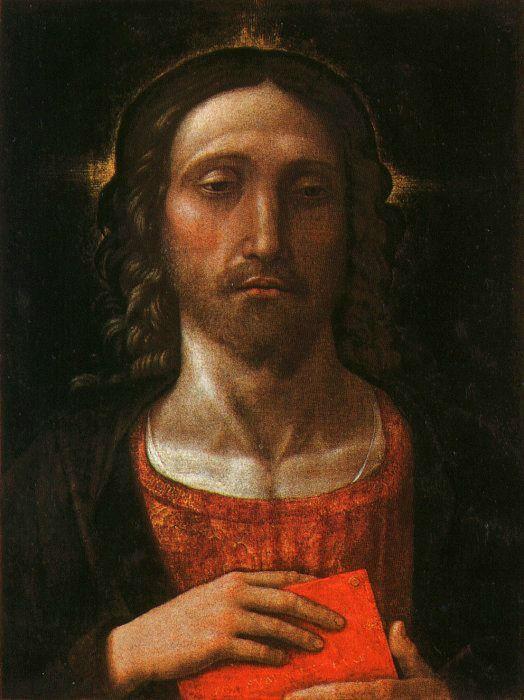
A Portrait of Faith: Exploring Andrea Mantegna’s Christ the Redeemer
Andrea Mantegna's *Christ the Redeemer* isn’t merely a depiction of Jesus; it’s an embodiment of Renaissance ambition—a daring attempt to recapture the grandeur and intellectual rigor of ancient Rome within the burgeoning artistic landscape of Italy. Born in Carturu around 1431, Mantegna’s formative years under Francesco Squarcione instilled in him a singular devotion to archaeological precision, shaping his artistic worldview profoundly. Unlike many artists preoccupied with idealized beauty, Squarcione's workshop functioned as an academy dedicated to the meticulous study of Roman ruins—a tangible connection to a civilization revered for its architectural prowess and philosophical sophistication. This immersion in antiquity fueled Mantegna’s conviction that true artistry resided not just in skillful representation but also in unwavering faithfulness to observed reality.
- Style: Mantegna's style is distinctly Mannerist, characterized by elongated figures, subtly distorted perspective, and a deliberate rejection of the harmonious ideals championed during the High Renaissance. He prioritized sculptural form over illusionistic depth, mirroring the influence of Roman sculpture—particularly busts—which served as models for artists seeking to convey dignity and solemnity.
- Technique: The painting utilizes tempera on canvas, a technique favored by Mantegna for its ability to achieve remarkable luminosity and textural richness. Tempera pigments bind together with egg yolk, resulting in durable images that retain their vibrancy over centuries. This meticulous layering process contributes significantly to the painting’s palpable sense of presence and conveys an unparalleled level of detail.
Historical Context: Rome Revisited
The Renaissance witnessed a fervent revival of interest in classical learning and art, driven by humanist scholars who championed reason and observation as pathways to understanding human experience. Mantegna’s *Christ the Redeemer* reflects this intellectual fervor—a conscious effort to emulate Roman artistic conventions and reaffirm Christian faith through the lens of antiquity. The painting emerged during a period marked by papal patronage and artistic experimentation, demonstrating Mantegna's commitment to pushing boundaries while honoring tradition. Its placement within the broader context of Renaissance art underscores its significance as a testament to the era’s transformative spirit.
Symbolism: Reverence and Humility
Beyond its technical brilliance, *Christ the Redeemer* resonates with profound symbolic meaning. The depiction of Christ's face—looking downward—suggests humility and contemplation, conveying a message of divine compassion and acceptance. The open Bible symbolizes faith and scripture’s role as a conduit for spiritual enlightenment. Furthermore, the red robe represents royalty and sacrifice, highlighting Jesus’s status as King of Kings and his willingness to endure suffering for humanity's salvation. These carefully chosen elements elevate the painting beyond mere visual representation, transforming it into an emblem of Christian piety.
Emotional Impact: A Moment Frozen in Time
Mantegna’s masterful execution captures a palpable sense of solemnity and reverence—a feeling that transcends time itself. The artist's meticulous attention to detail—the folds of Christ’s clothing, the texture of his hair—invites viewers into an intimate encounter with the figure of Jesus. *Christ the Redeemer* speaks to the viewer on a deeply emotional level, prompting reflection on themes of faith, compassion, and human dignity. It remains a powerful reminder of the enduring legacy of Renaissance art and its capacity to inspire awe and contemplation.