Ecce Homo
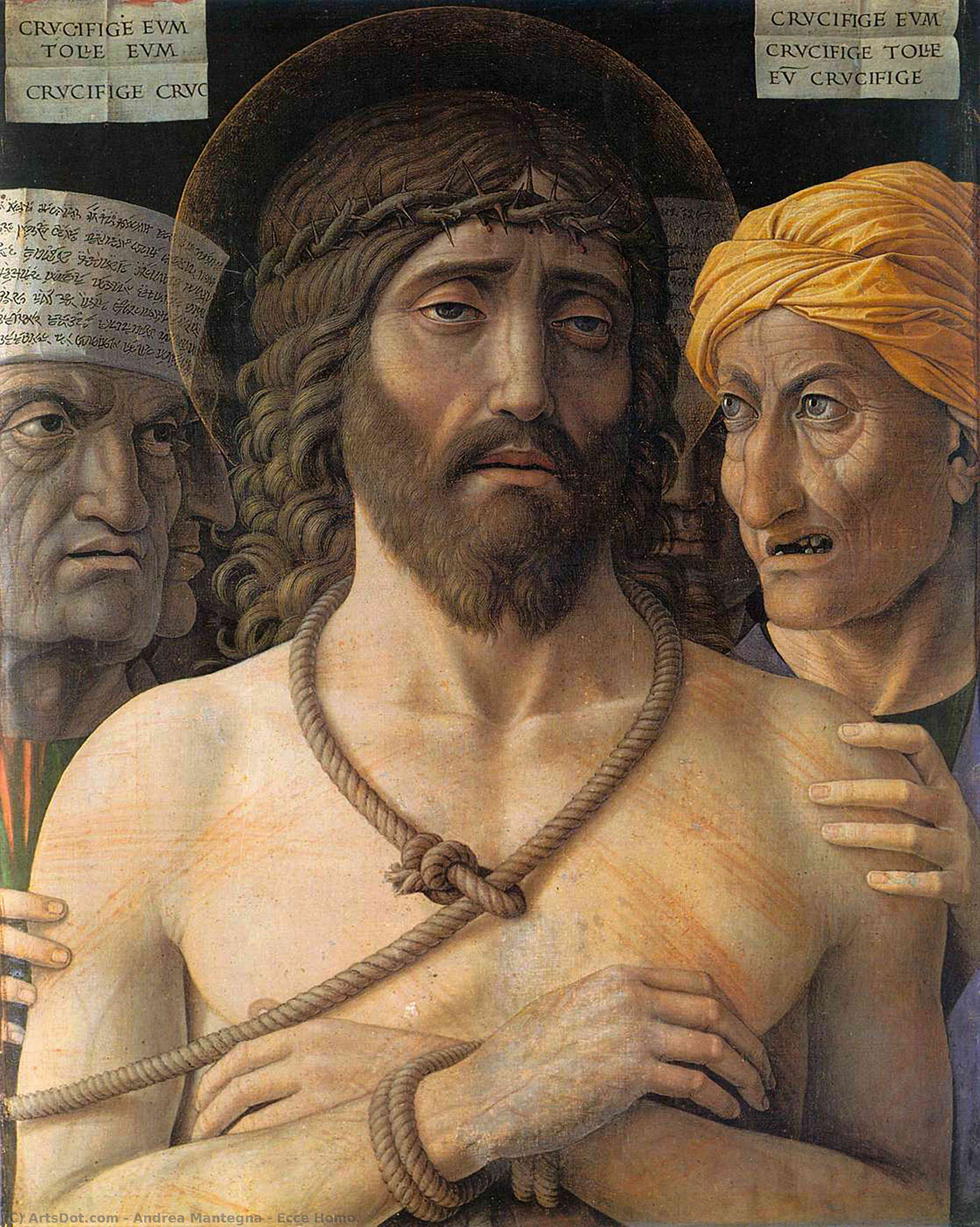
Andrea Mantegna’s Ecce Homo stands as a monumental achievement of Renaissance art—a poignant meditation on suffering and divine sacrifice rendered with unparalleled precision and psychological depth.
The Theme and Composition
Painted in 1500, this tempera on canvas artwork measuring 72 x 54 cm resides at the Musée Jacquemart-André in Paris. The painting confronts viewers with a stark depiction of Jesus Christ being presented to Pontius Pilate by the crowd—a pivotal moment recounted in John’s Gospel. Mantegna eschews grand theatricality, opting for a claustrophobic framing around Christ’s bust, emphasizing his vulnerability against the backdrop of hostile faces.
- The Figures: The central figure dominates the composition, portrayed with remarkable sculptural realism—a stylistic hallmark of Mantegna’s oeuvre. Surrounding him are two men on either side, their expressions conveying palpable anguish and anticipation.
- Pilate's Presence: Pontius Pilate is depicted in profile, embodying authority yet seemingly overwhelmed by the gravity of his decision.
- The Crowd: The faces of the onlookers—primarily Jewish plaintiffs—are rendered with exaggerated features, reflecting their fervent desire for Christ’s crucifixion.
Artistic Analysis
Mantegna's masterful use of tempera on canvas achieves a remarkable level of textural detail and luminosity. The muted color palette—dominated by earthy tones—contrasts sharply with the radiant aureole encircling Christ’s head, symbolizing his divine glory. This technique reflects Mantegna’s deep engagement with classical sculpture, particularly Roman portrait busts, informing his approach to anatomical accuracy.
The artist meticulously captures the physicality of suffering—the flayed torso bearing visible wounds from flagellation, the bound wrists and neck—creating an image that transcends mere representation, conveying profound emotional resonance. The careful shading contributes to a palpable sense of drama and immediacy.
Historical Context
Andrea Mantegna (1431-1506) emerged as a leading figure in Padua’s artistic milieu during the Early Renaissance—a period characterized by renewed interest in classical antiquity and an ambitious pursuit of artistic innovation. His influence extended far beyond his native Veneto, shaping the aesthetic sensibilities of artists across Europe.
Ecce Homo embodies Mantegna's pioneering spirit—his willingness to challenge conventions and explore new expressive possibilities. It stands as a testament to the enduring legacy of Renaissance art and its capacity to grapple with complex theological themes.
Conclusion
More than just a depiction of biblical narrative, Ecce Homo is an emblem of humanist contemplation—a profound meditation on human dignity and divine compassion. Its enduring power resides in Mantegna’s ability to transform a solemn religious scene into a masterpiece of visual artistry.
For those seeking inspiration or contemplating acquiring a stunning reproduction, visit ArtsDot—where you can immerse yourself in the beauty and intellectual richness of Renaissance art.