Andrea Mantegna (1431-1506): Renaissance master of perspective & sculptural detail. Explore iconic works like 'Lamentation' and the Camera degli Sposi!
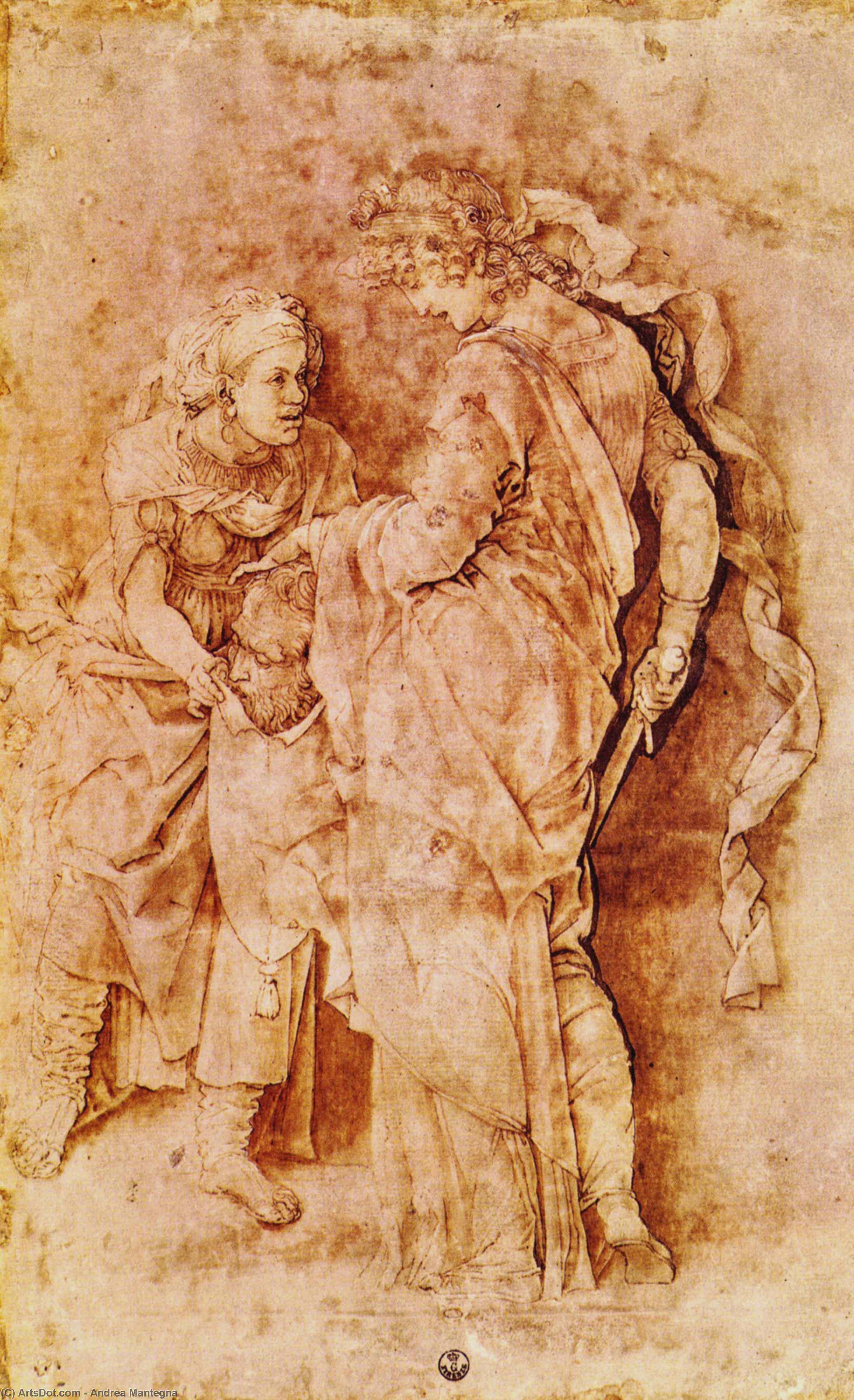
Judith with the Head of Holofernes
Andrea Mantegna’s *Judith with the Head of Holofernes*, painted around 1495–1500, stands as an emblem of Renaissance artistic innovation—a testament to its unwavering devotion to classical ideals and meticulous observation of reality. More than just a depiction of biblical narrative, it embodies a profound philosophical inquiry into virtue, courage, and the triumph of intellect over brute force. Commissioned for the Gonzaga family chapel in Mantua, this monumental fresco exemplifies Mantegna’s mastery of perspective and sculptural form, cementing his reputation as one of the foremost artists of his era.
Composition and Perspective
The painting's dramatic centerpiece is Judith, positioned centrally against a backdrop of meticulously rendered Romanesque architecture—a deliberate homage to antiquity. Mantegna employs a revolutionary technique known as “forced perspective,” dramatically compressing the space to create an illusion of depth that surpasses anything achieved by contemporaries like Piero della Francesca. This masterful manipulation of visual cues draws the viewer’s eye into the scene, emphasizing Judith's unwavering gaze and conveying a palpable sense of tension. The architectural elements—columns, arches, and vaulted ceilings—are not merely decorative; they serve as structural supports for the illusionistic space, grounding the narrative in tangible reality while simultaneously elevating it to an idealized realm.
Technique and Material
Mantegna’s palette is restrained yet luminous, dominated by earthy tones punctuated by splashes of vibrant color—primarily crimson and gold—that highlight key figures and details. He employs tempera paint on plaster, a medium favored for its durability and ability to achieve remarkable tonal gradations. The artist's meticulous attention to detail extends beyond mere representation; he painstakingly recreates textures—the folds of Judith’s robe, the glistening flesh of Holofernes’s head—creating an astonishingly lifelike portrayal. Furthermore, Mantegna utilizes a technique known as “wet drapery,” where the paint is applied while still wet, allowing it to merge seamlessly with the underlying plaster surface and producing a velvety sheen that enhances the sculptural quality of the artwork.
Symbolism and Narrative Significance
The biblical story recounts Judith’s audacious defiance of Assyrian siege—her cunning plan to seduce Holofernes, the commander of the invading army, and decapitate him after he had fallen asleep. Beyond its dramatic narrative, *Judith with the Head of Holofernes* operates on multiple symbolic levels. Judith embodies feminine virtue—intellect, courage, and unwavering resolve—challenging traditional notions of female heroism. The severed head symbolizes victory over evil and represents the triumph of righteousness over barbarism. Mantegna’s depiction underscores the importance of reason and cunning in overcoming obstacles, aligning with humanist ideals that flourished during the Renaissance.
Legacy and Influence
Mantegna's *Judith with the Head of Holofernes* profoundly impacted subsequent artists and continues to inspire awe and admiration today. Its groundbreaking use of perspective established a new standard for illusionistic painting and served as a model for generations of painters striving to capture the grandeur and complexity of the human experience. Reproductions of this masterpiece adorn museums and private collections worldwide, ensuring that Mantegna’s artistic vision—a harmonious blend of classical erudition and humanist sensibility—remains accessible to audiences across time and culture.