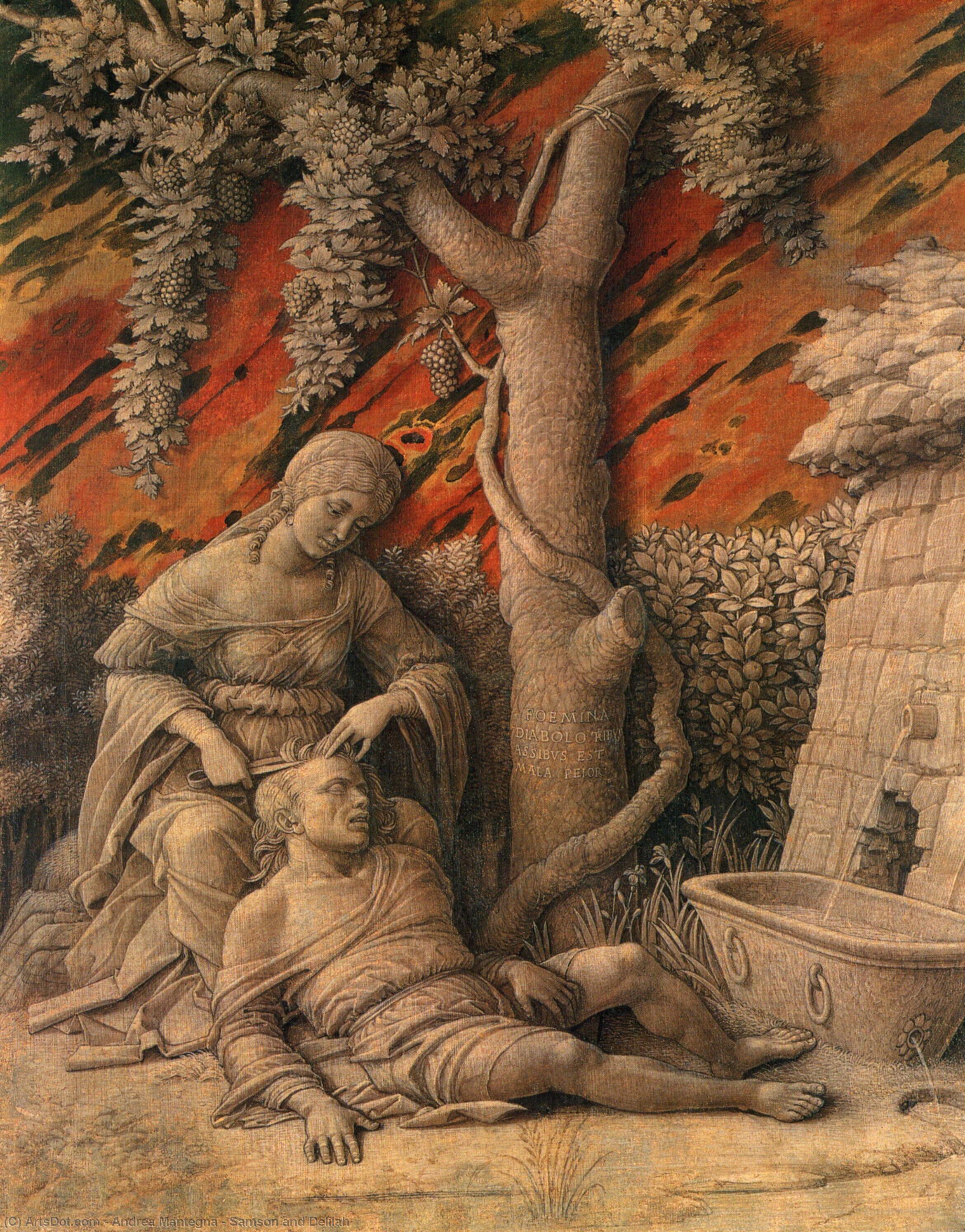
A Moment of Betrayal: Unveiling Mantegna’s “Samson and Delilah”
Andrea Mantegna's "Samson and Delilah," created around 1500, is a powerfully intimate depiction of a pivotal biblical story. This tempera on panel painting (47 x 37 cm), currently residing at the National Gallery in London, transcends mere illustration; it’s a masterclass in Renaissance storytelling, psychological tension, and artistic technique.
The Biblical Narrative
The scene portrays the moment Delilah, bribed by the Philistines, enacts her treacherous act – shearing Samson's hair while he sleeps. This seemingly simple act robs Samson of his superhuman strength, leading to his capture, blinding, and imprisonment. The painting captures not a triumphant victory, but the quiet, unsettling prelude to immense suffering.
Compositional Mastery & Artistic Style
Mantegna’s composition is strikingly intimate. Delilah dominates the scene, positioned *above* Samson, emphasizing her power in this moment of vulnerability. Her gentle touch as she prepares to cut his hair creates a disturbing contrast with the impending betrayal. The figures are rendered with Mantegna's characteristic sculptural quality – robust and defined. A solitary tree serves as a backdrop, its branches subtly framing the scene and adding depth without distraction. Two additional figures flank Samson and Delilah, their presence suggesting witnesses or conspirators, deepening the narrative complexity. The style is firmly rooted in the Early Renaissance, displaying an influence from artists like Piero della Francesca with its clarity of form and precise detail.
Symbolism & Hidden Meanings
Beyond the literal depiction, the painting is rich in symbolism. The tree, a common motif in art, can represent both life and knowledge – here perhaps hinting at the forbidden knowledge Delilah wields. Samson’s sleep symbolizes his vulnerability and loss of power. The careful arrangement of hands—Delilah's poised to strike, Samson's relaxed in slumber—speaks volumes about the shift in control. The overall *grisaille* palette (predominantly shades of grey) lends a somber tone, foreshadowing the tragic consequences to come.
Mantegna’s Technique & Historical Context
Mantegna was renowned for his innovative use of perspective and his meticulous attention to detail. His mastery of tempera allows for vibrant yet controlled color application, creating a sense of realism and depth. Created at the turn of the 16th century, the painting reflects the Renaissance fascination with classical themes *and* biblical narratives. Mantegna’s work bridges the gap between the Early and High Renaissance, showcasing both its artistic achievements and intellectual curiosity. He was deeply interested in archaeology and incorporated elements of Roman art into his compositions.
Emotional Impact & Lasting Legacy
“Samson and Delilah” is not a painting that evokes joy or celebration. Instead, it elicits feelings of unease, vulnerability, and the devastating consequences of betrayal. The quiet intensity of the scene draws the viewer in, forcing contemplation on themes of power, trust, and deception. Mantegna’s work continues to resonate with audiences today, serving as a powerful reminder of the enduring human drama captured within biblical stories.
Explore More Works by Andrea Mantegna
- The Resurrection: A dynamic depiction of Christ's triumph over death.
- Noli me tangere: A poignant portrayal of the encounter between Jesus and Mary Magdalene.
- Virgin and Child with the Magdalen and St John the Baptist: A tender and devotional scene showcasing Mantegna’s skill in portraying familial piety.
- David with Goliath's head: A dramatic representation of David’s victory, highlighting Mantegna’s mastery of anatomy and composition.
For those seeking to bring the beauty and historical significance of Renaissance art into their homes or collections, high-quality reproductions are available. This painting is a compelling addition to any space, offering both aesthetic appeal and intellectual stimulation.