Andrea Mantegna’s St. Euphemia: A Testament to Antiquity's Enduring Influence
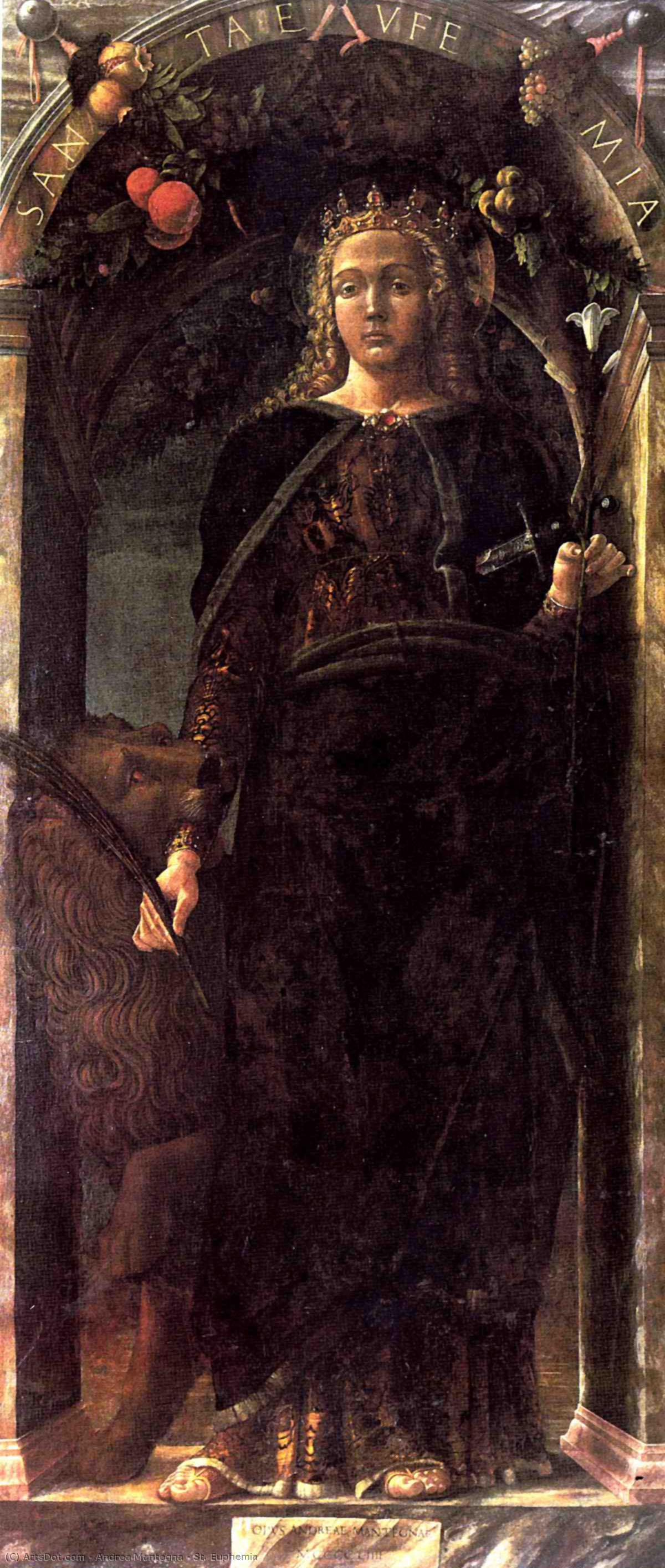
Andrea Mantegna’s “St. Euphemia,” completed in 1454, stands as a cornerstone of Early Renaissance art—a testament not merely to artistic skill but to an unwavering devotion to the principles championed by antiquity. Unlike many artists of his era who embraced classical ideals superficially, Mantegna undertook a profound intellectual quest: to resurrect Rome’s spirit within the burgeoning Italian landscape.
- Provenance & Context: Created during Padua’s vibrant artistic milieu—a crucible of humanist thought and archaeological discovery—the painting reflects the fervor with which scholars like Francesco Squarcione were excavating Roman ruins, imbuing their work with sculptural forms and dramatic perspective. Mantegna's formative years under Squarcione instilled in him a singular obsession: meticulous accuracy in replicating ancient monuments.
- Style & Technique: Mantegna’s approach distinguishes itself from prevailing trends. He eschewed the opulent drapery favored by Florentine artists, opting instead for a deliberately restrained palette and a strikingly flattened perspective—a technique borrowed directly from Roman frescoes. This stylistic choice wasn't arbitrary; it served to elevate St. Euphemia’s figure, emphasizing her solemn dignity and conveying an almost palpable sense of timelessness.
- Composition & Symbolism: The painting’s composition is masterful. St. Euphemia occupies the central space within a stone arch adorned with garlands of fruit and foliage—symbols of fertility and divine grace—underscoring the saint's sanctity. Her posture exudes confidence, while her gaze engages the viewer directly. Crucially, she holds a sword piercing her breast—a potent emblem of martyrdom—and a palm branch signifying victory over death. The lion beneath her feet reinforces this symbolism, representing both St. Euphemia’s suffering and divine protection.
- Material & Dimensions: Executed on canvas measuring 171 x 78 cm., “St. Euphemia” exemplifies Mantegna's commitment to realism. The artist skillfully rendered the textures of fabric and stone, capturing the subtle nuances of light and shadow—a hallmark of sculptural painting.
The Influence of Antiquity: A Sculptural Vision
Mantegna’s artistic vision was fundamentally shaped by his engagement with Roman antiquities. As noted in biographical research, he actively studied Roman sculptures and inscriptions, recognizing their capacity to inspire artists with a new understanding of form and space. This fascination manifested itself in the painting's sculptural qualities—the deliberate flattening of perspective and the stylized depiction of figures—reflecting the humanist ideals prevalent during the Renaissance.
A Masterpiece of Detail & Emotion
"St. Euphemia" transcends mere representation; it communicates profound spiritual contemplation. Mantegna’s meticulous attention to detail—the rendering of drapery folds, the subtle shading of skin tones—creates an immersive experience for the viewer. The painting's emotional impact is palpable: conveying St. Euphemia’s unwavering faith and resilience in the face of adversity.
Beyond Reproduction: Exploring Mantegna’s Legacy
A reproduction of “St. Euphemia” offers a glimpse into the artistic genius of Andrea Mantegna—a figure who dared to reimagine Renaissance art through the lens of antiquity. Its enduring appeal lies in its masterful composition, evocative symbolism, and unwavering commitment to sculptural realism.