A Window into Roman Antiquity: Exploring Andrea Mantegna’s “View of the West Wall”
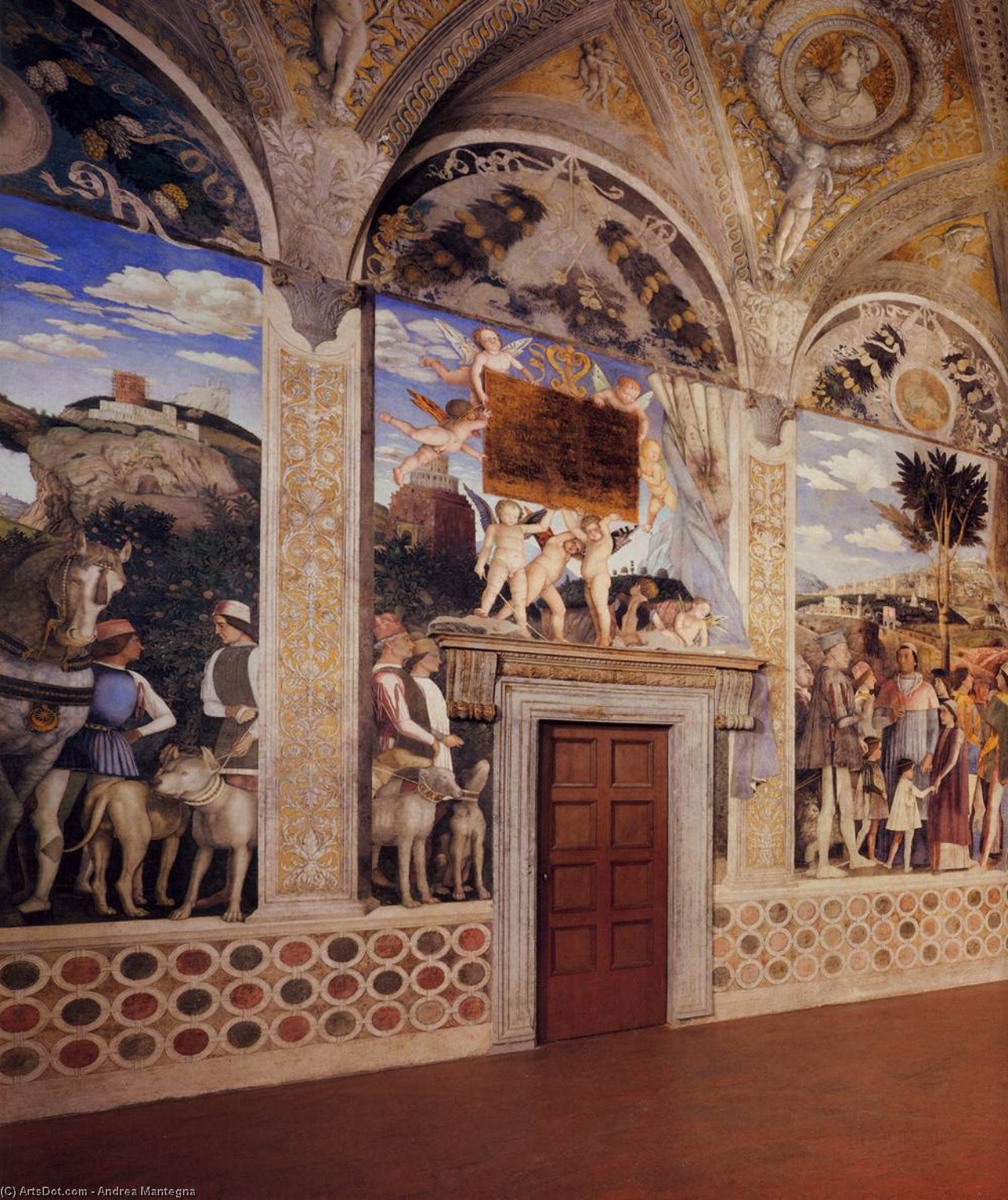
The fresco, “View of the West Wall,” painted by Andrea Mantegna in 1465, isn't merely a depiction of horses and riders; it’s a profound statement about artistic ambition and intellectual curiosity—a testament to Mantegna’s unwavering commitment to reviving the grandeur of Rome. Commissioned for the Cappella Santissima Annunciata in Padua Cathedral, this monumental artwork represents more than just visual splendor; it embodies a revolutionary approach to painting that would profoundly influence generations of artists to come.
- Subject Matter & Composition: The scene portrays a procession of riders traversing a corridor adorned with architectural elements reminiscent of Roman temples and tombs. Nine horses dominate the composition, each carrying individuals engaged in purposeful activity—some gesturing towards signs bearing Latin inscriptions, highlighting Mantegna’s meticulous attention to detail and scholarly pursuit.
- Style & Technique: Mantegna's mastery lies in his masterful manipulation of perspective – a technique rarely achieved with such precision during this period. He employs illusionistic painting, creating the impression of depth and space that transcends the limitations of its flat surface. This method, honed through extensive study of Roman ruins, distinguishes him from many of his contemporaries who favored more conventional styles.
Historical Context: The Renaissance Revival
The fresco’s creation coincided with a burgeoning fascination for classical antiquity across Europe. Humanists like Petrarch and Erasmus championed the rediscovery of Greek and Roman texts and monuments, fueling an intellectual fervor that permeated artistic circles. Mantegna wasn't simply copying classical forms; he was actively engaging in a dialogue with the past, attempting to recapture its spirit and infuse it into his own work. Padua Cathedral itself served as a focal point for humanist scholarship, fostering an environment conducive to groundbreaking artistic innovation.
- Symbolism: The Latin inscriptions adorning the horses’ signs are laden with symbolic significance—references to Roman deities and philosophical concepts that underscore Mantegna's erudition. Furthermore, the corridor itself symbolizes the passage of time and mortality, mirroring themes prevalent in classical literature.
- Emotional Impact: Despite its formal grandeur, “View of the West Wall” possesses a palpable sense of dynamism and movement. The riders’ gestures convey purposefulness and engagement, inviting viewers to contemplate the pursuit of knowledge and virtue—values central to humanist ideals.
Mantegna's Legacy: A Pioneer of Illusionism
Andrea Mantegna’s “View of the West Wall” stands as a cornerstone of Renaissance art history. His pioneering use of linear perspective established a new standard for spatial representation, influencing artists throughout Europe and shaping the visual language of subsequent centuries. More importantly, it represents a triumph of intellectual curiosity—a conviction that art could illuminate the wisdom of antiquity and inspire contemplation on fundamental human concerns. Reproductions of this iconic fresco offer collectors and interior designers alike an opportunity to experience firsthand the enduring beauty and profound significance of Mantegna’s artistic vision.