Andrea Sacchi’s Dramatic Vision of Mythological Triumph
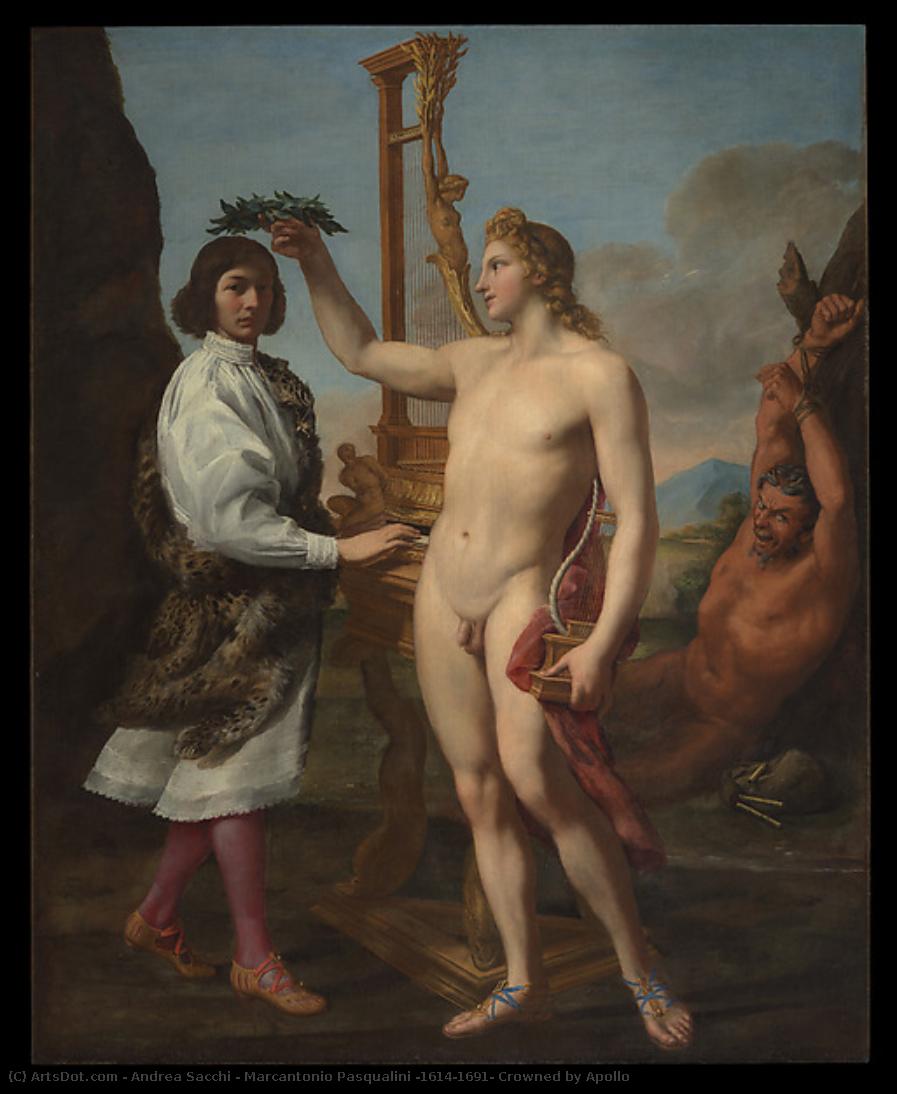
Andrea Sacchi's "Marcantonio Pasqualini Crowned by Apollo," completed in 1641, stands as a testament to the fervor and grandeur of High Baroque art—a period defined by opulent ornamentation and emotionally charged narratives. Painted during Antonio Barberini’s reign as Pope, this monumental oil on canvas embodies the artistic spirit of Rome at its zenith, reflecting both intellectual curiosity and fervent religious devotion. The artwork depicts Apollo, god of music and light, bestowing a laurel wreath upon Marcantonio Pasqualini, arguably the most celebrated castrato singer of his time—a figure whose vocal prowess had captivated audiences across Europe.
- Subject Matter & Narrative: The scene draws directly from Greek mythology, specifically the tale of Apollo’s contest with Marsyas over musical skill. Marsyas, representing earthly ambition and defiance, is depicted tied to a tree alongside his bagpipes—a symbol of unsuccessful artistry—while Apollo triumphantly presents Pasqualini with the laurel wreath, signifying victory and divine recognition.
- Style & Technique: Sacchi’s masterful execution exemplifies Baroque stylistic principles. The painting utilizes dramatic chiaroscuro – intense contrasts between light and shadow – to heighten emotional impact and sculpt the figures into three-dimensional forms. Impasto technique—thickly applied paint—creates textural richness, particularly evident in Apollo's drapery and Pasqualini’s robe, conveying a palpable sense of movement and dynamism.
- Composition & Perspective: The composition is carefully balanced, positioning Apollo and Daphne centrally while Marsyas occupies the right side. Linear perspective guides the viewer’s eye through the landscape setting—a stylized depiction of Arcadia—creating depth and reinforcing the narrative's dramatic tension. Sacchi skillfully employs lines to define shapes and contours, contributing to the overall visual harmony.
Historical Context: The painting reflects the broader cultural climate of Rome during Barberini’s papacy – a period marked by papal patronage of the arts and an unwavering commitment to Catholic dogma. Sacchi's work aligns with the Baroque aesthetic's desire to inspire awe and convey moral instruction, mirroring the theological preoccupations of the time.
Symbolism: Beyond its mythological narrative, “Marcantonio Pasqualini Crowned by Apollo” is laden with symbolic significance. Apollo represents divine authority and artistic excellence—a beacon of virtue and enlightenment—whereas Marsyas embodies earthly folly and resistance to divine grace. The laurel wreath symbolizes honor and triumph—affirming Pasqualini’s success in overcoming adversity.
Emotional Impact: Sacchi's masterful use of color, light, and texture evokes a profound emotional response in the viewer. The painting’s grandeur and dramatic intensity convey a sense of sublime beauty—capturing the moment of victory and celebrating artistic achievement. It serves as an enduring reminder of the power of art to communicate complex ideas and inspire contemplation.
- Size: 244 x 194 cm
- Medium: Oil on Canvas
Sacchi’s “Marcantonio Pasqualini Crowned by Apollo” remains a captivating masterpiece—a cornerstone of Baroque art and an enduring symbol of artistic triumph. Its meticulous technique, dramatic composition, and profound symbolism continue to inspire admiration and resonate with audiences today.