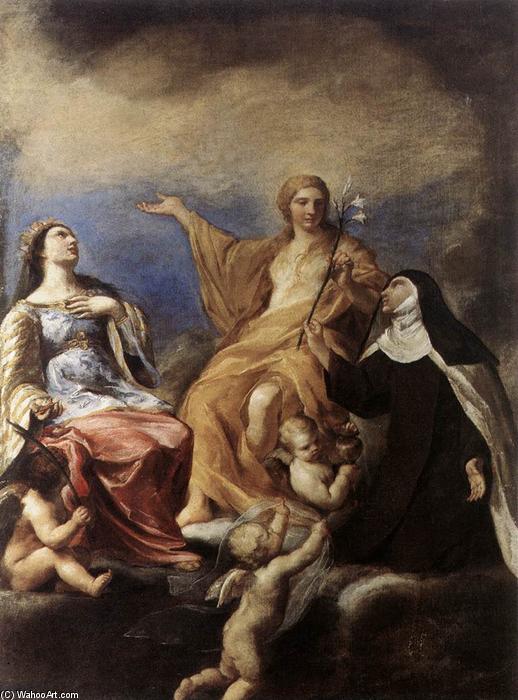
The
Three Magdalenes is a captivating oil on canvas painting created by the renowned Italian artist
Andrea Sacchi in 1634. This stunning artwork is housed in the
Galleria Nazionale d'Arte Antica in Rome, Italy, and measures 68 x 50 cm. The painting showcases Sacchi's exceptional skill in depicting religious iconography and classical themes, characteristic of the Baroque period.
Composition and Symbolism
The composition features three figures, all representing
Mary Magdalene, each with distinct poses and attire. The central figure points upwards with her right hand, while the figure to her left kneels on the ground, holding a book or manuscript. The third figure, to the right, also points upwards, but with her left hand. The use of light and shadow adds depth to the scene, highlighting the folds of their garments and the expressions on their faces.
Key elements of the painting include the dramatic cloudy sky in the background, which creates a sense of space and emphasizes the figures' emotions. The attention to detail in the rendering of hair and clothing is also noteworthy, demonstrating Sacchi's mastery of his craft.
Artistic Context
The
Three Magdalenes is part of a larger collection of artworks by prominent artists, including
Pieter Boddingh Van Laer and
Andrea Camassei, whose works can be found in the
Galleria Nazionale d'Arte Antica. For more information on these artists and their works, visit
Andrea Sacchi's page or explore the
Galleria Nazionale d'Arte Antica on ArtsDot.com.
The
Three Magdalenes is a remarkable example of Sacchi's skill and artistry, showcasing his ability to capture the essence of religious themes and classical motifs. As a masterpiece of the Baroque period, it continues to inspire and captivate audiences today.