The Enigmatic Majesty of Queen Margrethe II
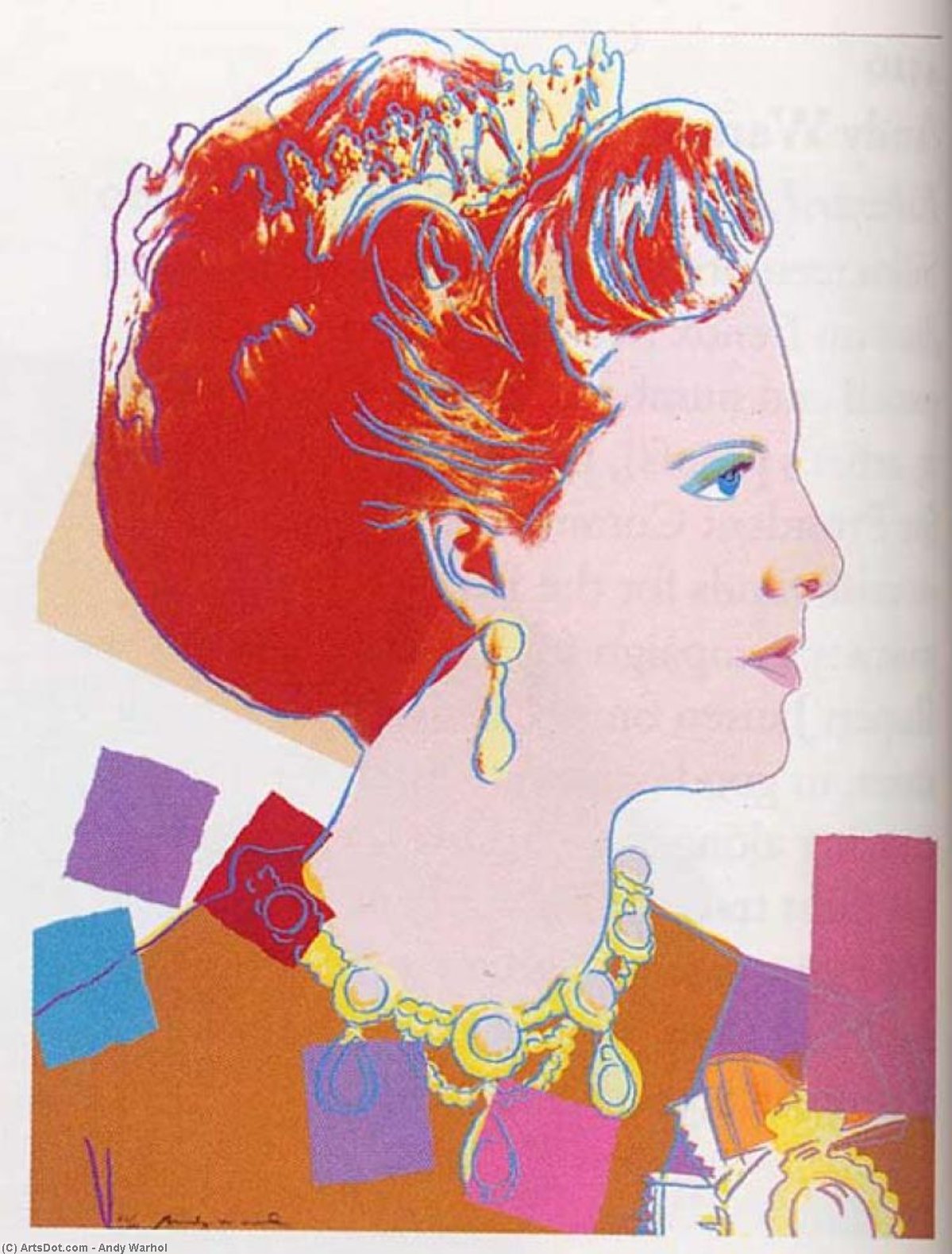
Andy Warhol’s “Queen Margrethe II of Denmark” is not merely a portrait; it's an arresting collision of celebrity, royalty, and the vibrant pulse of Pop Art. Created in 1985 as part of his iconic "Reigning Queens" series, this silkscreen captures the Danish monarch with a boldness that simultaneously celebrates her power and invites us to contemplate the shifting definitions of fame and authority within contemporary culture. The image immediately commands attention – a striking red gown dominates the composition, punctuated by glittering gold jewelry that seems almost aggressively luminous against the darker background. This deliberate contrast isn’t simply aesthetic; it speaks to Warhol's fascination with drawing viewers in, demanding their gaze, and ultimately, prompting reflection on the subject’s status.
The choice of a Pop Art style is crucial to understanding the work’s intent. Warhol deliberately stripped away traditional portraiture conventions – the meticulous detail, the subtle shading, the attempts at capturing an individual's unique essence—and replaced them with a flattened, graphic approach. The repetition inherent in screenprinting lends itself perfectly to this strategy, transforming Margrethe II into a recognizable icon, akin to a celebrity or advertising figure. This technique elevates her beyond a simple depiction of a queen; she becomes a symbol of power and influence, instantly familiar yet undeniably stylized.
A Royal Portrait Reimagined
The “Reigning Queens” series itself is deeply significant within Warhol’s oeuvre. Unlike his earlier portraits of male political figures – such as Mao Zedong or Jimmy Carter – which often employed a more confrontational and critical approach, Warhol here presents the Danish queen with a sense of almost playful reverence. The colors are bold and unapologetically bright, eschewing the muted tones typically associated with royal imagery. This deliberate exuberance suggests that Warhol is not simply documenting Margrethe II; he’s celebrating her as a figure of considerable stature, projecting an aura of glamour and sophistication.
Interestingly, Warhol's initial reluctance to exhibit this series in America reveals a fascinating layer of complexity. He reportedly became furious with the print publisher George Mulder for showcasing the portfolio in Europe, expressing his frustration that “nobody here cares about royalty.” This anecdote highlights Warhol’s astute understanding of American cultural values – a society increasingly obsessed with celebrity and spectacle—and suggests that he was deliberately tailoring this series to resonate with a European audience more receptive to notions of monarchy and tradition. The choice of color and style reflects this strategic awareness, creating an image that is both universally recognizable and culturally specific.
Symbolism and the Cult of Personality
The crown, prominently displayed in the center of the portrait, serves as a potent symbol of authority and legacy. However, Warhol doesn’t present it with the gravity typically associated with royal iconography. Instead, the crown is rendered with a certain sparkle and vibrancy, almost as if it were a dazzling accessory—a testament to the queen's status as a modern icon. The jewelry, particularly the large gold pieces, further reinforces this sense of opulence and glamour, echoing the visual language of advertising and celebrity culture.
Furthermore, the background – a dark, almost velvety black – serves to accentuate the brightness of the queen’s attire and features. This strategic use of contrast draws the viewer's eye directly to her face, emphasizing her regal expression and creating a sense of immediate connection. Warhol masterfully manipulates color and composition to transform a traditional portrait into a dynamic and engaging work of art, one that continues to resonate with audiences today.
A Legacy of Pop Art Iconography
“Queen Margrethe II of Denmark” stands as a compelling example of Andy Warhol’s innovative approach to portraiture. It's a testament to his ability to seamlessly blend high and low culture, tradition and modernity, celebrity and royalty. The work’s bold colors, graphic style, and strategic use of symbolism combine to create an image that is both visually arresting and intellectually stimulating. It remains a significant piece within Warhol’s extensive body of work, solidifying his place as one of the most influential artists of the 20th century.