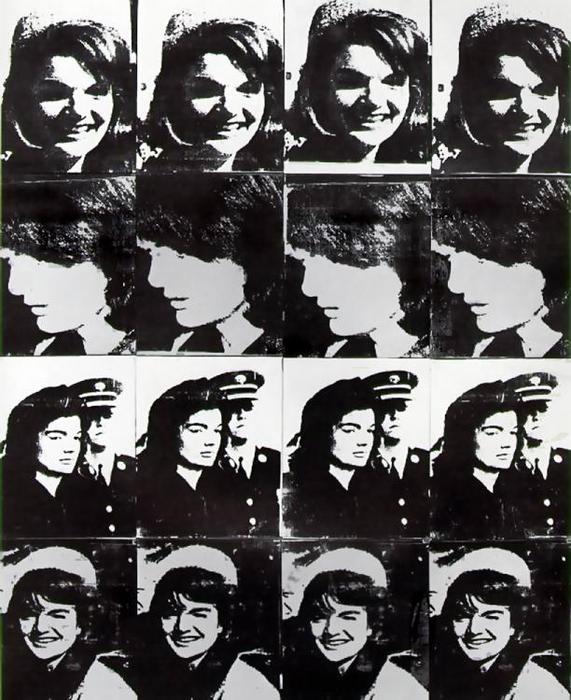
Sixteen Jackies

Explore Andy Warhol’s ‘Sixteen Jackies,’ a striking grid of Marilyn Monroe portraits in monochrome. Pop Art meets celebrity obsession – a captivating silkscreen print.


Andy Warhol (1928 - 1987)

Explore Andy Warhol's iconic Pop Art (1928-1987) – silkscreens of Marilyn, Campbell’s Soup Cans & celebrity culture. Discover his lasting impact on art.

A Serialized Icon: Warhol’s ‘Sixteen Jackies’

  • Subject & Style: ‘Sixteen Jackies’ (1964) is a striking example of Andy Warhol's signature Pop Art style. The work presents nine photographic portraits of Jacqueline Kennedy, meticulously arranged in a grid formation. Each image is a subtly altered repetition of the same source photograph – taken shortly after President Kennedy’s assassination – creating a mesmerizing and unsettling visual rhythm.
  • Technique & Process: Warhol employed silkscreen printing, a technique akin to screen-printing, allowing for mass production and slight variations in each impression. This process wasn't about achieving photographic realism; rather, it embraced the imperfections inherent in reproduction. The monochrome palette – shades of black and white – heightens the dramatic effect and emphasizes form over color. The flat lighting and frontal perspective further contribute to the work’s starkness.

Historical Context & Celebrity Obsession

  • A Nation in Mourning: Created in the immediate aftermath of President Kennedy's assassination, ‘Sixteen Jackies’ exists within a deeply emotional and historical context. Jackie Kennedy became an instant icon of grace under pressure during this period, her image relentlessly circulated through mass media.
  • Pop Art & Mass Culture: Warhol was fascinated by celebrity culture and the power of mass production. He elevated everyday objects and recognizable faces – like Campbell’s Soup cans and Marilyn Monroe – to high art, reflecting (and critiquing) the burgeoning consumerism of post-war America. ‘Sixteen Jackies’ continues this exploration, examining how tragedy itself could be commodified and endlessly reproduced.
  • Warhol's commercial background as an illustrator heavily influenced his artistic approach, allowing him to seamlessly blend fine art with the principles of advertising and mass communication.

Symbolism & Emotional Resonance

  • Fragmentation & Loss: The repetition in ‘Sixteen Jackies’ isn't celebratory; it feels almost mournful. The slight variations between images suggest a fragmented memory, the relentless media coverage blurring into an overwhelming and disorienting experience.
  • The Icon vs. The Individual: By serializing Jackie Kennedy’s image, Warhol questions the nature of celebrity and identity. Is she presented as a grieving widow or simply another consumable image? The work forces viewers to confront their own relationship with media representations of tragedy and fame.
  • A Lasting Impact: ‘Sixteen Jackies’ remains a powerful commentary on grief, memory, and the pervasive influence of mass media. Its stark aesthetic and thought-provoking symbolism continue to resonate with audiences today, making it a significant work within Warhol's oeuvre and Pop Art history.