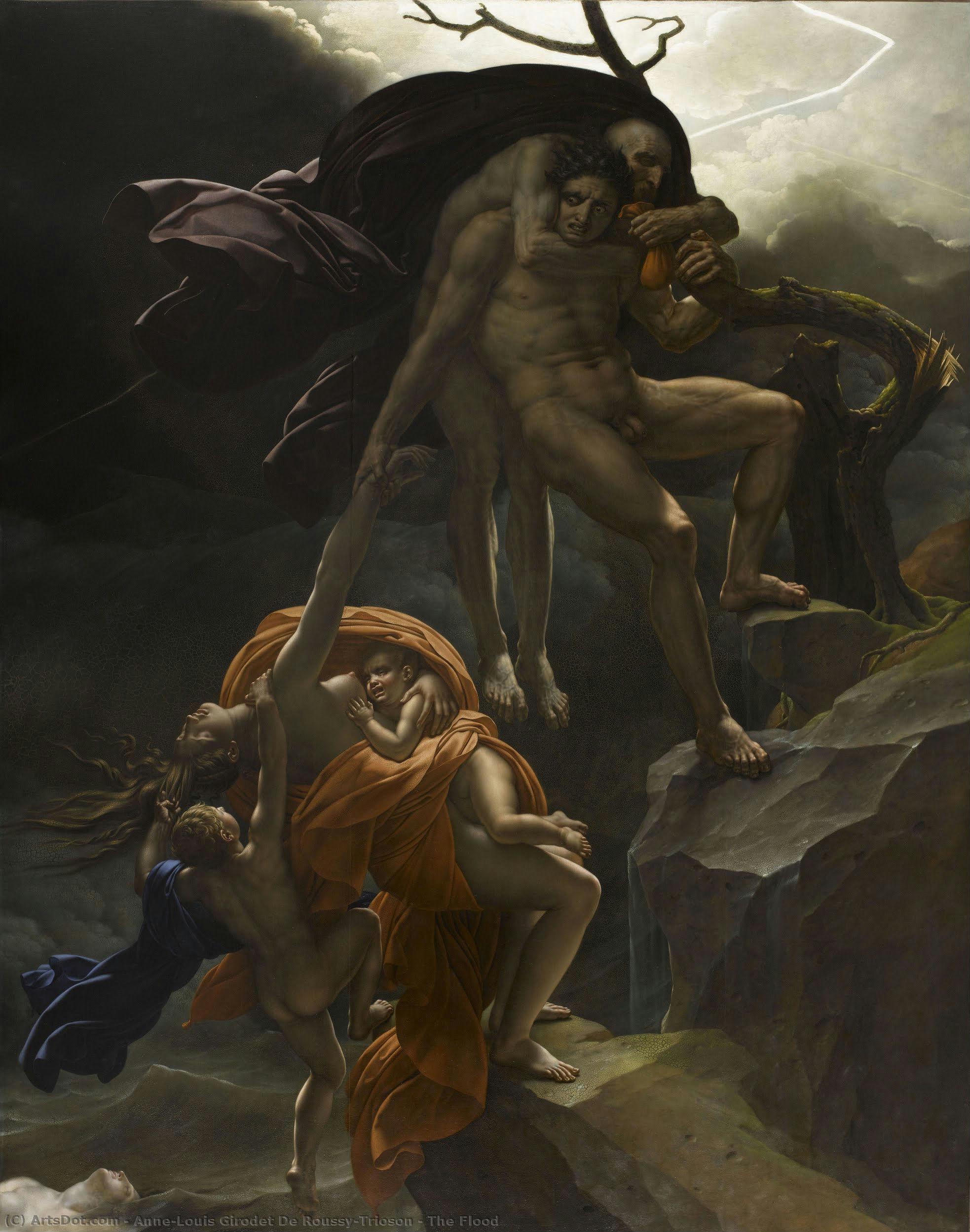
Witness the dramatic power of Anne-Louis Girodet’s ‘The Flood.’ This iconic painting captures Noah's Ark with intense emotion and masterful detail – now available as a stunning, hand-painted reproduction.
Discover Anne-Louis Girodet (1767-1824), a French painter bridging Neoclassicism & Romanticism. Explore his dramatic portraits, literary scenes & subtle erotic undertones!
Explore the Grand Palais in Paris! A historic exhibition hall & museum complex showcasing art, culture & innovation since 1900. Discover its stunning architecture & diverse events.
A Dramatic Encounter with Fate: Exploring Anne-Louis Girodet’s “The Flood”
Anne-Louis Girodet de Roussy-Trioson stands as a pivotal figure bridging the gap between Neoclassicism and Romanticism, an artist whose career exemplifies this fascinating stylistic evolution. Born in Montargis in 1767, Girodet's formative years were shaped by profound personal loss—the untimely deaths of his parents instilled in him a deep appreciation for familial bonds that would permeate his artistic endeavors. His adoptive father, Benoît-François Trioson, a physician who recognized Girodet’s talent and unwavering dedication, served as a constant guiding influence throughout the artist's life, fostering a connection that extended beyond mere mentorship into a cherished partnership. This familial legacy undoubtedly contributed to Girodet’s adoption of “Trioson” as part of his name in 1806—a deliberate act signifying both identity and enduring affection. Initially captivated by architecture, Girodet swiftly transitioned towards painting, honing his skills under the tutelage of Jacques-Louis David, arguably the most influential artist of his time.
The Scene Depicted: Biblical Narrative and Artistic Precision
“Scene from a Deluge,” completed in 1806 for the Salon, is an ambitious undertaking that captures the essence of Milton’s epic poem “Paradise Lost.” Girodet meticulously portrays the biblical tale of Noah's Ark—a story rife with symbolism concerning divine judgment and humanity’s redemption. At the heart of the composition are three figures: a man clutching another man, supported by a woman. Their vulnerability underscores the precariousness of human existence against the overwhelming force of nature. Scattered throughout the canvas are additional individuals engaged in various activities, adding to the dynamism of the scene—a deliberate choice reflecting Romantic sensibilities that prioritized emotional intensity and dramatic presentation. Two birds – one perched atop a rocky outcrop and another positioned near the bottom right corner – serve as subtle reminders of hope amidst despair, mirroring the biblical narrative’s core message.
Technique and Style: Neoclassical Influence Meets Romantic Emotion
Girodet's masterful technique exemplifies the blending of neoclassical ideals with burgeoning romantic expression. Executed in oil on canvas, the painting demonstrates a remarkable level of detail—characteristic of David’s style—particularly evident in the depiction of the rocky cliff face and the textures of the figures’ clothing. However, Girodet departs from strict geometric precision to imbue the scene with palpable emotion. The artist skillfully utilizes chiaroscuro – dramatic contrasts between light and shadow – to heighten the sense of drama and convey the overwhelming terror experienced by the characters facing imminent destruction. This technique aligns perfectly with Romantic artistic principles that championed subjective experience and emotional intensity, marking a decisive step away from the rational restraint of Neoclassicism.
Symbolism and Emotional Resonance: Confronting Mortality
Beyond its narrative depiction, “Scene from a Deluge” resonates deeply on an emotional level. The figures embody humanity’s helplessness before divine power—a theme central to Romantic thought. Their posture conveys vulnerability and despair, prompting contemplation about mortality and the fragility of human existence. Girodet's masterful portrayal captures not merely what is seen but what is felt—a testament to his artistic vision and ability to communicate profound psychological truths. The inclusion of birds symbolizes rebirth and resilience, offering a glimmer of optimism amidst the devastation depicted.
A Legacy Enduring: “The Flood” as Hand-Painted Reproduction
Today, “Scene from a Deluge” continues to inspire admiration for its artistic merit and dramatic storytelling. A high-quality hand-painted reproduction allows viewers to experience the painting’s breathtaking detail and emotive power firsthand—bringing this iconic masterpiece into contemporary homes and enriching art collections alike. Explore the beauty of Girodet's vision through ArtsDot.com, where you can acquire a stunning replica that captures the essence of Romantic artistic expression.