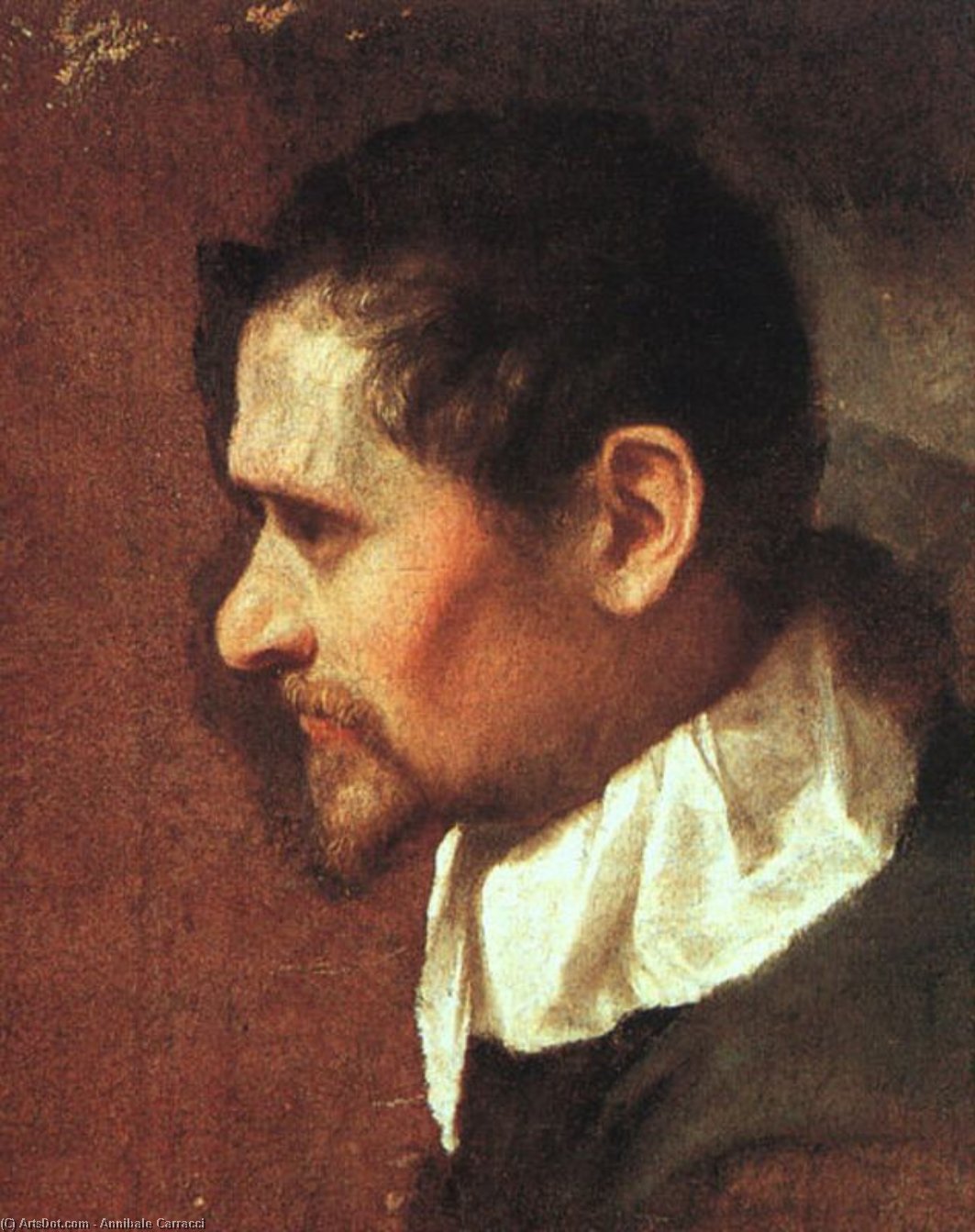
A Portrait of Reflection: Annibale Carracci’s Self-Portrait in Profile
The Bolognese Academy of the Desiderosi, founded in 1582 by Ludovico Gonzaga and his brothers, represented a bold assertion of artistic independence amidst the grandeur of Rome and Venice. Within this crucible of creativity resided Annibale Carracci—a young artist determined to elevate Italian painting beyond mere imitation and toward a more profound engagement with humanist ideals. His self-portrait in profile, completed around 1590, stands as a testament to this ambition and embodies the spirit of the era’s burgeoning naturalism.
- Subject Matter & Composition: Carracci meticulously rendered himself in a contemplative pose, gazing outwards with an expression that speaks volumes about introspection and observation. The simplicity of the composition—a single figure against a textured red wall—serves to heighten the focus on the artist’s gaze and internal state. This deliberate choice reflects the humanist preoccupation with self-awareness prevalent during the Renaissance.
- Style & Technique: Carracci's style aligns squarely with the High Renaissance tradition, drawing inspiration from Raphael and Michelangelo. However, unlike his predecessors who often idealized their subjects, Carracci opted for a realistic portrayal of human anatomy and musculature—a significant departure from Mannerist conventions that favored distortion and stylized forms. He employed oil paint on canvas, utilizing layering techniques to achieve remarkable tonal depth and luminosity. The subtle gradations of color capture the nuances of light and shadow, creating an illusionistic effect that convincingly simulates reality.
- Historical Context: Painted during a period of intellectual ferment in Bologna—a city grappling with papal authority and striving for cultural prestige—the self-portrait reflects the broader humanist movement’s emphasis on human dignity and rational inquiry. Carracci's Academy sought to revive classical ideals of beauty and proportion, rejecting the exaggerated grandeur of Mannerism and reaffirming the importance of observation and disegno (drawing) as foundational skills.
- Symbolism & Emotion: The red wall serves not merely as a backdrop but as a symbolic element—representing passion and vitality—contrasting with Carracci’s serene gaze. This juxtaposition underscores the artist's awareness of both inner turmoil and outward contemplation, conveying a sense of melancholy yet also unwavering resolve. The portrait invites viewers to consider questions of identity, perception, and the role of art in capturing the complexities of human experience.
- Emotional Impact: Carracci’s self-portrait transcends mere representation; it communicates an emotional resonance that continues to captivate audiences centuries later. The artist's gaze compels us to confront our own reflections on life, beauty, and the pursuit of knowledge—a timeless testament to the enduring power of humanist art.
This artwork exemplifies Carracci’s commitment to reviving classical ideals while simultaneously grounding his artistic vision in meticulous observation and skillful technique. Its understated elegance and profound psychological depth solidify its place as a cornerstone of Bolognese Renaissance painting and an inspiring exemplar for artists seeking to explore the depths of human consciousness.