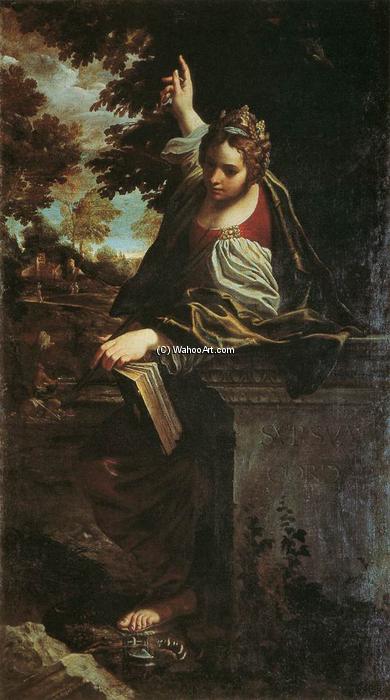
The painting
St Margaret by
Annibale Carracci is a masterpiece of the Baroque period, characterized by its dramatic use of light and shadow. Created in 1597, this oil on canvas artwork measures 239 x 134 cm and is housed at the
Chiesa di Santa Caterina della Rosa in Rome, Italy.
Artistic Style and Composition
The painting depicts
St Margaret with a contemplative expression, her head slightly tilted downwards towards a book that she holds open in her hands. Her attire consists of a richly detailed dress with a high collar, suggesting a setting of religious significance or nobility. The fabric of the dress is rendered with meticulous folds and textures, indicative of the artist's skill in capturing the nuances of clothing. The background features a landscape that includes trees and what appears to be a body of water, adding depth to the composition.
Artist and Historical Context
Annibale Carracci was an Italian painter and one of the leading figures of the Baroque period. He is known for his innovative style, which broke away from the exaggerated manner of Lombard Mannerism in favour of an early Baroque style, distinguished by clarity of form and content. To learn more about
Annibale Carracci and his works, visit /art/list/?Filter=8Y3VKQ-Annibale-Carracci-St-Margaret.
Key Features of the painting include:
- Dramatic use of light and shadow
- Meticulous attention to detail in the subject's attire
- A serene and contemplative atmosphere
The
Chiesa di Santa Caterina della Rosa museum, where the painting is housed, offers visitors an opportunity to explore the rich history and culture of Rome. For more information on the museum, visit /art/list/?Filter=A@D3BTV3-The-Museum-Chiesa-di-Santa-Caterina-della-Rosa-(Rome-Italy).
To discover more about
Annibale Carracci and his other works, such as
The Flight into Egypt, visit /art/list/?Filter=8Y3VKW-Annibale-Carracci-The-Flight-into-Egypt.
The captivating painting of
St Margaret by
Annibale Carracci is a testament to the artist's skill and innovative style, making it a significant work in the history of art.