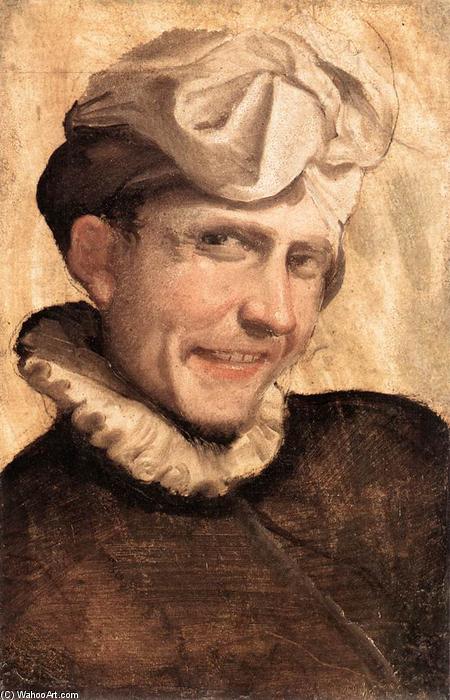
Annibale Carracci's 'The Laughing Youth' (1583) captures youthful joy with loose brushstrokes and vibrant colors, showcasing the artist’s Baroque style & a captivating portrait.
Eclectic blend of Florentine linear draftsmanship and Venetian color/atmospheric effects; revival of High Renaissance ideals.
Explore the Galleria Borghese in Rome! Discover masterpieces by Bernini, Raphael & Caravaggio within Villa Borghese's stunning Baroque setting. Book your timed tickets now!
The Enigmatic Joy of Annibale Carracci’s *The Laughing Youth*
Annibale Carracci's *The Laughing Youth*, painted in 1583, is more than just a portrait; it’s a fleeting capture of youthful exuberance, a miniature drama rendered with the nascent energy of the Baroque style. This small oil-on-card masterpiece, now housed within the Borghese Gallery in Rome, offers a captivating glimpse into the artistic world of Bologna and its burgeoning influence on Italian painting. Carracci, alongside his brother Agostino and cousin Ludovico, was part of a revolutionary group striving to break free from the constraints of Mannerism and embrace a more naturalistic, dynamic approach – an ambition vividly reflected in this remarkably intimate work. It’s a piece that whispers of playful secrets and the ephemeral nature of happiness, inviting viewers into a moment suspended in time.
A Study in Baroque Innovation
The painting's style is immediately recognizable as a pivotal point in the transition from Renaissance to Baroque. While rooted in the classical ideals championed by Raphael – evident in the carefully balanced composition and refined handling of drapery – *The Laughing Youth* introduces a crucial element of dynamism previously absent in Bolognese art. Carracci’s brushstrokes are loose, almost sketch-like, creating an impression of immediacy and spontaneity. He deliberately avoids meticulous detail, prioritizing capturing the essence of the subject's expression over photographic accuracy. This technique, combined with the subtle use of *chiaroscuro* – a dramatic contrast between light and shadow – imbues the portrait with a palpable sense of depth and movement. Notice how the light catches the curve of his cheekbone, highlighting his joyful grin, while the darker tones recede into the background, drawing our focus entirely to this single, captivating moment.
A Portrait of a Character: Symbolism and Context
The subject himself is shrouded in intriguing ambiguity. He’s often interpreted as representing a *buffone*, a comedic performer common in Italian theatre – specifically, a type known as a “clown” or jester. The elaborate hat, adorned with what appears to be lace, and the slightly awkward posture contribute to this reading. However, Carracci wasn't simply depicting a theatrical character; he was exploring the very nature of human expression, capturing a genuine burst of laughter that transcends any specific role. The painting’s creation coincided with the *Accademia degli Incamminati*, where the Carraccis were experimenting with new approaches to portraiture and composition. This period saw them moving away from static formality towards a more engaging and emotionally resonant style – a shift powerfully demonstrated in *The Laughing Youth*.
A Legacy of Innovation
*The Laughing Youth* stands as a testament to Annibale Carracci’s pioneering spirit and his pivotal role in shaping the Baroque aesthetic. It's a remarkably intimate work, demonstrating an early exploration of capturing fleeting emotions and human character – a technique that would profoundly influence generations of artists. The painting’s loose brushwork and dynamic composition foreshadowed the grand, theatrical frescoes that would later define Carracci’s career at Palazzo Farnese in Rome. Studying this small portrait offers a valuable insight into the evolution of Italian art and the enduring power of capturing a single, unforgettable moment of joy. It remains a captivating example of how a seemingly simple image can hold profound artistic significance.