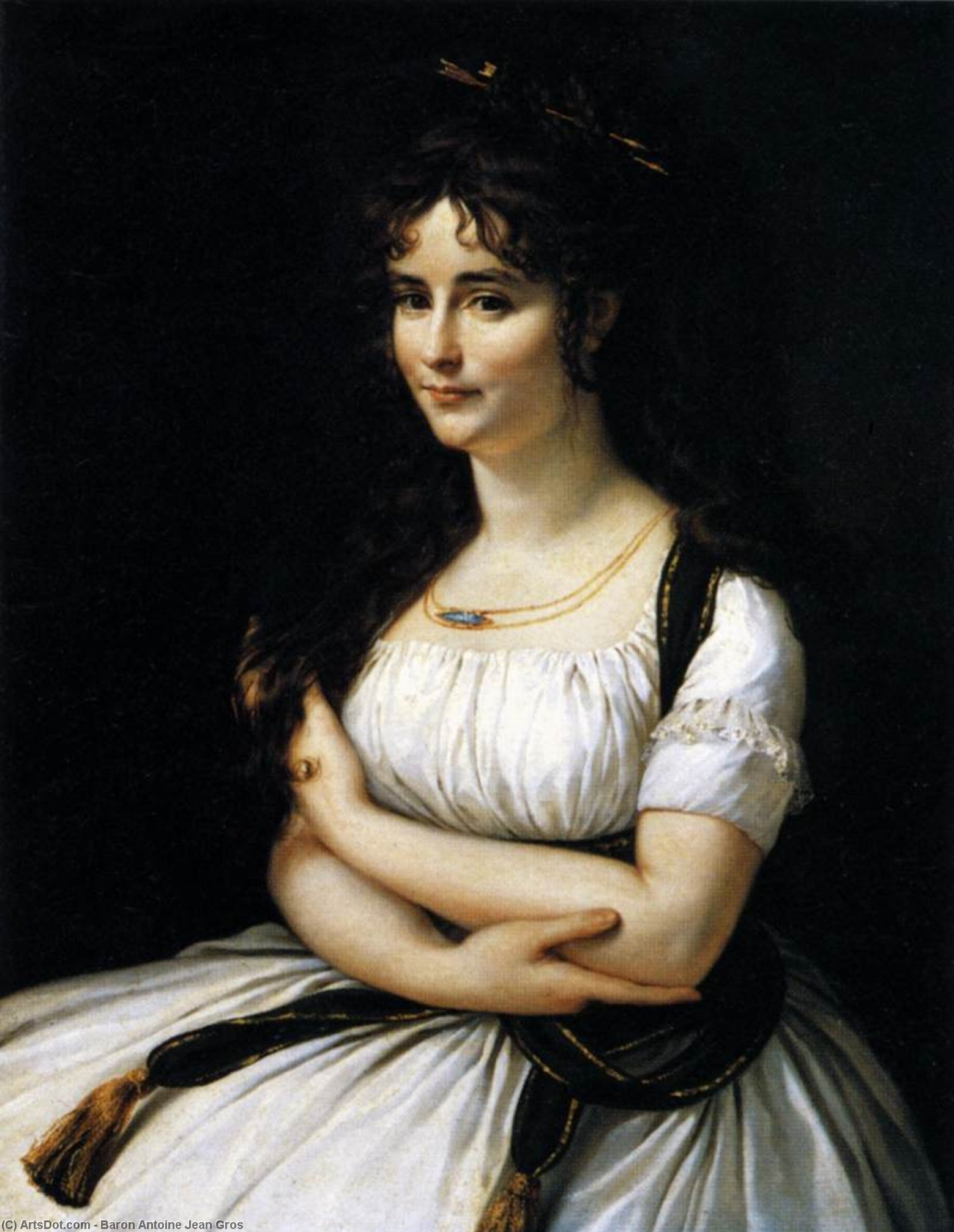
Madame Pasteur: A Romantic Portrait of Quiet Reflection
The Musée du Louvre in Paris stands as a testament to centuries of artistic achievement, yet few paintings command quite the same reverence as Baron Antoine Jean Gros’s “Madame Pasteur.” Completed in 1795-96 during the tumultuous years of the French Revolution, this oil on canvas masterpiece transcends mere representation; it embodies the spirit of Romanticism—a movement that prioritized emotion and dramatic visual impact over the rational formalism championed by Neoclassicism.
The Artist and His Style: Gros’s artistic lineage traced back to his parents, both accomplished artists themselves. His father, Jean-Antoine Gros, instilled in him a meticulous attention to detail and an appreciation for miniature painting—a craft that demanded precision and subtlety. This formative influence undoubtedly shaped Gros's approach to portraiture, favoring nuanced expressions and capturing fleeting moments of psychological depth.
Technical Mastery: Gros’s technique is characterized by loose brushstrokes—particularly evident in the depiction of Madame Pasteur’s hair and dress—that contrast sharply with the more defined lines used for her facial features and hands. This deliberate juxtaposition creates a palpable sense of texture and dynamism, mirroring the turbulent emotional landscape of the era. The artist skillfully employs chiaroscuro—the dramatic interplay between light and shadow—to sculpt Madame Pasteur's form and heighten the intensity of her gaze.
Historical Context: “Madame Pasteur” emerged against a backdrop of profound societal upheaval. Alexandre Madeleine Pasteur, the subject’s husband, was a prominent physician who championed scientific inquiry during the revolution. Gros’s decision to portray Madame Pasteur in this contemplative pose speaks volumes about the values of the time—a yearning for serenity amidst chaos and an acknowledgement of the importance of inner life.
Symbolism and Emotional Impact: The white dress adorned with lace symbolizes purity and grace, while the black sash serves as a visual anchor against the luminous background. Madame Pasteur’s serene expression invites viewers to contemplate her inner world—a subtle gesture of vulnerability and strength simultaneously. Gros's masterful rendering captures not just a likeness but also an essence—a moment frozen in time that resonates with enduring beauty.
Handmade Oil Painting Reproductions: For those seeking to experience the grandeur of “Madame Pasteur” firsthand, ArtsDot.com offers exceptional reproductions crafted by skilled artisans. Explore the exquisite detail and vibrant colors of this iconic artwork at https://ArtsDot.com. Discover other captivating works by Baron Antoine Jean Gros, including “Napoleon Bonaparte on the Battlefield of Eylau, 1807” and “Christine Boyer,” at https://ArtsDot.com.
To delve deeper into the Musée du Louvre’s collection and its influence on artistic history, visit https://en.wikipedia.org/wiki/Louvre.