A Primal Symphony in Bronze
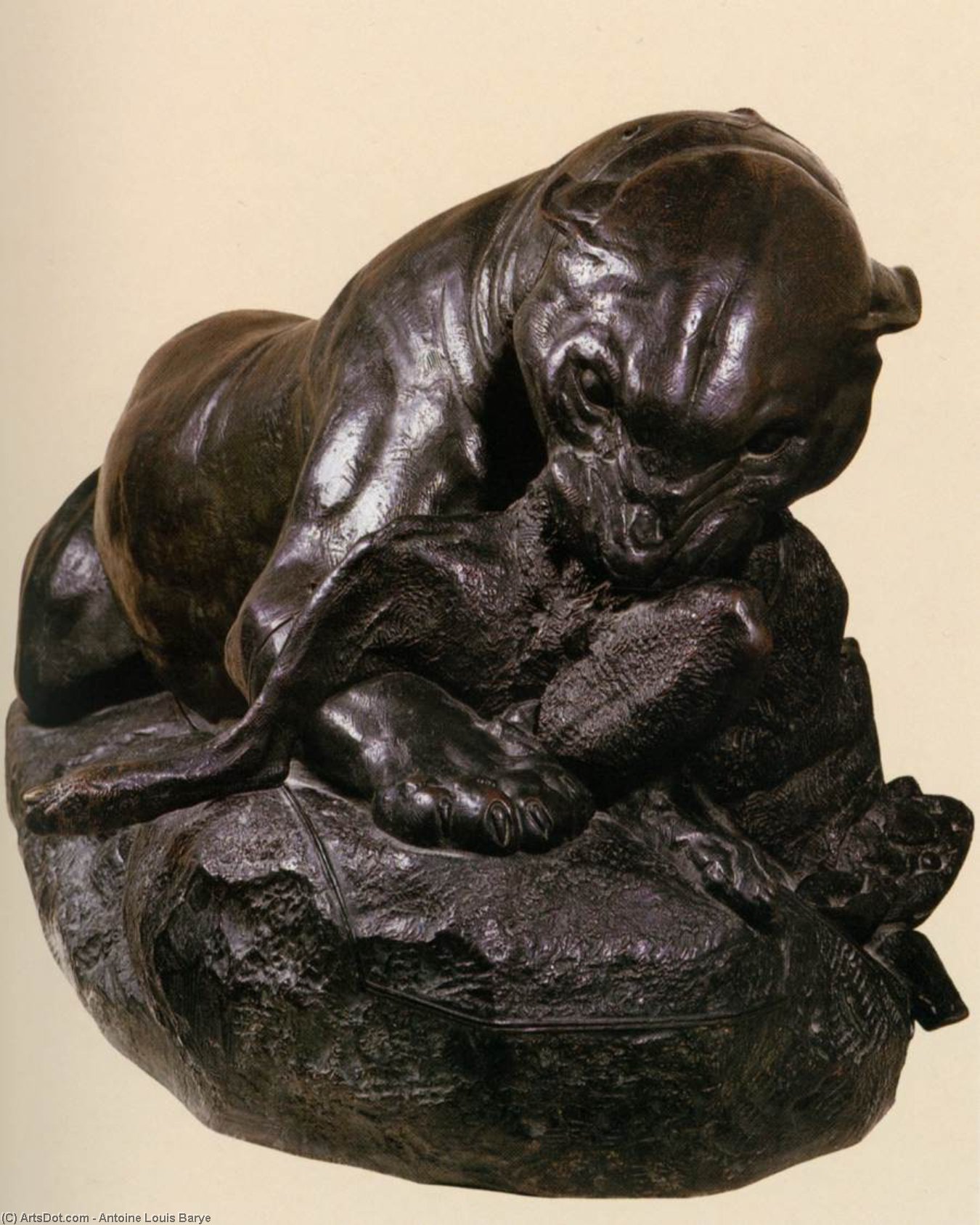
In the quiet stillness of a gallery, few works command the room with such visceral intensity as Antoine-Louis Barye’s Jaguar Devouring a Hare. This masterpiece is not merely a depiction of nature; it is a captured moment of raw, unbridered life and death. As one gazes upon the muscular tension of the jaguar, there is an undeniable sense of movement, as if the predator's heavy breathing and the frantic struggle of its prey are still echoing through the bronze. Barye, the legendary animalier, transcends simple representation to channel the very essence of the wild, inviting the viewer into a dramatic encounter that feels both ancient and immediate.
The sculpture serves as a profound study in contrast, where the heavy, powerful limbs of the great cat meet the delicate, vulnerable form of the hare. This juxtaposition creates a narrative tension that is central to the Romantic movement, where the sublime beauty of nature is often found in its most ferocious and untamed states. For the discerning collector or interior designer, this piece offers more than just aesthetic value; it provides a focal point of profound emotional depth, capable of anchoring a room with its commanding presence and storytelling power.
The Mastery of the Animalier
To understand the brilliance of this work, one must look to the hands that shaped it. Antoine-Louis Barye began his journey not in the lofty halls of academia, but as an apprentice goldsmith. This foundational training in fine metalwork gifted him with a meticulous eye for detail and an unparalleled command over texture. When he transitioned to sculpture, he brought this precision to the study of anatomy, meticulously observing the way muscle ripples under skin and how bone structure dictates form. In Jaguar Devouring a Hare, every sinew and every curve of the jaguar's powerful frame speaks to this scientific rigor blended with artistic passion.
Utilizing the ancient lost-wax casting method, Barye was able to translate his fluid clay models into enduring bronze. This technique allowed for an incredible level of complexity, capturing the subtle textures of fur and the grim reality of the hunt. The dark, rich patina of the bronze enhances the shadows within the sculpture, adding a layer of mystery and weight that makes the scene feel grounded in reality. It is this technical perfection that allows the work to bridge the gap between a scientific anatomical study and a high-art emotional epic.
A Timeless Addition to the Modern Collection
Beyond its historical significance as a cornerstone of 19th-century Romanticism, this sculpture remains strikingly relevant for contemporary spaces. In an era of digital abstraction, there is a profound longing for the tactile, the physical, and the real. A high-quality reproduction of Barye’s work brings this much-needed groundedness into a home or professional environment. Whether placed in a sunlit study, a sophisticated library, or as a centerpiece in a modern living area, the sculpture acts as a conversation piece that celebrates the enduring power of the natural world.
For those seeking to curate an atmosphere of strength, elegance, and intellectual curiosity, this work offers endless inspiration. It is a testament to the idea that art should not only decorate a space but also provoke thought and stir the soul. Owning a piece that captures such a legendary moment in art history allows one to surround themselves with the legacy of the "father of animal sculpture," ensuring that the primal energy of Barye’s vision continues to inspire generations to come.