A Window Into Rococo Splendor
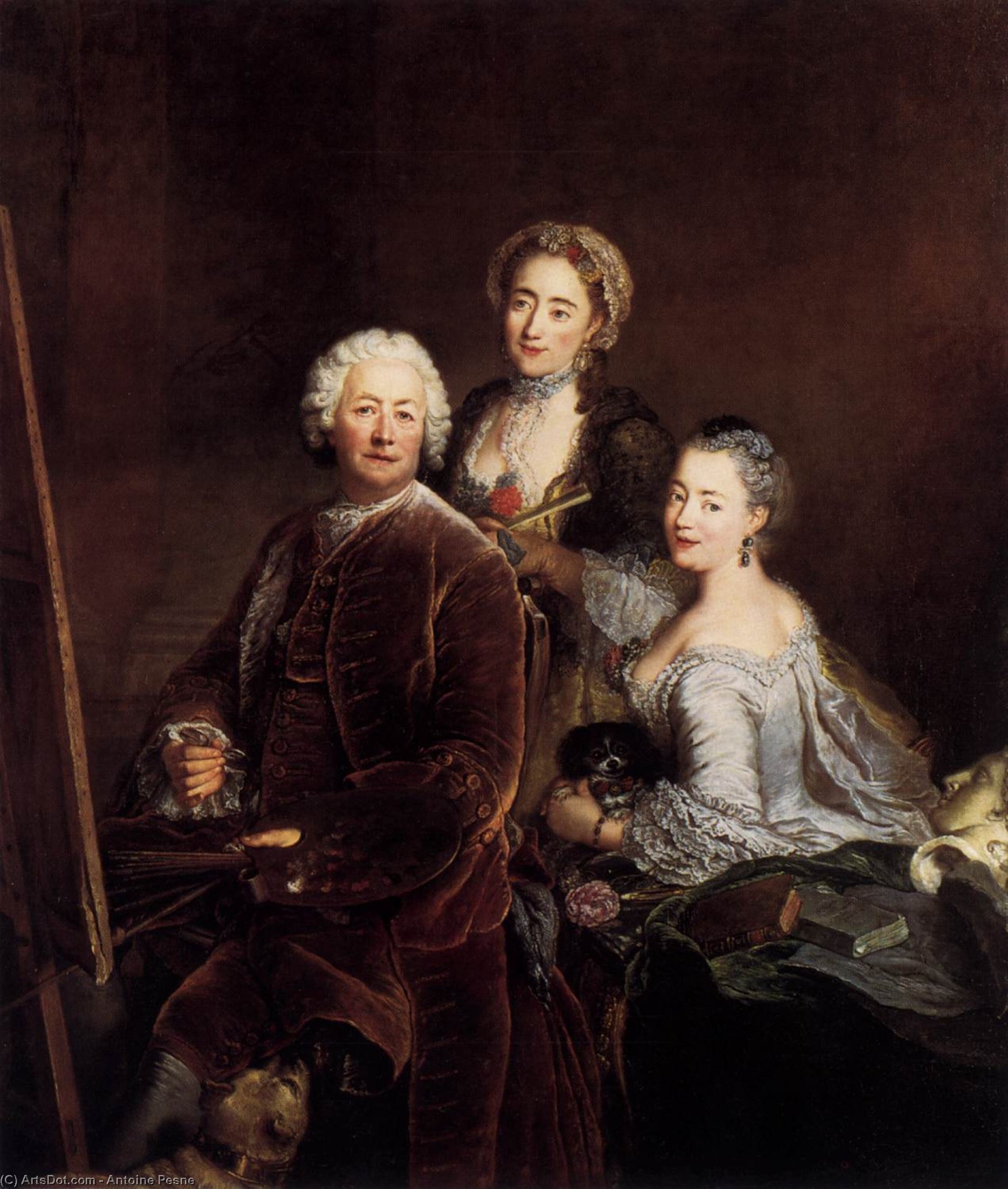
In the delicate dance of light and pastel hues, Antoine Pesne’s 1754 masterpiece, “Self-Portrait with Daughters,” emerges as a breathtaking window into the heart of the Rococo era. This is not merely a portrait of a man and his kin; it is a vibrant testament to an age defined by aristocratic elegance and a refined, almost ethereal sensibility. As one gazes upon the canvas, the rigid, heavy grandeur of the preceding Baroque period dissolves, replaced by an atmosphere of playful asymmetry and luminous grace. Pesne, a master of transition, captures the very essence of Prussia’s burgeoning cultural ambitions under Frederick II, presenting a scene that feels both intimately personal and grandly representative of the era's sophisticated social fabric.
The composition is a masterclass in balanced intimacy. Seated on the left, Pesne anchors the work, his presence commanding yet approachable. Behind him, his two daughters stand like graceful sentinels of beauty, their forms draped in the opulent fabrics that defined the high fashion of the mid-18th century. The artist’s technique is nothing short of sublime; through the use of delicate brushstrokes and luminous glazing, he creates a surface that seems to glow from within. The palette—a sophisticated arrangement of creams, soft pinks, and shimmering golds—evokes a sense of warmth and luxury, making the painting an ideal centerpiece for any collection seeking to evoke a sense of timeless prestige.
Symbolism and the Art of Identity
Beyond the surface beauty lies a profound layer of symbolic storytelling. Every element within the frame has been meticulously placed to communicate status, virtue, and the artist's own identity. The daughter on the right is adorned with a lustrous pearl necklace, a classic emblem of feminine virtue and high social standing that would have been instantly recognizable to contemporary viewers. Even the seemingly mundane objects—a sturdy chair in the foreground and a simple bowl near the center—serve a greater purpose. They act as grounding elements, anchoring these idealized figures within a domestic space and celebrating the sanctity and stability of family life.
<
p>In a subtle nod to his vocation, Pesne includes his artist's brushes in the lower corner, a quiet but powerful assertion of his professional identity. This detail transforms the work from a simple family portrait into a profound statement on the creator's role within society. As his gaze meets the viewer, an intimate connection is forged, inviting us to look past the silk and lace to discover the character and aspiration of the man behind the brush. For the discerning collector or interior designer, this painting offers more than just aesthetic pleasure; it provides a narrative depth that can transform a room into a space of historical reflection and emotional resonance.
A Timeless Addition to the Modern Interior
For those looking to infuse their living spaces with a sense of historical grandeur and soft, romantic light, a high-quality reproduction of this work offers unparalleled inspiration. The Rococo style, with its emphasis on beauty, grace, and light, possesses a unique ability to soften modern architectural lines and add a layer of sophisticated warmth to any decor. Whether placed in a sunlit gallery or a stately study, “Self-Portrait with Daughters” serves as a conversation piece that bridges the gap between the 18th-century Prussian court and the contemporary home.
Owning a reproduction of such caliber allows one to inhabit the splendor of the past. It is an invitation to surround oneself with the artistry of Antoine Pesne—a man who successfully navigated the complexities of royal patronage to create works that remain as captivating today as they were in 1754. This painting is not just an acquisition of art; it is an acquisition of atmosphere, bringing the luminous, gilded spirit of the Rococo into the heart of the modern world.