A Divine Radiance: The Soul of Mengs' Masterpiece
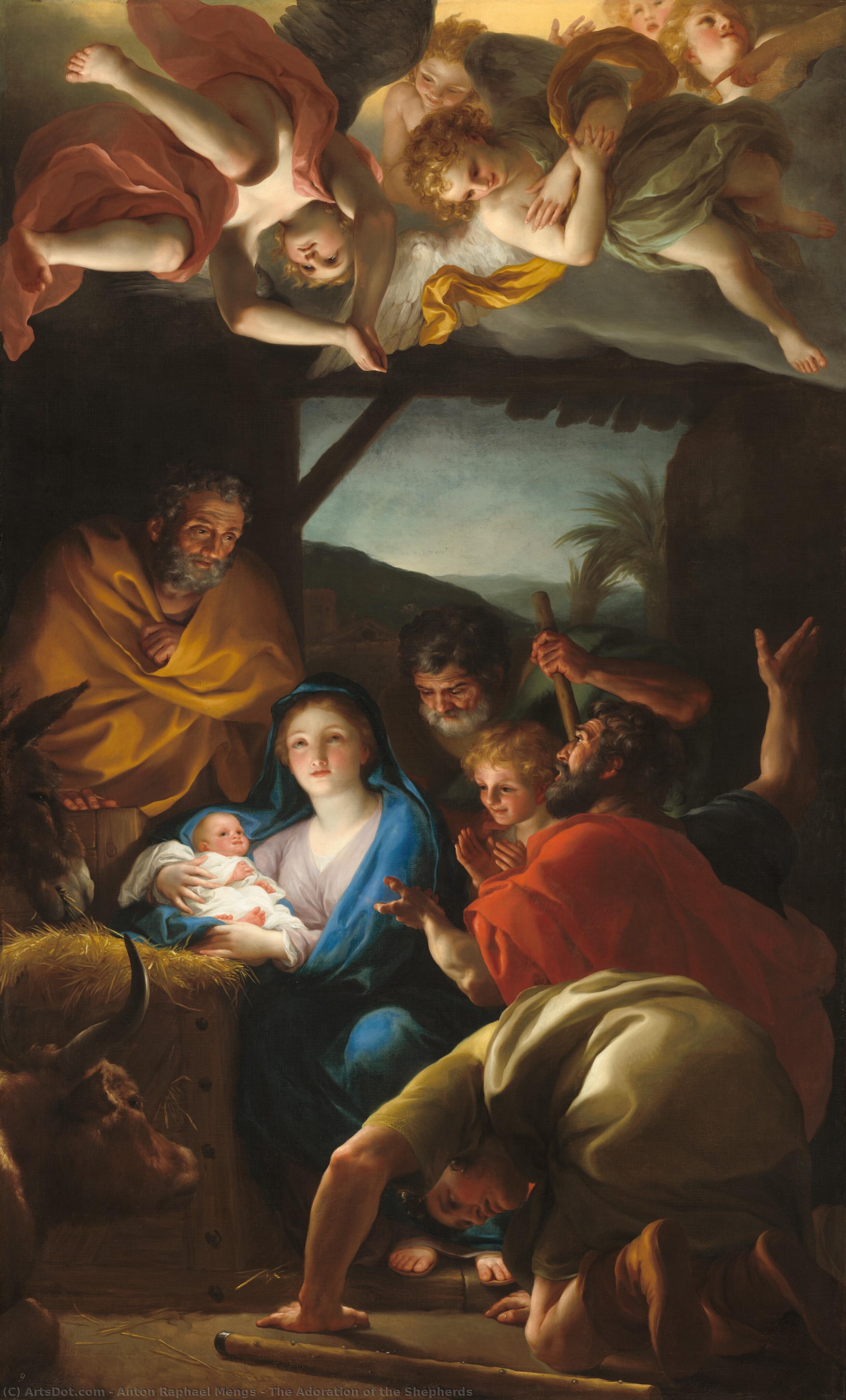
In the quiet, shadowed depths of a wooden stable, a singular, celestial light breaks through the gloom, illuminating a moment of profound spiritual intimacy. Anton Raphael Mengs’ The Adoration of the Shepherds is not merely a depiction of a biblical event; it is a breathtaking study in contrast and devotion. As the eye wanders through the composition, it is immediately drawn to the radiant glow emanating from the infant Jesus, whose very presence serves as the sun within this nocturnal landscape. This light spills across the faces of the gathered shepherds and the tender features of the Virgin Mary, casting long, dramatic shadows that evoke the heavy, emotional atmosphere of the late Baroque era transitioning into Neoclassical clarity.
The scene is a tapestry of human emotion and divine grace. Mary sits with a quiet, ethereal dignity, her azure-blue mantle and lavender robes providing a cool counterpoint to the warm, golden light of the manger. Her eyes, shimmering with the threat of tears, reflect a maternal tenderness that is both deeply human and divinely moved. Beside her, the weathered face of Joseph, with his furrowed brow and silver beard, offers a grounded, protective presence. The shepherds, ranging from a wide-eyed young boy to seasoned men with sun-tanned skin, bring a sense of earthly reality to the scene. Their varied gestures—bowing, kneeling, and gazing in silent awe—create a rhythmic movement that guides the viewer’s soul toward the center of the miracle.
Technique and the Transition of Eras
As an artist, Anton Raphael Mengs occupied a pivotal position in European art history, acting as a bridge between the ornate complexity of the Rococo and the disciplined purity of Neoclassicism. In this work, one can observe his masterful command of chiaroscuro, the dramatic interplay of light and dark that breathes life into the figures. The technique is remarkably precise; the textures of the coarse straw in the manger, the soft swaddling of the Christ child, and the heavy folds of the shepherds' garments are rendered with a tactile realism that invites the viewer to reach out and touch the scene.
The composition is meticulously balanced, utilizing a vertical format to draw the gaze upward from the earthly toil of the animals—the ox and donkey peering curiously from the shadows—toward the heavenly host. Above the stable, five angels float within a bank of soft, gray clouds, their blond curls and delicate wings suggesting a realm of pure light. This structural ascent from the dark, terrestrial floor to the luminous, celestial heights mirrors the spiritual journey of the shepherds themselves, making the painting an immersive experience of transcendence.
An Eternal Inspiration for the Modern Collector
For the discerning collector or interior designer, The Adoration of the Shepherds offers much more than historical significance; it provides a profound emotional anchor for any space. The painting’s palette—a sophisticated blend of deep pine greens, scarlet reds, and buttery yellows set against somber shadows—possesses a timeless elegance that complements both classical and contemporary settings. It is a piece that commands attention through its narrative depth rather than mere spectacle.
Integrating a high-quality reproduction of this masterpiece into a curated collection allows for the introduction of a sense of reverence and peace. Whether placed in a grand library, a quiet study, or as a focal point in a formal living area, the painting serves as a window into a moment of universal hope. It invites contemplation, sparking conversations about art history, faith, and the enduring power of light to pierce the darkness. To possess such a work is to hold a fragment of the Enlightenment’s most beautiful pursuit: the search for clarity, beauty, and truth.