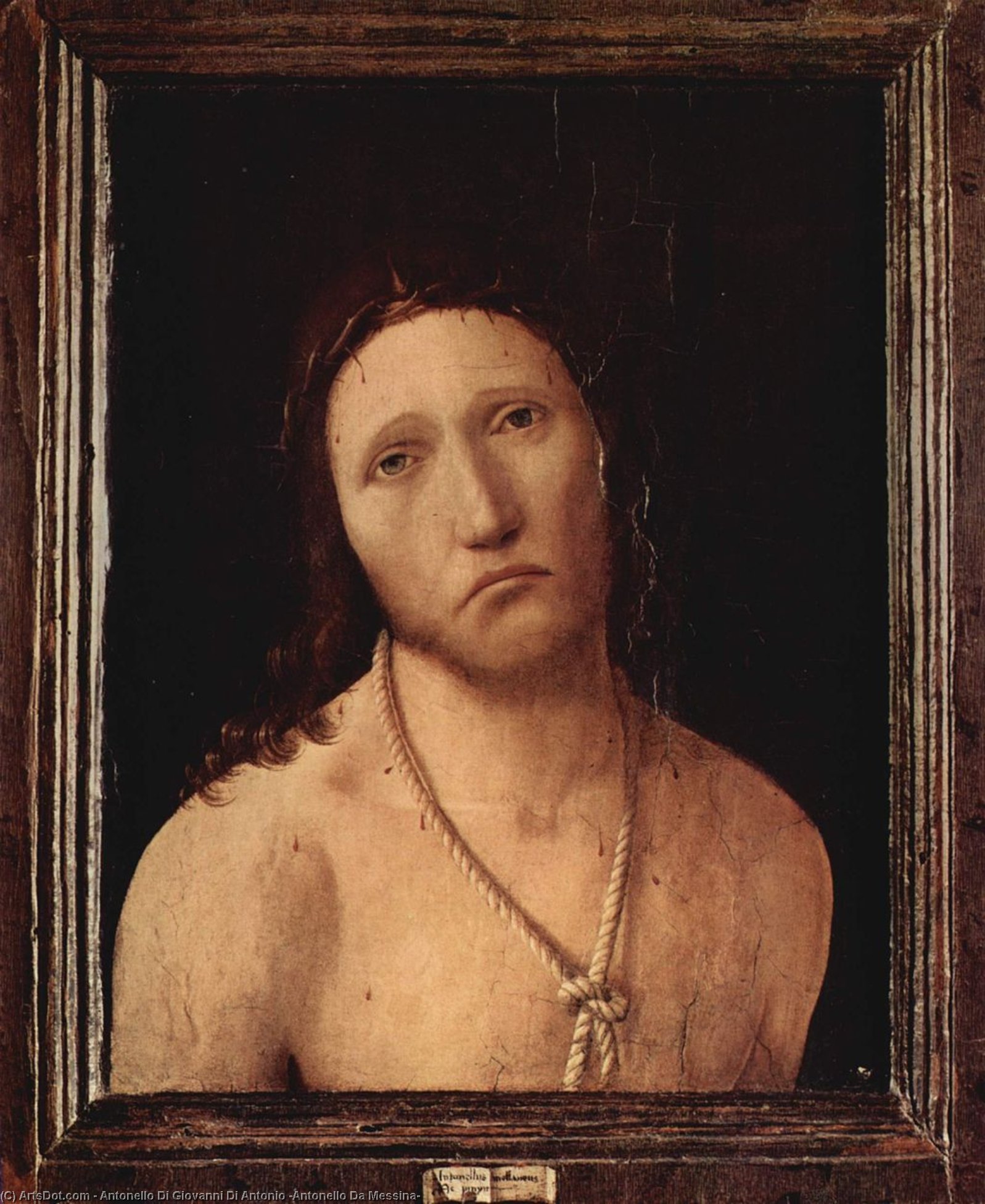
The
Ecce Homo painting by
Antonello Di Giovanni Di Antonio (Antonello Da Messina) is a captivating work of art that showcases the artist's skill and attention to detail. Created in 1474, this oil on panel painting measures 39 x 32 cm and is a prime example of
Early Renaissance art. The painting depicts a man with a sad expression on his face, wearing a necklace around his neck, conveying a sense of melancholy or introspection.
Artistic Style and Technique
Antonello Da Messina's artistic style is characterized by his use of
oil painting techniques, which were innovative for his time. His attention to detail and ability to capture the subject's features and expression are evident in the
Ecce Homo painting. The artist's use of chiaroscuro, a technique that uses strong contrasts between light and dark, adds depth and volume to the painting.
Similar Works by the Artist
Some of
Antonello Da Messina's other notable works include the
Portrait of a Man series, which can be found on
ArtsDot.com. These paintings showcase the artist's skill in capturing the subject's features and expression, and are prime examples of
Early Renaissance art.
Handmade oil paintings reproductions of the
Ecce Homo painting can be found on
ArtsDot.com, allowing art lovers to own a piece of history.
The
Ecce Homo painting by
Antonello Di Giovanni Di Antonio (Antonello Da Messina) is a masterpiece that continues to captivate art lovers to this day. Its beauty and significance are a testament to the artist's skill and innovative techniques, making it a must-see for anyone interested in
Early Renaissance art.