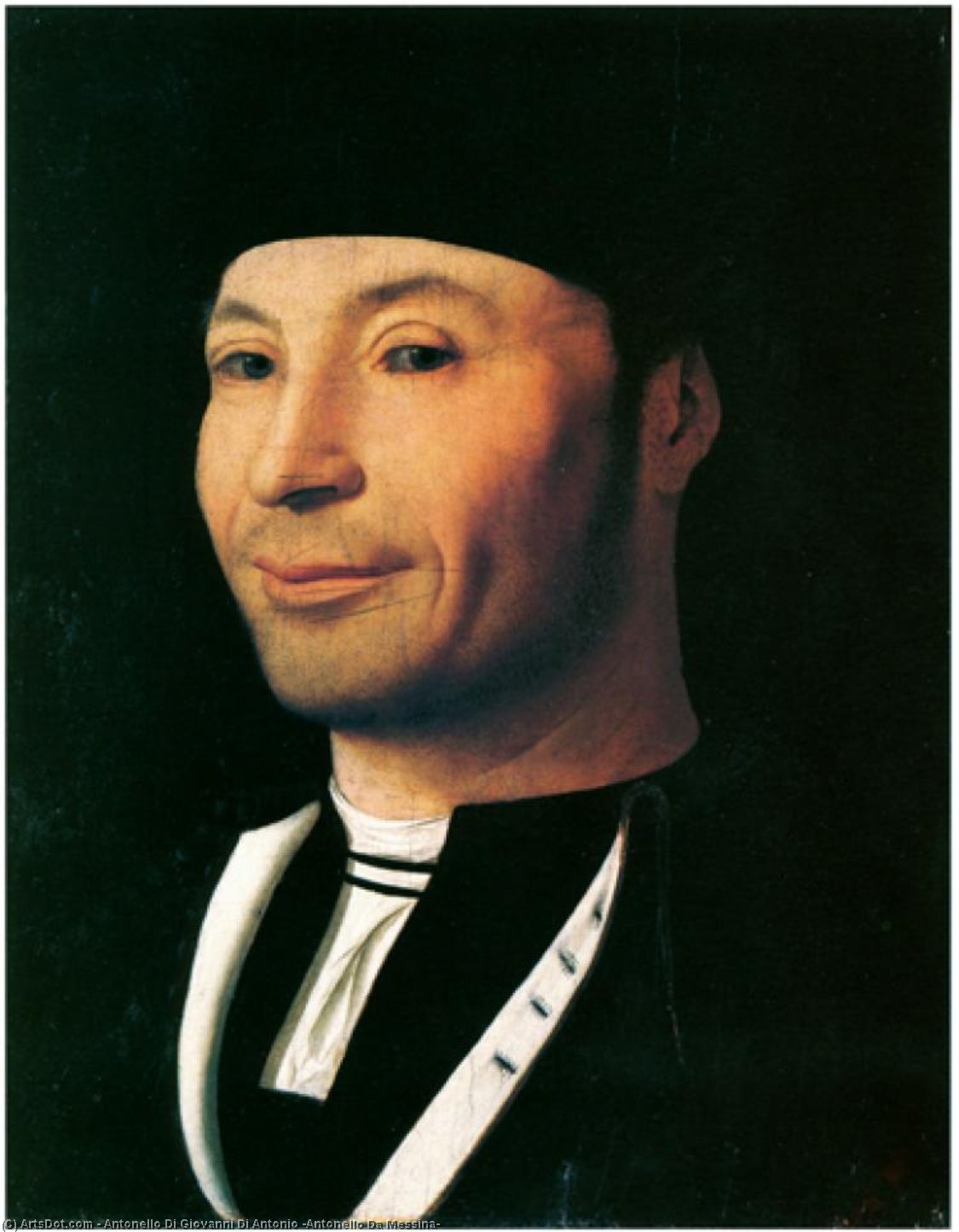
The
Portrait of a Man is a captivating oil on panel painting created by the renowned Italian artist
Antonello Di Giovanni Di Antonio (Antonello Da Messina) in 1475. This masterpiece is a prime example of Early Renaissance art, characterized by its use of oil paint and attention to detail. The painting measures 31 x 24 cm and is a testament to the artist's skill in capturing the essence of his subject.
Artistic Style and Influences
Antonello Da Messina's work was heavily influenced by Northern European artists, such as
Van Eyck, who pioneered the use of oil paint. This is evident in the
Portrait of a Man, which features a dark background and strong lighting, drawing attention to the subject's face. The artist's use of oil paint allowed for a level of depth and realism that was previously unseen in Italian art.
Key Features of the painting include:
- The subject's intense gaze, which seems to engage the viewer directly
- The intricate details of the subject's attire, including his robe and hat
- The use of chiaroscuro, which creates a sense of volume and depth in the painting
Provenance and Exhibitions
The
Portrait of a Man has been exhibited in various museums, including the
McMaster Museum of Art in Hamilton, Canada. It is also featured on
ArtsDot.com, where art enthusiasts can learn more about the painting and even purchase a handmade oil reproduction. For more information on
Antonello Da Messina and his works, visit
Wikipedia.
The
Portrait of a Man is a significant work in the history of art, showcasing
Antonello Da Messina's innovative use of oil paint and his ability to capture the essence of his subject. As a masterpiece of Early Renaissance art, it continues to inspire and fascinate art lovers to this day.