Discover Antonio da Correggio (1489-1534), a High Renaissance master! Explore his innovative perspective, sensuality & influence on Baroque art. See 'Leda and the Swan'!
Explore Vienna's artistic soul at the Kunsthistorisches Museum! Discover masterpieces by Raphael, Rembrandt, Vermeer & ancient treasures from Egypt to Rome.
Ganymede: A Symphony of Light and Myth
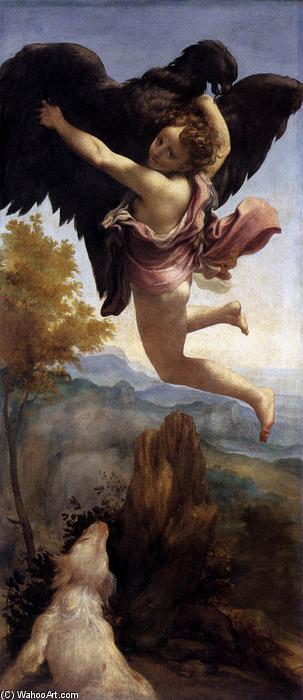
Antonio Allegri da Correggio’s “Ganymede,” completed in 1531, transcends mere depiction; it embodies the zenith of High Renaissance artistic ambition—a breathtaking achievement that simultaneously honors classical ideals and heralds the burgeoning drama of the Baroque. Housed within the Kunsthistorisches Museum in Vienna, this monumental oil on canvas (measuring 163 x 70 cm) isn’t simply a representation of Greek mythology; it's an immersive experience crafted with meticulous attention to perspective, color theory, and emotional resonance.
The Narrative Echoes of Homer
The painting recounts the legendary abduction of Ganymede, Zeus’s favorite mortal youth, by the eagle god—a tale recounted by Homer in *Iliad* and *Odyssey*. Correggio captures this pivotal moment with remarkable sensitivity, portraying Ganymede as a young man gazing downwards with serene composure. He is being borne aloft by Zeus's eagle, whose outstretched tongue delicately brushes against Ganymede’s arm – a gesture laden with symbolism representing divine favor and the transformative power of celestial grace. This posture speaks to themes of innocence, vulnerability, and acceptance of fate—elements deeply rooted in humanist philosophy prevalent during Correggio’s time.
A Masterclass in Illusionistic Technique
Correggio's genius lies primarily in his masterful manipulation of *trompe l'oeil*, or illusionistic technique. The artist employs a radical pyramidal perspective that draws the viewer into the scene, creating an astonishing sense of depth and spatial realism. Walls appear to recede into infinity, blurring the boundaries between painted surface and actual space—a daring innovation that departed significantly from earlier Renaissance conventions. Correggio’s use of chiaroscuro – dramatic contrasts between light and shadow – further enhances this illusionistic effect, sculpting form with subtle gradations of tone and emphasizing the ethereal quality of the figures. The soft, rounded contours of Ganymede and Zeus contribute to a palpable feeling of life-like presence.
Color Palette and Atmospheric Mood
The painting’s color palette is dominated by earthy hues—warm browns and ochres—which provide a grounding counterpoint to the luminous azure sky and brilliant white clouds. Correggio skillfully employs atmospheric perspective, subtly diminishing colors as they recede into the distance, reinforcing the illusion of depth. This deliberate choice contributes to an overall mood of tranquility and contemplation – mirroring the idealized beauty of classical art while hinting at the emotional complexity characteristic of Baroque sensibilities.
Influence Beyond Vienna’s Walls
Correggio's groundbreaking style profoundly impacted subsequent artists, notably Peter Paul Rubens, who himself created “The Abduction of Ganymede.” This shared fascination with mythological narratives and dramatic visual storytelling solidified Correggio’s legacy as a pivotal figure in the transition from Renaissance to Baroque art. To delve deeper into Correggio’s artistic vision and explore his other celebrated works, visit ArtsDot.com for detailed reproductions and scholarly analyses. For further exploration of this iconic masterpiece, consult the Kunsthistorisches Museum website or Wikipedia's entry on Ganymede Abducted by the Eagle.