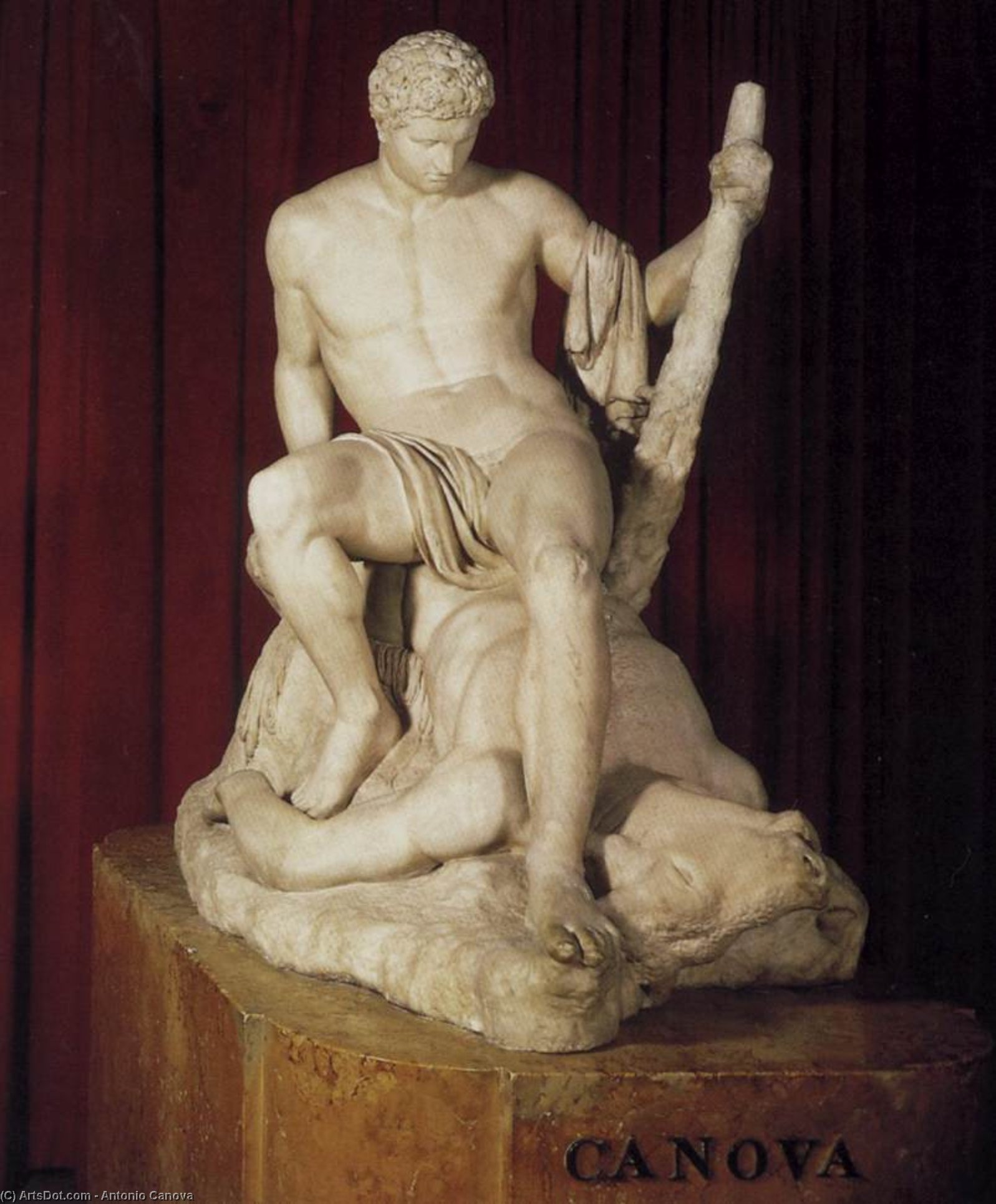
Theseus and the Minotaur: A Triumph of Form and Narrative
Antonio Canova’s “Theseus and the Minotaur,” completed in 1782, stands as one of Neoclassical sculpture's most enduring achievements. More than just a depiction of mythic heroism, it embodies the movement’s core principles—classical idealism tempered with palpable emotion—captivating viewers centuries later.
- Subject Matter: The statue portrays Theseus triumphantly seated atop the lifeless Minotaur, symbolizing victory over primal terror and embodying Athenian strength.
- Style: Canova’s meticulous craftsmanship adheres to the tenets of Neoclassicism, rejecting the ornate excesses of Baroque art in favor of austere beauty and precise anatomical detail. The sculpture reflects the influence of Greek ideals of proportion and harmony.
- Technique: Executed in Carrara marble—a material prized for its purity and luminosity—the statue showcases Canova’s unparalleled skill in sculpting with stone. His painstaking carving captures every muscle fiber and vein, demonstrating an astonishing mastery of form.
The sculpture's genesis lies within the intellectual fervor of Enlightenment Rome. Commissioned by Girolamo Zulian, the Venetian ambassador, it was conceived as a testament to Athenian virtue and resilience—a deliberate counterpoint to the perceived decadence of contemporary European courts. Canova’s patron recognized his genius, providing him with a studio and fostering an environment conducive to artistic innovation.
Beyond its formal brilliance, “Theseus and the Minotaur” resonates deeply with symbolic significance. The Minotaur represents chaos and barbarism—the antithesis of civilized order—while Theseus embodies courage, intellect, and divine favor. The posture of Theseus—seated confidently atop his vanquished foe—communicates a profound sense of triumph and affirms humanity’s capacity for overcoming adversity. Canova's masterful rendering elevates the mythic narrative into an unforgettable visual experience.
- Historical Context: Created during the Enlightenment, the sculpture reflects the movement’s fascination with classical antiquity and its belief in reason as a guiding principle.
- Symbolism: The statue embodies ideals of heroism, virtue, and triumph over evil—themes central to Neoclassical thought.
- Emotional Impact: Viewers experience a visceral response to the sculpture’s depiction of struggle and victory—a testament to Canova's ability to convey profound emotion through stone.
Today, housed in the Victoria and Albert Museum in London, “Theseus and the Minotaur” continues to inspire admiration for its artistic excellence and intellectual depth. Its enduring legacy testifies to Antonio Canova’s unparalleled contribution to Western art—a masterpiece that transcends time and captivates audiences with its timeless beauty.