A Titan’s Grip: The Visceral Struggle of Hercules and Antaeus
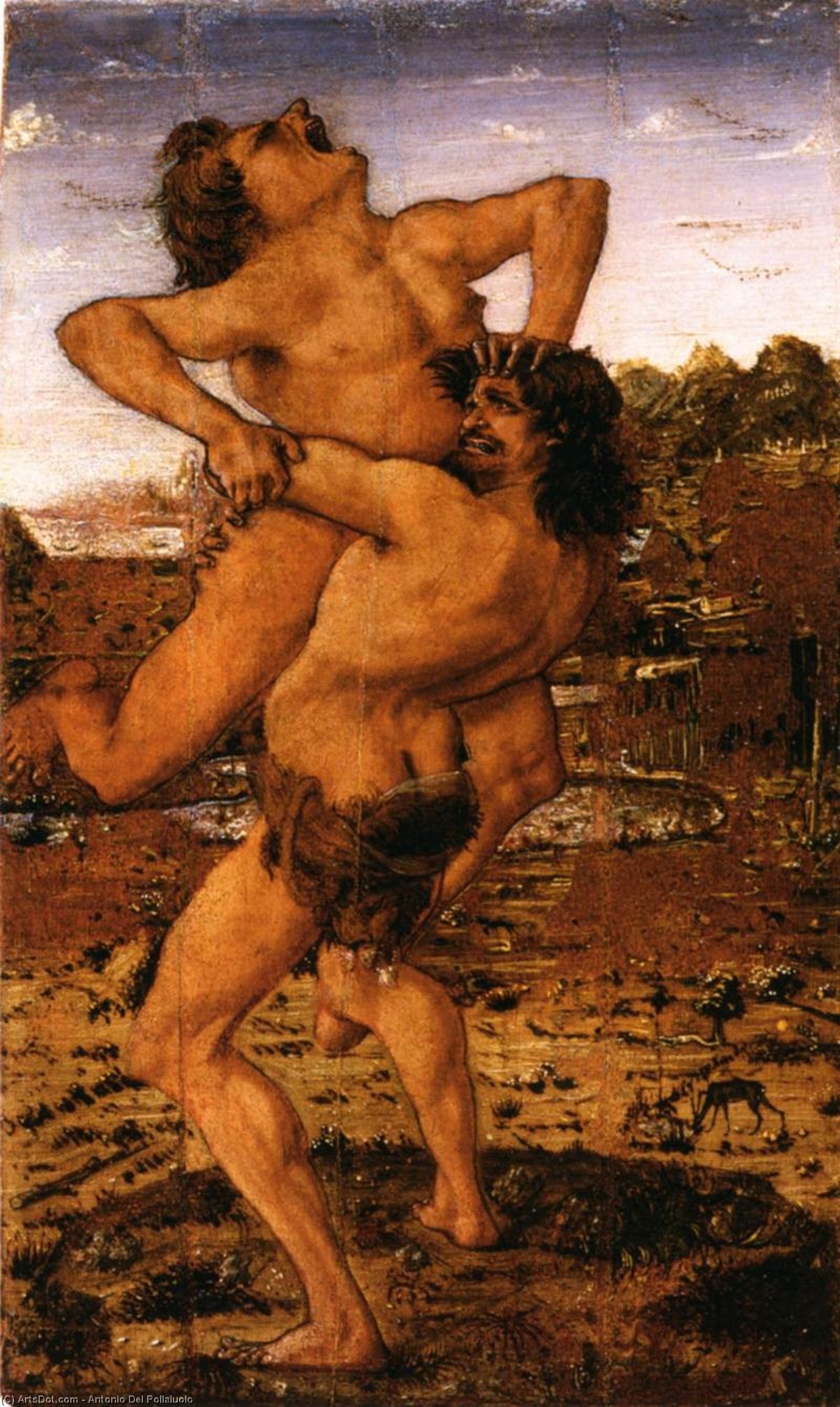
In the quiet intimacy of a mere sixteen by nine centimeters, Antonio del Pollaiuolo captures an explosion of primordial violence and heroic resolve. Hercules and Antaeus is not merely a painting; it is a concentrated burst of Florentine Renaissance energy, frozen in the delicate medium of egg tempera on wood. The scene depicts the legendary confrontation between the mighty Hercules and the giant Antaeus, a son of Gaia whose strength was replenished by every touch of the earth. As the hero lifts his adversary from the ground, he does more than execute a physical maneuver; he orchestrates a moment of profound vulnerability, severing the giant's connection to his source of power. This diminutive panel vibrates with a tension that belies its small scale, inviting the viewer into a world where myth and muscle collide.
The artistry of Pollaiuolo is on full display through his unparalleled command of human anatomy. Having been trained in the meticulous traditions of goldsmithing, the artist brings a jeweler's precision to the rendering of every sinew, tendon, and bulging muscle. The technique of egg tempera allows for a luminous, almost translucent quality that highlights the strain of the combatants. One can almost feel the heat of the struggle and the grit of the dirt field beneath them. The composition is masterfully balanced, with the central figures dominating the frame, yet softened by the presence of distant trees and the delicate movement of birds in the sky, which provide a serene, naturalistic counterpoint to the brutal human drama unfolding below.
Renaissance Humanism and the Legacy of Power
To understand this work is to understand the heart of 15th-century Florence. Created during the illustrious reign of Lorenzo de' Medici, the painting reflects the era's deep fascination with classical antiquity and the humanist pursuit of anatomical truth. The provenance of this piece—originally adorning the Sala Grande of the Palazzo Medici Riccardi—speaks to its intended purpose: to impress and intimidate. In the halls of the Medici, such depictions of Hercules served as potent metaphors for the strength and stability of the Florentine state. The struggle between the hero and the giant becomes a symbol of order overcoming chaos, and intellect overcoming brute, ungrounded force.
For the discerning collector or interior designer, a reproduction of this masterpiece offers more than just a decorative element; it provides a focal point of intellectual and aesthetic depth. The painting’s ability to command attention through its intricate detail and emotional intensity makes it an ideal centerpiece for spaces that value historical narrative and classical elegance. Whether placed in a study filled with leather-bound volumes or a modern gallery setting, Hercules and Antaeus serves as a timeless testament to the enduring power of the human spirit and the transformative beauty of Renaissance mastery.