António Teixeira Carneiro Júnior’s “Untitled” – A Window into Portuguese Expressionism
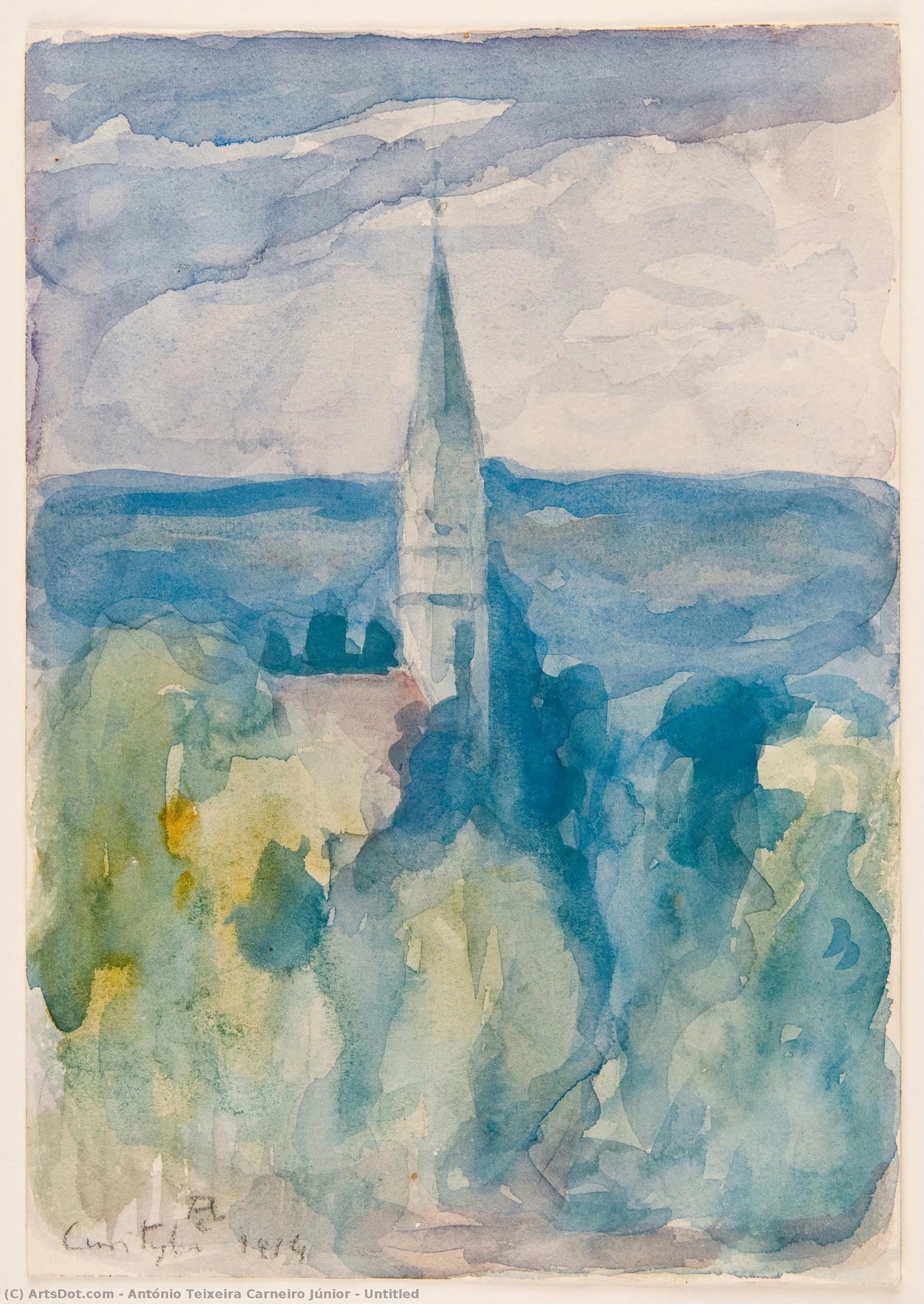
The year is 1926. Lisbon sprawls beneath a hazy, impressionistic sky, captured with remarkable sensitivity by António Teixeira Carneiro Júnior in this evocative painting, simply titled "Untitled." More than just a depiction of the city’s skyline, it's a profound meditation on memory, loss, and the enduring spirit of Portugal – a key work that reveals the heart of Portuguese Expressionism during a period of intense social and artistic transformation. Carneiro, born in Amarante in 1872 and tragically orphaned at seven, channeled his early hardships into a deeply personal and emotionally charged artistic vision, one profoundly shaped by his formative years spent within the walls of the Santa Casa da Misericórdia orphanage in Porto.
A Painter’s Journey: From Orphanage to Parisian Influence
Carneiro's early life was marked by profound absence and sorrow, experiences that would irrevocably inform his artistic trajectory. His placement at the orphanage provided a crucial foundation – not just shelter but also an introduction to drawing through the meticulous copying of religious illustrations. This initial training ignited a nascent talent, one nurtured by a dedicated teacher and director who recognized his potential. Later, he enrolled in the Escola Superior de Belas-Artes do Porto, studying under João Marques de Oliveira before transitioning to sculpture with António Soares dos Reis, ultimately returning to painting after Reis’ untimely death. A pivotal moment arrived when Carneiro received a scholarship to study in Paris, an experience that exposed him to the vibrant currents of European artistic innovation – particularly the Symbolist movement and the burgeoning Expressionist styles gaining traction at the time. The influence of Jean-Paul Laurens and Jean-Joseph Benjamin-Constant is palpable in his brushwork and compositional choices, demonstrating a deliberate departure from the prevailing naturalism of Portuguese art.
Technique and Style: A Symphony of Color and Emotion
“Untitled” exemplifies Carneiro’s distinctive style – characterized by loose, expressive brushstrokes, a rich palette dominated by blues, ochres, and muted greens, and a masterful use of light and shadow. He employed a technique reminiscent of the Impressionists, yet imbued with a distinctly emotional depth. The buildings are rendered with a sense of fluidity and movement, almost dissolving into the atmospheric haze. Notice the subtle shifts in color that evoke the changing light of the day – a key element of his approach to capturing the essence of Lisbon’s urban landscape. The composition is carefully balanced, drawing the eye towards the distant church steeple, a symbol of faith and resilience amidst the city's complexities. The painting isn’t merely a representation; it’s an *interpretation*—a subjective experience translated onto canvas.
Symbolism and the Weight of Memory
Beyond its purely visual qualities, “Untitled” resonates with layers of symbolic meaning. The hazy atmosphere can be interpreted as representing the fog of memory, obscuring details but retaining a powerful emotional core. The church steeple, a recurring motif in Carneiro’s work, symbolizes faith and hope—a beacon amidst the uncertainties of life. Considering Carneiro's own difficult childhood, marked by abandonment and loss, it is reasonable to suggest that this painting reflects his personal struggle with grief and longing for connection. The solitary figure glimpsed near the center of the composition could be seen as a representation of the artist himself, contemplating the city’s past and perhaps searching for solace within its ancient walls. The overall effect is one of quiet contemplation—a poignant reminder of the enduring power of memory and the human spirit.
A Legacy Preserved: Reproductions and Artistic Inspiration
Today, “Untitled” stands as a testament to António Teixeira Carneiro Júnior’s artistic genius. Reproductions offer a remarkable opportunity to experience the depth and emotion of this significant work firsthand. Whether adorning a contemporary interior or serving as a focal point in a collection of Portuguese art, this painting continues to captivate viewers with its evocative beauty and profound emotional resonance. It's more than just a depiction of Lisbon; it’s a window into the soul of a nation—a poignant reflection on memory, loss, and the enduring power of artistic expression.