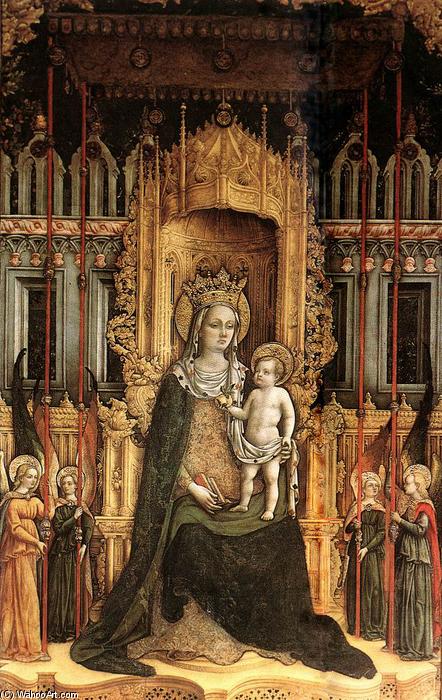
A Vision of Faith Illuminated: Exploring Antonio Vivarini’s Triptych
The year is 1446. Murano, Venice – a crucible of artistic innovation and religious fervor – births Fra Angelico’s masterpiece, “Triptych (detail).” This monumental artwork transcends mere visual representation; it embodies the spiritual essence of its time, capturing the profound devotion felt by the Dominican Order and offering a glimpse into their idealized vision of paradise. Examining this triptych reveals not only masterful technique but also layers of symbolism that continue to captivate audiences centuries later.
- Subject Matter: The central panel depicts Saint Ambrose and Saint Augustine, revered figures representing wisdom and piety within Christian theology. Their serene postures convey a palpable sense of contemplation, mirroring the contemplative life of monastic devotion.
- Style: Vivarini’s style aligns with the Florentine Gothic tradition, characterized by its delicate ornamentation and luminous coloration. The artist skillfully employs geometric forms to create depth and perspective, reflecting the humanist ideals prevalent during the Renaissance.
- Technique: Executed in tempera on wood panel, Vivarini utilizes a glazing technique—applying thin layers of translucent pigment over opaque undercoats—to achieve unparalleled brilliance and luminosity. This meticulous process ensures that every brushstroke radiates with ethereal light, enhancing the spiritual atmosphere of the artwork.
The historical context surrounding “Triptych (detail)” is inextricably linked to the burgeoning humanist movement in Florence. Artists like Vivarini sought inspiration from classical antiquity, incorporating elements of proportion and harmony into their compositions. Simultaneously, they remained deeply rooted in Christian faith, striving to depict sacred subjects with reverence and accuracy. The triptych served as a focal point for liturgical worship, intended to inspire piety and guide the faithful toward spiritual enlightenment.
Symbolism: Beyond its depiction of saints, “Triptych (detail)” is replete with symbolic imagery. The overarching structure represents the cosmos—the heavens above and the earth below—reflecting Christian cosmology. Furthermore, the use of gold leaf – a hallmark of Venetian art – symbolizes divine grace and illuminates the spiritual significance of the scene. The careful arrangement of figures and drapery contributes to an overall impression of solemn beauty and conveys the profound yearning for transcendence that characterizes monastic spirituality.
Emotional Impact: Viewing “Triptych (detail)” evokes a powerful emotional response—a feeling of tranquility, awe, and spiritual contemplation. Vivarini’s masterful rendering captures not only the visual splendor of his subject but also its intangible essence. The luminous colors and refined craftsmanship invite viewers to immerse themselves in a realm of serene beauty, prompting reflection on themes of faith, virtue, and divine grace. It stands as an enduring testament to the transformative power of art—a reminder that true artistry can elevate the human spirit and illuminate the path toward spiritual fulfillment.
The painting is part of a larger triptych executed by Vivarini and his brother-in-law Giovanni Fantuzzi, commissioned for the church of San Giorgio Maggiore in Venice. This monumental artwork exemplifies the artistic achievements of the Venetian Renaissance and continues to inspire admiration for its beauty and spiritual depth.