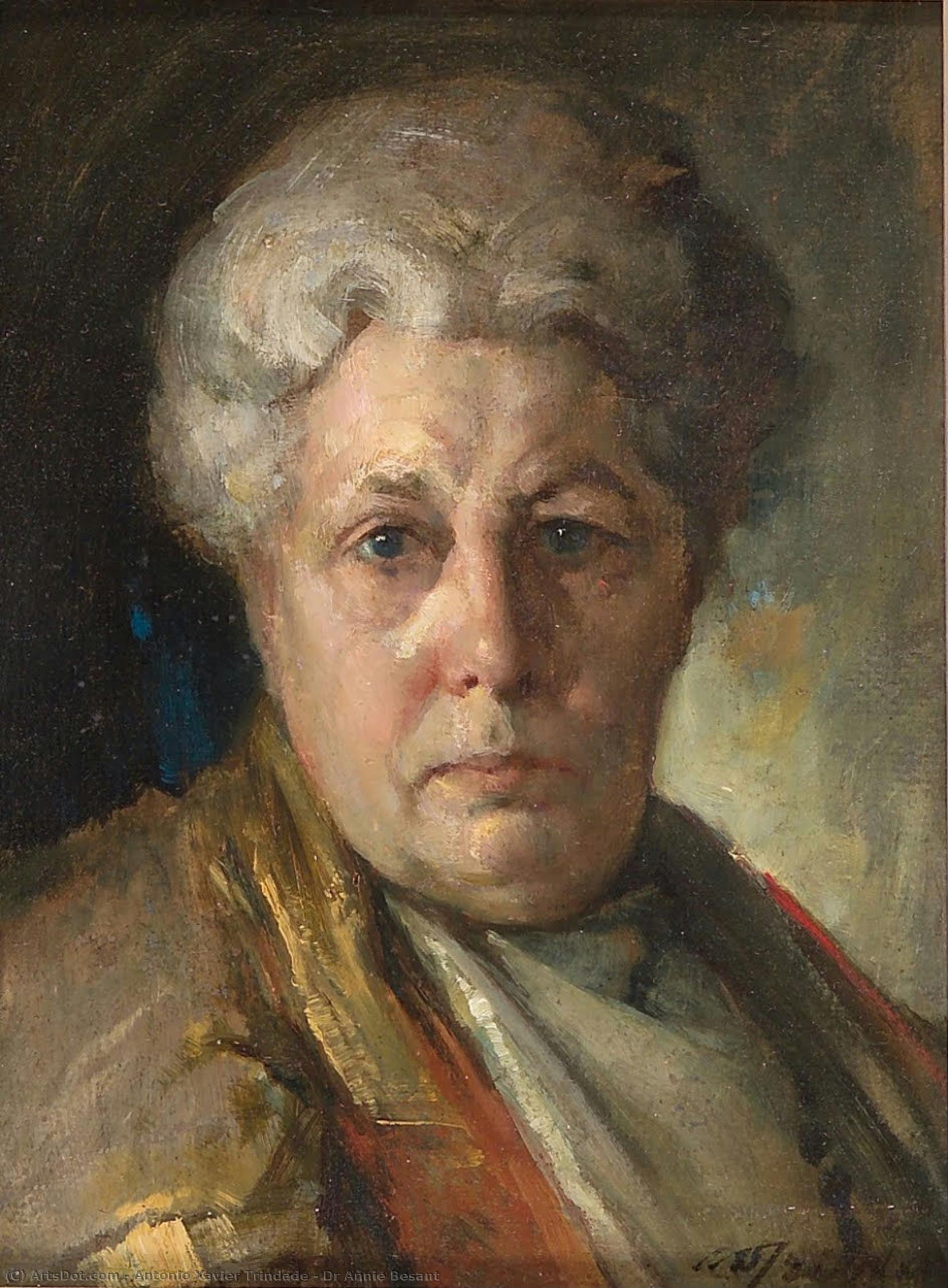
A Portrait Steeped in Tradition: António Xavier Trindade’s Reverent Depiction of Annie Besant
Annie Besant (1847-1933) remains an enduring figure in the annals of Indian history – a woman whose unwavering conviction and pioneering spirit challenged colonial authority and championed social reform. António Xavier Trindade, a master of the Bombay School style, captured this formidable intellect with remarkable sensitivity in his 1927 portrait, offering viewers a glimpse beyond mere likeness into Besant’s inner life and moral fortitude. This oil painting transcends simple representation; it embodies the spirit of its time and speaks to universal themes of dignity, contemplation, and quiet strength.
- Bombay School Style: Trindade's work exemplifies the Bombay School, a distinctive artistic movement that flourished in Goa during the early 20th century. Characterized by muted palettes dominated by browns, tans, and grays—a deliberate choice reflecting the somber mood of the era—the style prioritizes tonal harmony and subtle gradations of color over vibrant hues.
- Impasto Technique: The textured surface achieved through impasto – applying paint thickly onto the canvas – is immediately apparent. Visible brushstrokes ripple across Besant’s face and drape elegantly over her clothing, conveying a palpable sense of physicality and immediacy. This technique lends depth and dynamism to the composition, resisting the static conventions of academic portraiture.
- Lighting & Composition: Strategic lighting plays a crucial role in shaping the artwork's emotional impact. Light emanates from the left side of the frame, illuminating Besant’s face with a warm glow—a deliberate compositional decision that draws attention to her gaze and reinforces her presence as the central subject. The shallow depth of field further enhances this focus, creating an intimate atmosphere conducive to contemplation.
The painting's historical context is inextricably linked to Besant’s pivotal role in India’s independence movement. As a staunch advocate for self-governance and a tireless campaigner against British imperialism, Besant represented the burgeoning aspirations of a nation yearning for liberation. Trindade skillfully conveys this spirit through his portrayal—a woman poised with unwavering resolve, embodying resilience and intellectual brilliance amidst turbulent times.
References: Shihandi, Marcella, et al, António Xavier Trindade: An Indian Painter from Portuguese Goa (exhibition catalogue), Georgia Museum of Art, University of Georgia, 1996.
A Closer Look at Besant’s Expression and Symbolism
Trindade's artistic vision extends beyond mere visual accuracy; he strives to capture Besant’s essence—her inner character—through nuanced facial expressions and subtle gestures. Her gaze is direct, unwavering, conveying a profound seriousness that commands attention. The artist’s deliberate choice of pose – seated with her hands folded gracefully – reinforces her composure and dignity. Furthermore, the painting subtly incorporates symbolic elements reflecting Trindade's fascination with Hindu cosmology. The dominant color scheme—browns and grays—echoes the earth tones prevalent in Hindu iconography, symbolizing stability, wisdom, and spiritual grounding.
Beyond Likeness: Trindade’s Artistic Intent
Unlike conventional portraits that aim for a precise likeness, Trindade's depiction seeks to communicate something deeper – an appreciation for Besant’s moral stature and intellectual prowess. The artist skillfully avoids the exaggerated poses and dramatic lighting often employed in academic portraiture, opting instead for a more restrained aesthetic that prioritizes psychological insight. Evidence suggests Trindade executed the painting from life—a testament to his dedication to capturing not just appearance but also spirit.
Size & Dimensions
The artwork measures 44 x 36 cm (approximately 17.5 x 14.2 inches).