A Vision of Resilience: Unpacking Artemisia Gentileschi’s ‘Self-Portrait as Saint Catherine of Alexandria’
Artemisia Gentileschi's 1615 self-portrait, “Self Portrait as Saint Catherine of Alexandria,” is far more than a simple depiction of a biblical figure; it’s a profoundly personal and powerfully symbolic statement etched onto canvas. Housed in the National Gallery, London, this painting transcends its subject matter to become a testament to the artist's own strength, resilience, and artistic genius – a visual echo of her tumultuous life following a brutal assault that irrevocably shaped her trajectory.
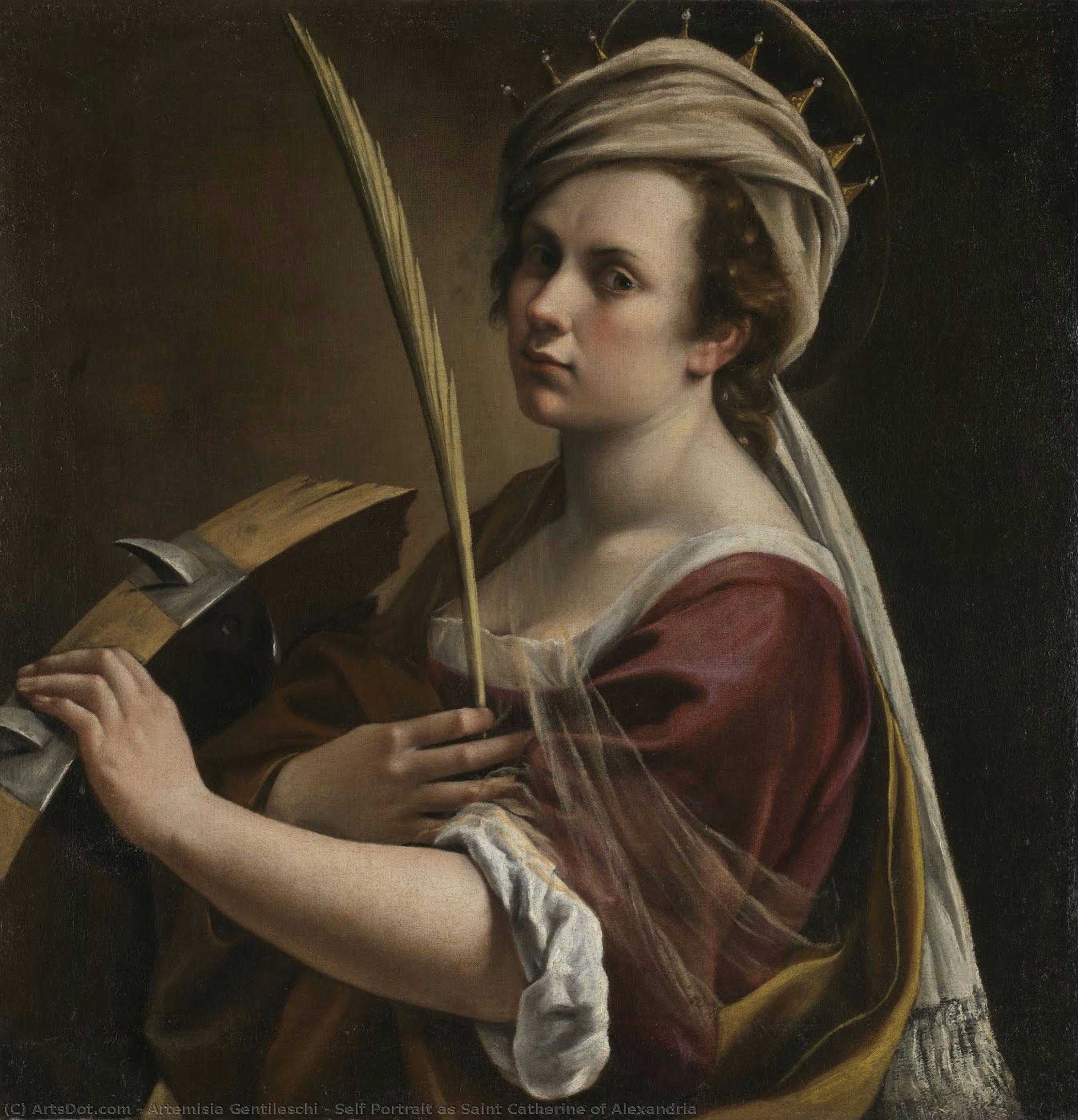
The image immediately commands attention with its dramatic chiaroscuro, a technique masterfully borrowed from Caravaggio. Deep shadows engulf much of the composition, drawing the viewer’s eye to the central figure – Gentileschi herself, rendered as Saint Catherine of Alexandria, a revered Christian martyr known for her wisdom and ability to defeat a false magician. The stark contrast between light and dark isn't merely an aesthetic choice; it mirrors the internal struggles and external hardships that defined Gentileschi’s life, reflecting both the saint’s ordeal and the artist’s own battle against injustice.
- The Iconography: Catherine is depicted leaning on a broken spiked wheel – a brutal symbol of her torture before execution. Her right hand holds a martyr's palm, raised to her chest, an emblem of unwavering faith and endurance. This gesture isn’t passive; it’s a defiant display of resilience, mirroring the artist’s own determination in the face of adversity.
- A Mirror Image: The crown atop Catherine’s head subtly hints at royalty, yet it's juxtaposed with the simple, unadorned clothing – a deliberate choice that underscores Gentileschi’s rejection of superficiality and her focus on inner strength.
- The Background Figures: Two indistinct figures in the background add to the painting’s complexity, suggesting the presence of witnesses or perhaps even the forces arrayed against Catherine. Their anonymity emphasizes the central figure's isolation and vulnerability.
Caravaggism and Florentine Identity
Gentileschi’s style is deeply rooted in Caravaggio’s revolutionary approach to painting, particularly his use of dramatic lighting and realistic portrayal of human emotion. She expertly employs this technique here, imbuing the scene with a palpable sense of tension and immediacy. However, “Self-Portrait as Saint Catherine” isn't merely a slavish imitation; it possesses a distinctly Florentine sensibility – a subtle shift in composition and color palette that reflects her time spent in Florence after fleeing Rome.
The painting’s creation during this period is significant. Following the traumatic trial, where she was forced to testify against Agostino Tassi, Gentileschi sought refuge and artistic renewal in Florence. This self-portrait can be interpreted as a deliberate act of self-promotion – a bold assertion of her talent within a new city eager for fresh artistic voices. The choice of Saint Catherine, a figure known for wisdom and intellectual prowess, may also have been intended to subtly signal Gentileschi’s own burgeoning reputation as an artist of considerable intellect.
Symbolism Beyond the Biblical Narrative
While rooted in Christian iconography, “Self-Portrait as Saint Catherine” resonates with layers of personal symbolism. The broken wheel represents not only Catherine's physical suffering but also the shattering of Gentileschi’s own life after the assault. The raised palm signifies her unwavering faith and refusal to be silenced – a powerful declaration of agency in the face of oppression.
Furthermore, some scholars suggest that the painting can be viewed as a veiled commentary on the artist's own experience. The saint’s stoic expression mirrors Gentileschi’s own resilience, while the act of portraying herself as Catherine allows her to reclaim control over her narrative and transform personal trauma into artistic triumph. It is a masterful blend of religious iconography and deeply personal introspection.
A Legacy Forged in Darkness
“Self-Portrait as Saint Catherine of Alexandria” stands as a pivotal work in Artemisia Gentileschi’s oeuvre – a powerful testament to her artistic skill, unwavering spirit, and profound understanding of the human condition. It's a painting that demands attention, inviting viewers to contemplate not only the story of Saint Catherine but also the extraordinary life of the woman who dared to portray herself as such. Today, its presence in the National Gallery serves as a poignant reminder of her enduring legacy – an artist who defied convention and left an indelible mark on the history of art.