A Bold Statement: Artemisia Gentileschi and the Embodiment of Art
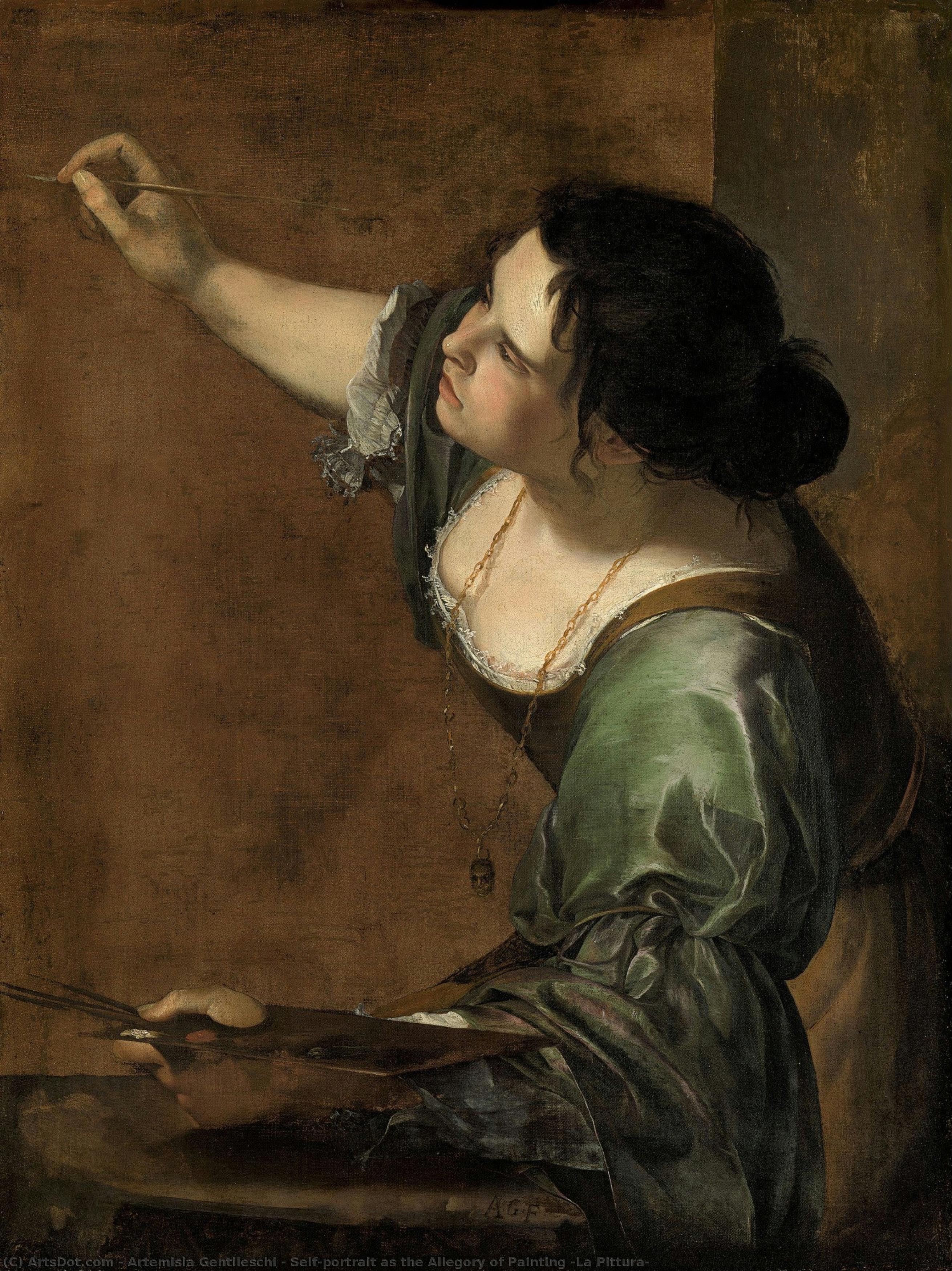
Artemisia Gentileschi's Self-Portrait as the Allegory of Painting (La Pittura), painted circa 1638-9, is far more than a simple self-portrait; it’s a carefully constructed declaration of artistic identity and a subtle yet powerful challenge to the established hierarchies of the Baroque era. Created during her brief sojourn in London at the invitation of Charles I, this painting transcends mere representation, becoming a vibrant embodiment of the very concept of art itself. It's a work that whispers of resilience, ambition, and the enduring legacy of a woman who dared to claim her place within a world dominated by male artists.
The scene depicts Gentileschi herself as the personification of Painting – an allegorical figure rendered with remarkable confidence and authority. She stands before a canvas, holding a brush in one hand and a palette in the other, gestures that immediately identify her with the act of creation. The composition is strikingly direct; she isn’t coy or hesitant, but rather poised and engaged, as if actively immersed in the process of bringing an image to life. The muted color palette – dominated by browns, greens, and ochres – serves to draw attention to the figure herself and her tools, emphasizing the materiality of artmaking.
Decoding the Symbolism: Allegory and Identity
Gentileschi’s choice to portray herself as Painting was a deliberate act, rooted in the iconography prevalent during her time. The 16th-century *Iconologia* by Cesare Ripa provided a framework for representing allegorical figures, and Gentileschi skillfully adapted this system to her own identity. The attributes she carries – the brush, the palette, the canvas – are all instantly recognizable symbols of artistic practice. However, she subtly subverts traditional expectations. Unlike many depictions of female artists, she isn’t presented as a delicate or passive figure; instead, she embodies strength and agency.
The inclusion of the gold chain with the mask pendant is particularly significant. The mask, often associated with deception and disguise in Renaissance art, suggests that Painting itself can be deceptive – capable of creating illusions and representations that may not always reflect reality. Furthermore, the absence of a gag—a common feature in depictions of Painting as a mute figure—is a crucial detail. It asserts the power of artistic expression to speak, to convey ideas and emotions through visual language.
A Royal Patronage and Artistic Context
The painting’s creation coincided with Gentileschi's brief but influential time in England, invited by Charles I to join her father, Orazio, who had been working for the English court since 1626. This period marked a turning point in her career, providing access to royal patronage and exposure to a wider audience. The fact that she brought this self-portrait with her upon her return to Rome underscores its importance—it was not merely a commission but a personal statement of her artistic identity.
It’s fascinating to consider the historical context in which this work emerged. Women artists faced significant obstacles during the 17th century, often denied formal training and limited to domestic commissions. Gentileschi's decision to represent herself as Painting was a bold assertion of her skill and ambition—a way of challenging societal expectations and asserting her rightful place within the artistic world. The painting stands as a testament to her ingenuity and determination.
Capturing the Essence: Reproduction and Artistic Appreciation
ArtsDot offers meticulously crafted hand-painted reproductions of Artemisia Gentileschi’s Self-Portrait as the Allegory of Painting, allowing you to bring this iconic artwork into your home or office. Our skilled artists faithfully recreate the painting's rich textures, dramatic lighting, and nuanced symbolism, ensuring that every detail is rendered with exceptional accuracy and artistic flair. Whether you are an art enthusiast, a collector, or simply seeking a stunning piece of decorative art, our reproduction captures the essence of this remarkable work—a timeless symbol of female artistry and creative power.