A Soul Captured: Ary Scheffer’s Intimate Portrait of Frédéric Chopin
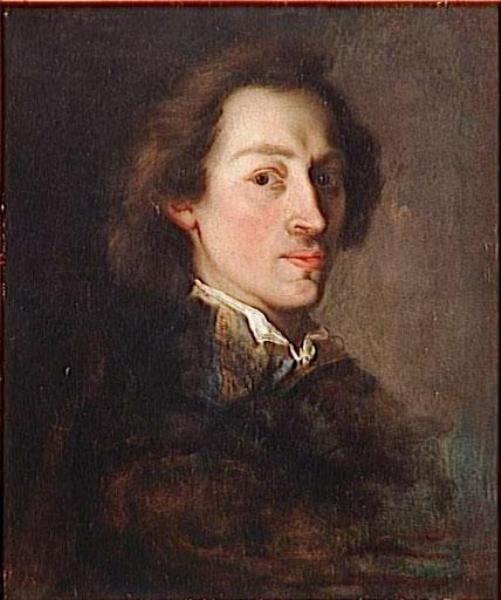
Ary Scheffer's "Portrait of Frédéric Chopin" isn’t merely a likeness; it’s a profound distillation of the Romantic spirit, a window into the soul of a musical genius. Painted in 1847, just three years before Chopin’s untimely death, this work transcends the conventions of portraiture to become a deeply resonant meditation on artistry, melancholy, and the quiet intensity of creative life. Scheffer, a master of capturing psychological depth, eschews the grandiosity often associated with royal or aristocratic subjects, instead focusing entirely on the subtle nuances of Chopin's demeanor – a testament to his belief that true greatness resides not in outward display but in inward reflection.

The Language of the Brush: Technique and Style
Scheffer’s technique is characterized by a remarkable sensitivity to light and shadow, a hallmark of his Romantic training. He employs a loose, almost impressionistic approach, utilizing short, broken brushstrokes that create a shimmering surface – a deliberate choice that mirrors the ephemeral nature of musical inspiration. The palette is restrained, dominated by muted browns, greys, and ochres, punctuated by subtle highlights that draw attention to Chopin’s face and hands. Notice how Scheffer masterfully renders the texture of Chopin's hair, capturing its unruly volume with delicate detail, and the worn ivory keys of his piano, hinting at countless hours spent in passionate creation. The background is deliberately indistinct, serving not as a distraction but as a subtle reinforcement of the focus on the subject – a deliberate move to immerse the viewer entirely within Chopin’s world.
A Figure Forged in Romanticism: Context and Symbolism
To understand this portrait fully, one must appreciate the context of its creation. Scheffer was deeply immersed in the vibrant intellectual and artistic circles of 19th-century Paris, a city pulsating with revolutionary fervor and romantic idealism. Chopin himself was a central figure in this milieu – a celebrated virtuoso pianist and composer whose music embodied the era’s yearning for beauty, emotion, and transcendence. The portrait itself is laden with symbolism. Chopin's gaze, direct and unwavering, suggests both vulnerability and profound concentration. His slightly downturned mouth hints at melancholy, perhaps reflecting the struggles of a brilliant artist navigating a world often indifferent to his genius. The piano, an integral part of his being, represents not just his instrument but also his soul – the very source from which his music flows.
Beyond the Canvas: A Legacy of Emotional Resonance
“Portrait of Frédéric Chopin” endures as a powerful example of Romantic portraiture. It’s more than just a representation of a man; it's an evocation of mood, a glimpse into the inner life of a musical icon. Scheffer’s ability to capture not only Chopin’s physical likeness but also his emotional state is truly remarkable. Reproductions of this work continue to resonate with viewers today, offering a poignant reminder of the enduring power of art to connect us to the human experience – to the joys and sorrows, the triumphs and tribulations that shape our lives. It's a piece that invites contemplation, prompting us to consider the nature of genius, the pursuit of beauty, and the profound connection between music and the soul.