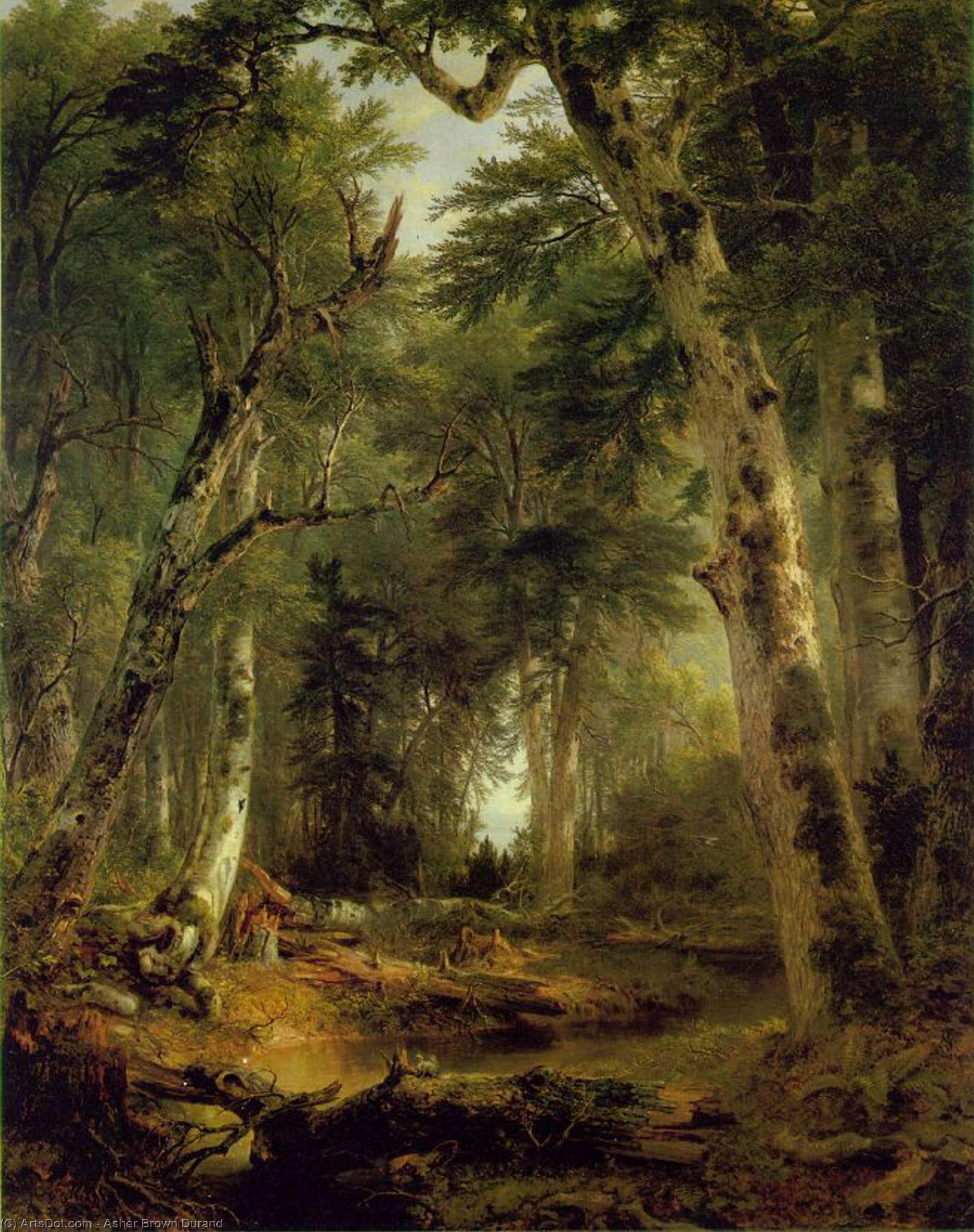
Experience the serene beauty of Asher Brown Durand's 1855 Luminist masterpiece, "In the Woods," a captivating oil painting showcasing nature’s tranquility and masterful chiaroscuro techniques. Discover this iconic American landscape and own a timeless piece of art history.
In the Woods by Asher Brown Durand: A Luminist Masterpiece
Asher Brown Durand’s “In the Woods,” painted in 1855, is more than just a depiction of a forest scene; it's an immersive experience, a testament to the burgeoning Romantic movement’s fascination with nature and its profound ability to evoke emotion. This oil on canvas work, currently residing within the Metropolitan Museum of Art, offers a glimpse into a pivotal moment in American landscape painting – a time when artists sought to capture not just the outward appearance of the natural world but also its inherent spirituality and tranquility.
- Subject Matter: The scene unfolds with remarkable realism, showcasing a group of figures thoughtfully dispersed throughout a dense woodland. Tall trees dominate the composition, their branches reaching skyward, while scattered rocks introduce textural variation and a sense of ruggedness.
- Technique: Durand masterfully employs Luminism, a style characterized by its emphasis on the effects of light. The painting’s brilliance lies in his skillful manipulation of chiaroscuro – the dramatic contrast between light and dark – which sculpts the forms of the trees and figures, creating an almost palpable sense of depth and volume.
- Composition: The arrangement of the figures within the vastness of the forest contributes to a feeling of both intimacy and awe. They are small in scale, emphasizing the immensity of nature and inviting the viewer to contemplate their place within it.
A Window into Luminism
“In the Woods” stands as a significant example of Luminism, a movement that emerged in the 1850s, largely influenced by the work of Thomas Cole and Frederic Church. Luminists sought to capture the fleeting effects of light on landscapes, prioritizing atmospheric perspective and the sublime beauty of natural phenomena over detailed representation. Durand’s approach aligns perfectly with this aesthetic, demonstrating an acute awareness of how light transforms a scene – particularly during the golden hours of dawn or dusk – imbuing it with a sense of ethereal quality. The painting's meticulous attention to detail, combined with its expressive use of light and shadow, elevates it beyond mere topographical representation, transforming it into a powerful meditation on nature’s grandeur.
Interestingly, Durand’s technique shares similarities with that of Albert Pinkham Ryder, another notable Luminist painter, though their approaches differed in subtle ways. Ryder's *The Forest of Arden* (available on ArtsDot.com) provides a valuable point of comparison, illustrating the broader context of this artistic style within American landscape painting.
Symbolism and Emotional Impact
Beyond its technical brilliance, “In the Woods” carries a deeper symbolic weight. The presence of human figures suggests humanity’s connection to nature – a theme frequently explored by Romantic artists. The scene evokes a sense of peace, solitude, and contemplation, inviting viewers to escape the pressures of urban life and reconnect with the restorative power of the natural world. Durand's ability to capture this emotional resonance is a key element of his artistic legacy.
Own a Piece of Art History
Handmade oil painting reproductions of Asher Brown Durand’s “In the Woods” are now available for purchase on ArtsDot.com, offering art enthusiasts and collectors the opportunity to acquire a stunning representation of this iconic work. Each reproduction is meticulously crafted using traditional techniques, ensuring that it faithfully captures the original's beauty and artistic merit. Bringing "In the Woods" into your home or office will not only add a touch of timeless elegance but also connect you with a significant chapter in American art history.