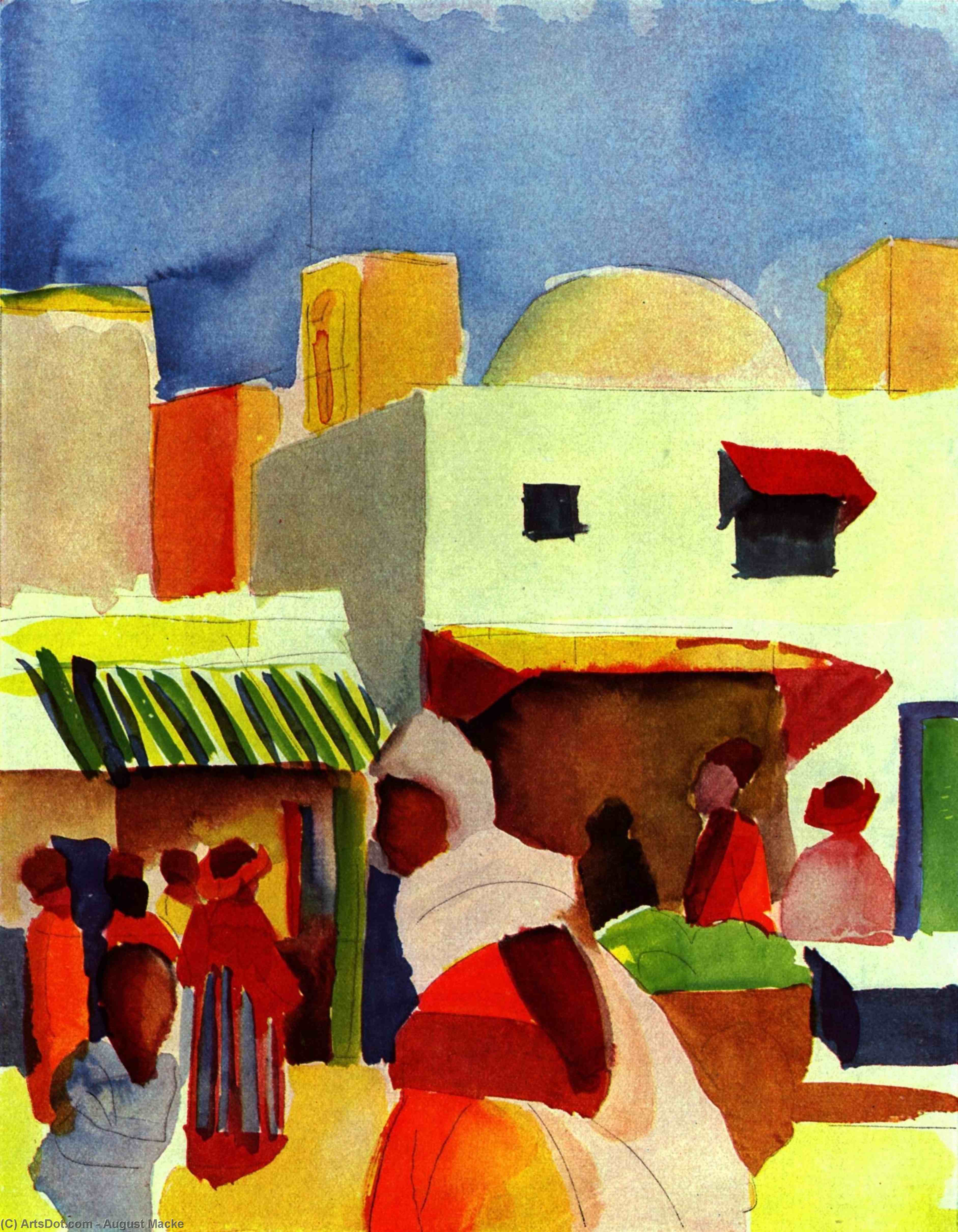
August Macke’s ‘Market in Algiers’: A Burst of Expressionist Energy
- Subject Matter: August Macke's 'Market in Algiers,' painted in 1914, captures a vibrant and bustling scene – the heart of an Algerian marketplace. It isn’t merely a depiction of commerce; it’s a snapshot of human interaction, a celebration of everyday life rendered with remarkable intensity. The painting focuses on the dynamic movement of individuals navigating the crowded space, their presence contributing to the overall sense of energy and activity.
- Style & Technique: This watercolor exemplifies Macke's signature Expressionist style, characterized by bold, saturated colors and deliberately loose, gestural brushstrokes. He eschews meticulous detail in favor of conveying emotion and movement through flattened forms and simplified shapes. The use of watercolor itself – a medium known for its inherent spontaneity – perfectly complements this approach, lending the scene an immediate and almost dreamlike quality. Notice how Macke builds up layers of color to create depth and luminosity, particularly evident in the fabrics and figures.
A Window into Expressionism
Painted at the cusp of the 20th century, ‘Market in Algiers’ is a pivotal work within the burgeoning Expressionist movement. Born in 1887 in Meschede, Germany, August Macke was a key figure in this revolutionary artistic current, which sought to express subjective emotions and experiences rather than objective reality. Expressionism, as a whole, reacted against the perceived superficiality of Impressionism and Post-Impressionism, aiming instead for raw, unfiltered portrayals of human feeling. Macke’s work reflects this shift powerfully, prioritizing emotional impact over photographic accuracy.
The painting's context is crucial to understanding its significance. 1914 marked a period of immense social and political change in Europe, anxieties about modernity, and a growing interest in exploring the darker aspects of human psychology – themes that would become central to Expressionist art. Macke’s decision to depict a foreign locale—Algiers—further amplifies this sense of displacement and heightened emotion.
Symbolism and Emotional Resonance
- Color as Emotion: Macke's masterful use of color isn't accidental; it’s deliberately employed to evoke specific feelings. The dominant reds, yellows, and blues contribute to a sense of excitement, energy, and perhaps even a touch of chaos – mirroring the vibrant, overwhelming nature of the marketplace itself.
- Figures as Vessels of Emotion: The figures within the painting are not simply individuals; they represent humanity in its rawest form. Their postures, gestures, and interactions suggest a range of emotions—joy, frustration, negotiation, observation—all contributing to the overall emotional impact of the work.
Collecting a Masterpiece – A Hand-Painted Reproduction
ArtsDot offers meticulously crafted hand-painted reproductions of ‘Market in Algiers,’ allowing you to bring this iconic artwork into your home or office. Each reproduction is created by skilled artisans, ensuring an unparalleled level of detail and fidelity to Macke’s original vision. Whether for a statement piece in a contemporary interior or as a thoughtful gift, a ArtsDot reproduction offers the beauty and power of Expressionism within reach.