A Snapshot of Tunisian Life: August Macke’s Vibrant Market Scene
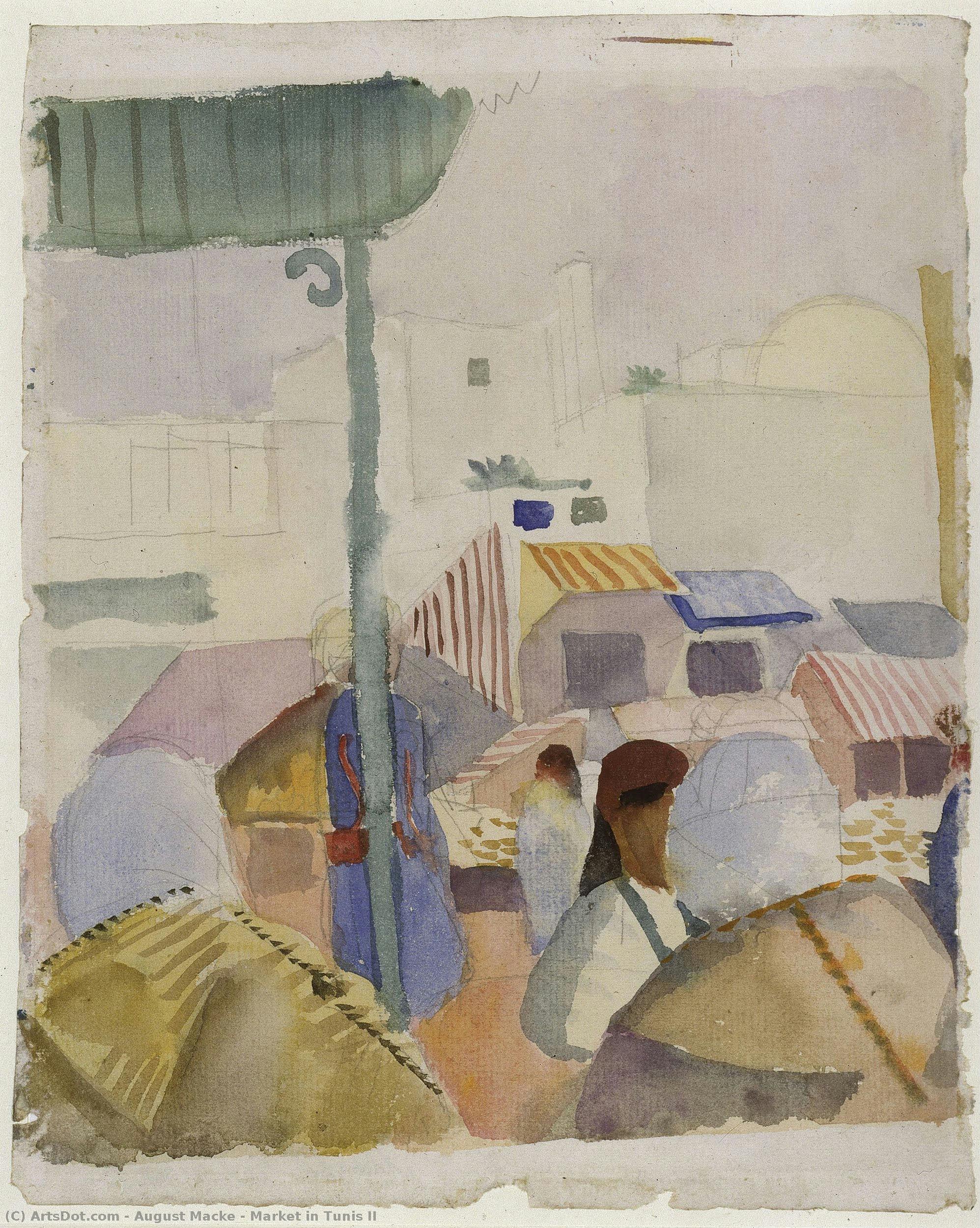
August Macke's “Market in Tunis II,” painted just months before his untimely death in 1914, isn’t merely a depiction of a bustling marketplace; it’s an immersive experience. Created during a pivotal journey with Paul Klee and Louis Moilliet to the North African city of Tunis, the painting captures a fleeting moment of vibrant energy and social interaction against a backdrop of intense light and color. Macke, already experimenting with Fauvist techniques – bold, non-naturalistic colors – found himself utterly captivated by the sensory overload of Tunis, translating this experience onto canvas with remarkable immediacy.
The scene unfolds within a tightly packed market square, dominated by a complex interplay of figures and structures. Buildings lean precariously, their facades rendered in planar segments that deliberately clash with the traditional perspective, hinting at Macke’s experimentation with geometric abstraction. This deliberate disruption of linear space isn't about creating illusion; it’s about conveying the overwhelming density and dynamism of the market itself – a feeling of being enveloped by movement and sound.
Color as Emotion: The Fauvist Influence
Macke’s masterful use of color is arguably the painting’s most striking feature. He abandons naturalistic hues, opting instead for intense, saturated tones—deep blues, fiery oranges, vibrant reds, and yellows—that seem to pulse with life. These aren't colors that simply describe; they evoke emotion. The warm palette dominates the foreground, drawing the eye towards the central figures while simultaneously suggesting a sense of heat and activity. Notice how the deep greens and browns of the surrounding buildings provide a grounding contrast, anchoring the scene within its Tunisian context.
The influence of Fauvism is undeniable here. Macke, like his contemporaries, sought to liberate color from its descriptive function, using it purely for expressive effect. This bold approach aligns with the broader artistic currents of the early 20th century, reflecting a desire to capture subjective experience rather than objective reality.
Details and Storytelling: A Moment Frozen in Time
Despite the flattened perspective and vibrant colors, Macke meticulously renders details that bring the scene to life. The richly textured camel-hair coats worn by the two Arab figures in the foreground are particularly noteworthy – their thick seams and deep hues immediately conveying a sense of warmth and practicality. The inclusion of episodic events, such as the man leaning on a column, adds layers of narrative complexity, suggesting that this is not simply a snapshot but a carefully constructed tableau.
Furthermore, the painting’s composition subtly guides the viewer's eye through the scene. The diagonal lines created by the stalls and figures create a sense of movement, while the central figure acts as a focal point, drawing attention to the heart of the market activity. Macke’s ability to capture both the overall atmosphere and individual details is a testament to his artistic skill.
A Legacy of Light and Emotion
“Market in Tunis II” stands as a powerful example of August Macke's unique artistic vision. It’s a painting that transcends its subject matter, offering viewers a glimpse into the vibrant culture and sensory experience of early 20th-century Tunisia. The painting’s emotional intensity, combined with Macke’s innovative use of color and perspective, continues to resonate with audiences today, cementing its place as a significant work in the history of modern art. Reproductions capture only a fraction of the original's impact, but offer an accessible way to appreciate this remarkable artist’s ability to translate fleeting moments into enduring works of beauty.