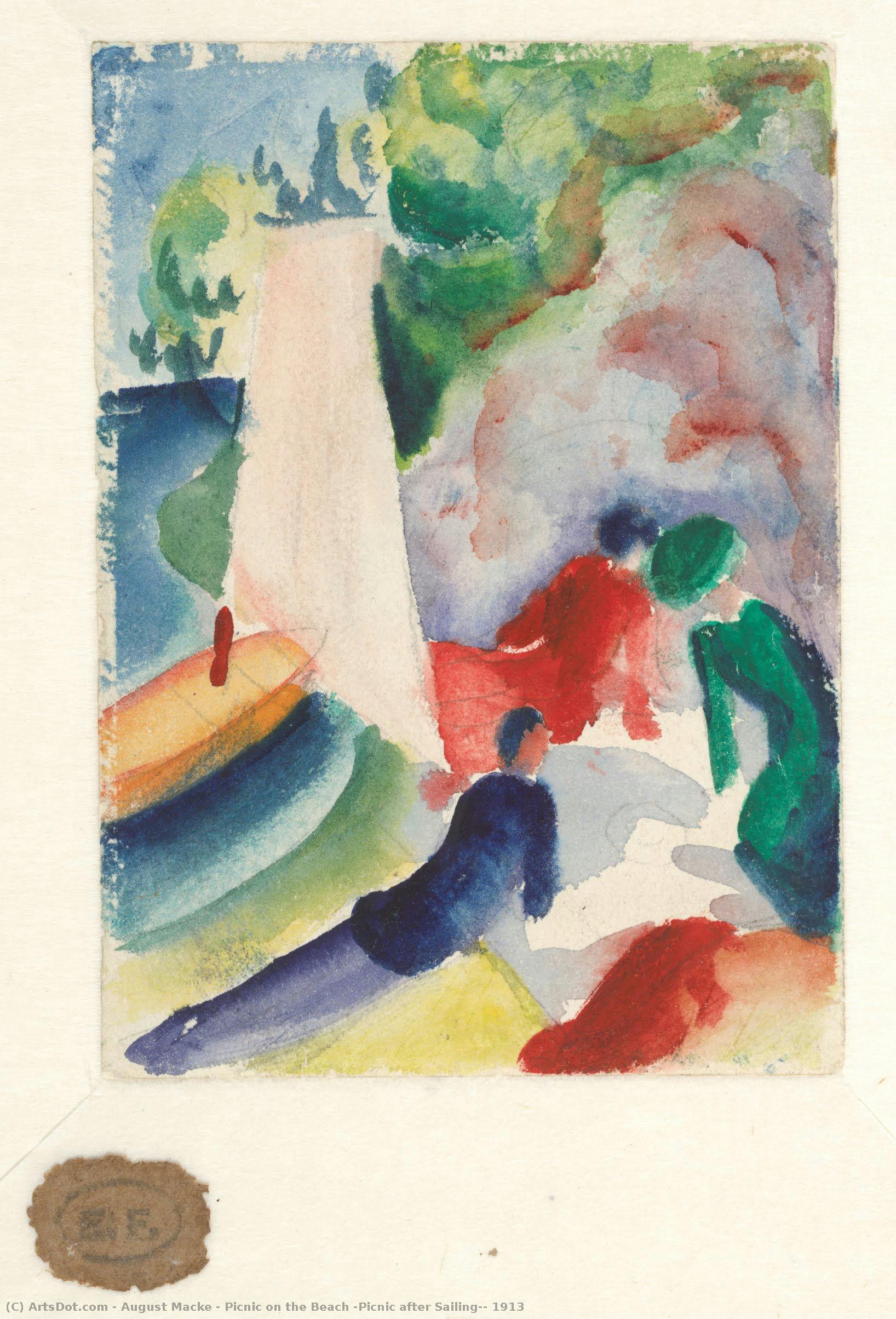
August Macke’s “Picnic on the Beach” – A Snapshot of Joyful Harmony
August Macke's "Picnic on the Beach (Picnic after Sailing)," painted in 1913, isn’t merely a depiction of a seaside gathering; it’s a vibrant distillation of optimism and connection within the tumultuous landscape of early 20th-century Germany. Captured with his signature loose brushstrokes and luminous palette, the painting radiates an almost palpable sense of contentment – a rare and precious commodity during a period shadowed by political unrest and looming war. Macke, a key figure in the Expressionist movement yet often resisting rigid categorization, masterfully eschews dramatic narrative for a quiet celebration of shared experience. The scene unfolds on a sun-drenched beach, not with grand gestures or heroic poses, but with the simple pleasure of friends enjoying a meal together. The figures – four individuals seated around a checkered blanket – are rendered in simplified forms, almost childlike in their directness, suggesting an innocence and vulnerability that transcends age and social standing.
A Symphony of Color and Light: Macke’s Technique
Macke's distinctive style is immediately recognizable. He employed a technique heavily influenced by Impressionism and Post-Impressionism, particularly the work of Paul Gauguin and Vincent van Gogh, but infused it with his own intensely personal vision. The painting is predominantly executed in watercolor on paper, lending it an ethereal quality – the colors seem to shimmer and blend seamlessly. Notice how he uses broad washes of color rather than meticulously detailed brushwork; this creates a sense of movement and atmosphere, as if the sunlight itself is dancing across the scene. The dominant hues are warm – yellows, oranges, and reds – reflecting the brilliance of the afternoon sun, while cooler blues and greens provide a grounding contrast. The use of complementary colors intensifies these effects, creating a visual vibrancy that draws the eye and evokes feelings of warmth and happiness. Macke’s layering of translucent washes builds up depth and texture, giving the painting a remarkable sense of luminosity.
Contextualizing Joy: Germany in 1913
To fully appreciate “Picnic on the Beach,” it's crucial to understand the historical context. 1913 was a year of significant upheaval in Europe. The Austro-Hungarian Empire teetered on the brink, nationalist tensions were simmering across the continent, and Germany was experiencing rapid industrialization and social change. Macke, despite his personal struggles with depression and a tragically short life (he died during World War I), consistently sought to capture moments of beauty and connection amidst this uncertainty. The painting can be interpreted as a deliberate act of resistance – a celebration of simple pleasures and human bonds in the face of looming darkness. The inclusion of the sailboat in the background subtly hints at a longing for escape, perhaps reflecting a shared desire for respite from the anxieties of the time.
Symbolism and Emotional Resonance
Beyond its technical brilliance, “Picnic on the Beach” is rich with symbolic meaning. The act of sharing a meal represents community, friendship, and mutual support – fundamental values that were particularly poignant during a period marked by increasing social division. The relaxed posture of the figures, their faces turned towards each other in animated conversation, suggests a genuine connection and shared joy. Macke’s use of simplified forms further emphasizes this sense of unity, stripping away individual identities to reveal the essence of human interaction. The painting evokes a feeling of nostalgia for simpler times, a yearning for connection, and a quiet affirmation of life's beauty – emotions that resonate deeply with viewers even today. It is a testament to Macke’s ability to capture not just a scene, but an entire mood.
This reproduction offers a faithful representation of Macke’s original vision, allowing you to experience the painting’s captivating charm and emotional depth in your own space. Consider framing it with a simple wooden frame to complement its rustic aesthetic or opting for a more contemporary setting to juxtapose its timeless appeal.