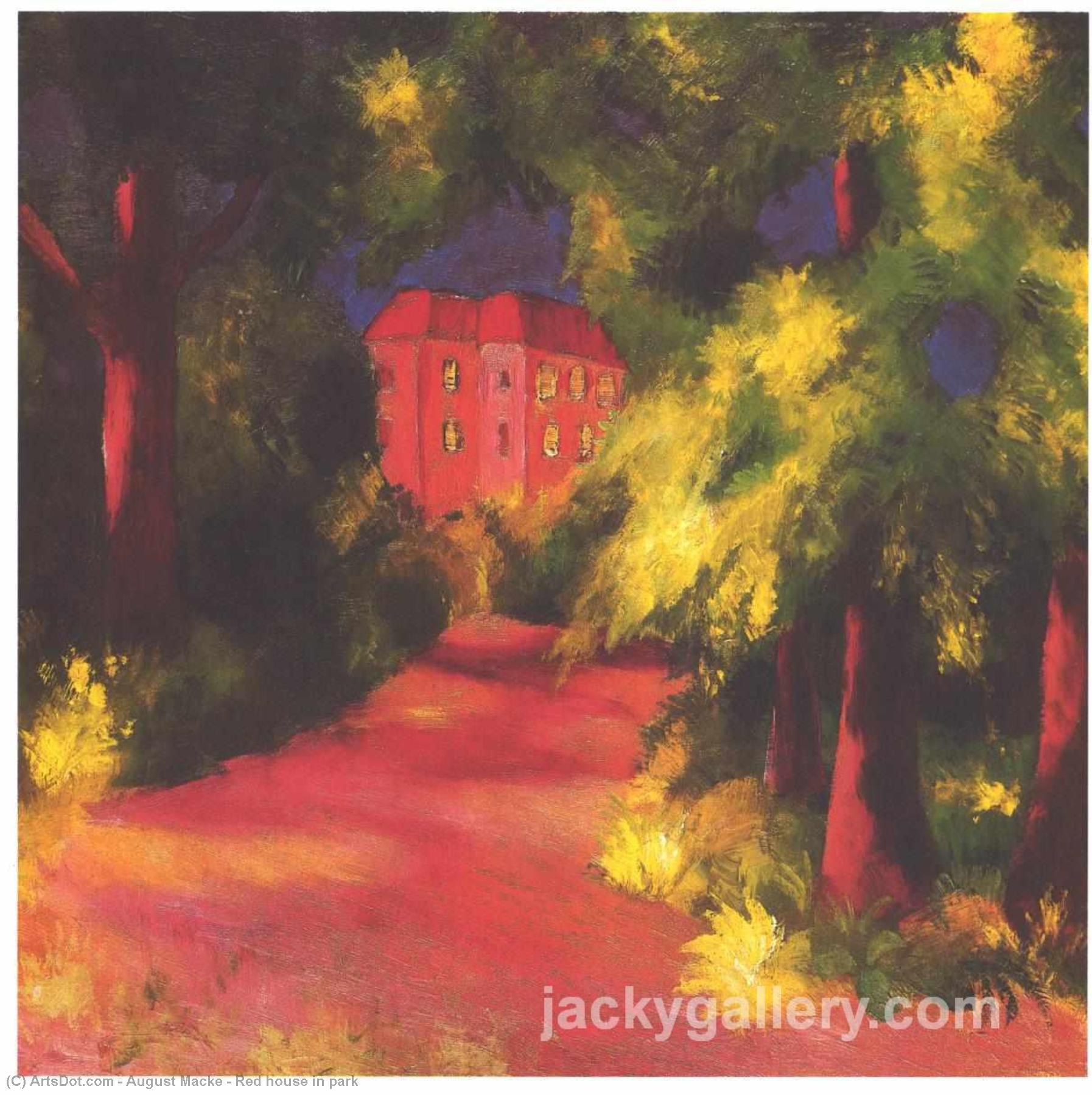
Experience the tranquil beauty of August Macke’s Expressionist masterpiece – ‘Red House in Park’! Bold colors and emotive brushstrokes capture a serene park scene featuring a striking red dwelling, embodying German art history.
Explore the vibrant Expressionist paintings of August Macke (1887-1914). Influenced by Fauvism & Orphism, his works capture modern life with bold color and draftsmanship. A key figure in Der Blaue Reiter.
A Moment Frozen in Tranquility: Exploring August Macke’s “Red House in Park”
The painting "Red House in Park" by August Macke stands as a poignant emblem of Expressionism's fleeting brilliance, encapsulating a deceptively simple scene—a solitary red house nestled amongst verdant trees—yet brimming with profound artistic and emotional resonance. Created in 1914, just before the devastating onset of World War I, this oil on canvas piece transcends mere depiction; it’s an attempt to distill the very spirit of German life at that pivotal moment. Macke's stylistic choices powerfully communicate a yearning for beauty amidst encroaching anxieties, reflecting the broader artistic preoccupation with capturing inner feelings rather than objective reality.
Composition and Technique: Bold Strokes, Harmonious Balance
Macke’s masterful technique is immediately apparent upon observation. He employs loose, expressive brushstrokes—characteristic of Expressionist painters—that prioritize feeling over meticulous detail. The dominant red hue of the house commands attention, strategically positioned against a backdrop of textured greens and browns. These colors aren't merely descriptive; they are deliberately chosen to evoke sensations of warmth and vibrancy, countering the pervasive gloom of the era. Geometric shapes – particularly squares and rectangles – contribute to the painting’s structural integrity while simultaneously conveying a sense of stability amidst apparent chaos. The artist skillfully utilizes chiaroscuro—the interplay of light and shadow—to sculpt form and heighten visual drama, emphasizing the contours of the house and trees alike.
Historical Context: Expressionism's Response to Uncertainty
“Red House in Park” emerged during a period of intense intellectual ferment within German art circles. Expressionism arose as a reaction against Impressionism’s focus on optical perception, rejecting its pursuit of accurate representation in favor of conveying subjective experience and emotional intensity. Artists like Macke sought to express the anxieties and uncertainties surrounding the impending war, channeling these feelings into visual language that prioritized emotion over logic. The painting's quietude is deliberately unsettling; it invites contemplation about the fragility of peace and the inescapable presence of darkness within even seemingly idyllic landscapes. It’s a testament to Macke’s ability to distill complex psychological states into a single, unforgettable image.
Symbolism: The House as Refuge Amidst Change
The red house itself serves as a potent symbol—a beacon of warmth and permanence against the backdrop of shifting seasons and impending upheaval. Traditionally associated with passion and vitality, its bold color underscores Macke’s desire to preserve beauty and optimism in the face of adversity. Surrounding it are trees representing resilience and connection to nature, mirroring the Expressionist preoccupation with confronting existential questions. The pathway leading towards the house symbolizes aspiration and hope—a journey toward solace and contemplation amidst turbulent times.
Emotional Impact: A Legacy of Tranquility
Ultimately, “Red House in Park” succeeds in conveying a profound sense of tranquility despite its historical context. It’s not merely a beautiful painting; it's an invitation to pause and consider the enduring power of art to communicate emotion and inspire contemplation. Reproductions of this masterpiece offer collectors and interior designers alike the opportunity to bring a touch of Macke’s expressive vision into their homes, capturing the essence of a moment frozen in time—a testament to the artist’s unwavering belief in the transformative potential of beauty.