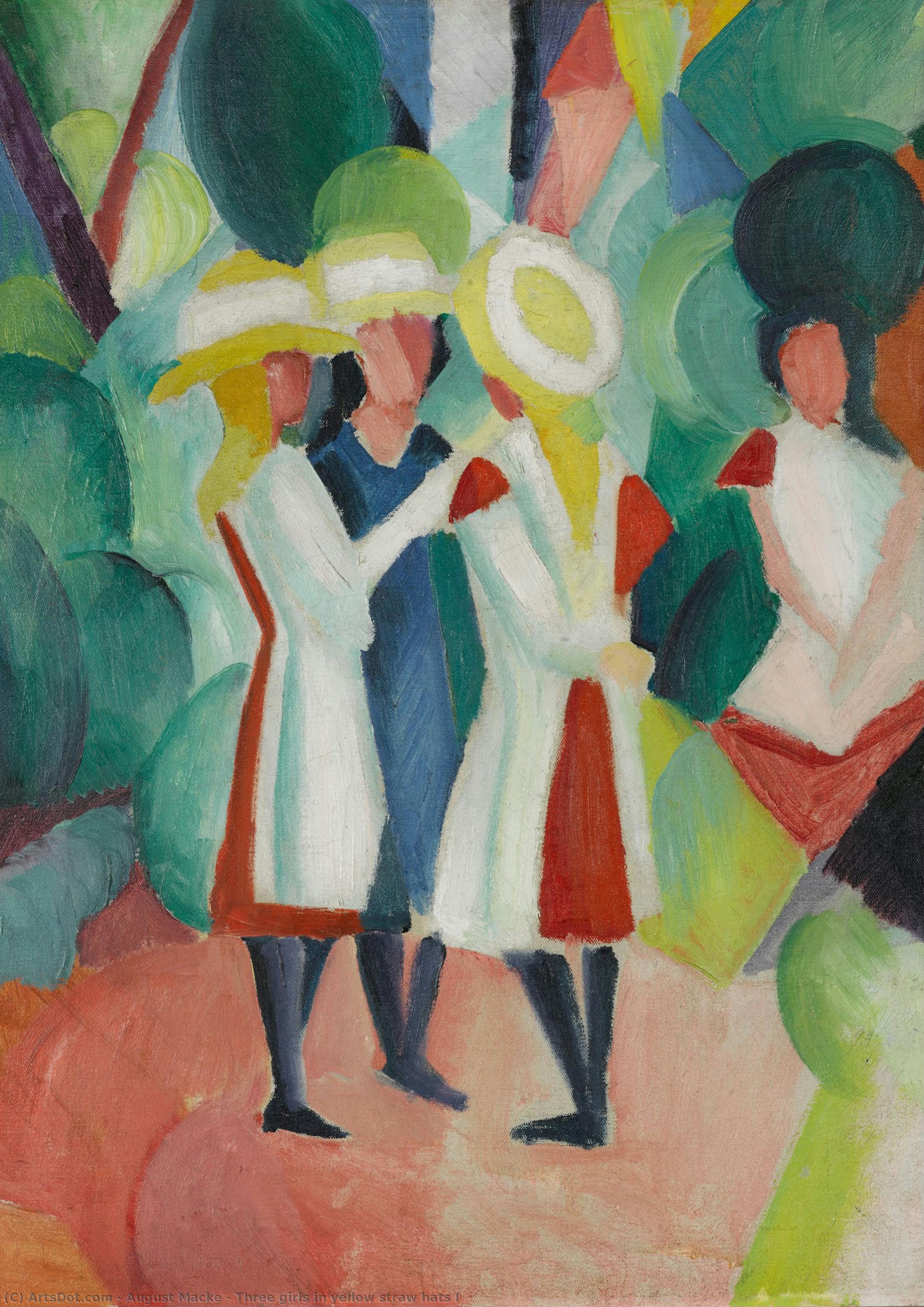
A Moment Frozen in Time: August Macke’s “Three Girls in Yellow Straw Hats”
August Macke's "Three Girls in Yellow Straw Hats" isn't merely a depiction of a rural scene; it’s a vibrant distillation of joy, community, and the fleeting beauty of summer. Painted in 1913, during a pivotal period of his artistic evolution – a time when he was deeply influenced by Robert Delaunay’s pioneering use of color and light – this work embodies Macke's signature style: an optimistic blend of Impressionism, Fauvism, and the burgeoning principles of Orphism. The painting captures a group of young women engaged in simple pleasures within a sun-drenched woodland setting, radiating an almost palpable sense of carefree delight.
Macke’s technique is remarkably fluid and expressive. He employs loose, broken brushstrokes, layering colors with a deliberate lack of precision that creates a shimmering effect—a visual dance of light and shadow. The palette is dominated by warm yellows, greens, and blues, evoking the golden hues of late afternoon sunlight filtering through the trees. Notice how he doesn’t meticulously render individual features; instead, he uses color to suggest form and atmosphere, prioritizing feeling over strict realism. This approach aligns perfectly with Delaunay's influence – Macke isn’t trying to replicate reality but rather to capture its essence through a carefully orchestrated symphony of hues.
The Echoes of Orphism and the German Expressionist Movement
Macke’s encounter with Robert Delaunay in 1911 proved transformative. Delaunay's “Orphism,” characterized by its use of fragmented forms, vibrant color fields, and a rejection of traditional perspective, resonated deeply with Macke’s own artistic sensibilities. This influence is particularly evident in the painting’s composition – the figures are not arranged realistically but rather seem to float within a luminous space, their outlines dissolving into the surrounding colors. Simultaneously, “Three Girls in Yellow Straw Hats” retains elements of German Expressionism, reflecting Macke's engagement with the movement’s exploration of subjective experience and emotional intensity.
The painting’s context is equally important to understanding its significance. Created during a period of immense social and political upheaval – just months before the outbreak of World War I – “Three Girls in Yellow Straw Hats” offers a poignant counterpoint to the anxieties of the time. It's a celebration of simple pleasures, a reminder of the beauty that can be found in everyday life, and a testament to the enduring power of human connection. The girls’ relaxed postures and shared smiles suggest a sense of camaraderie and belonging, creating an atmosphere of warmth and optimism.
Symbolism and the Language of Light
Beyond its immediate visual appeal, “Three Girls in Yellow Straw Hats” is rich in symbolic meaning. The yellow straw hats themselves are particularly evocative, representing not only summer and youth but also a sense of innocence and joy. The dappled sunlight filtering through the trees creates an ethereal atmosphere, suggesting a realm beyond the mundane. Macke masterfully uses light as a key element of his composition, transforming the scene into a luminous dreamscape.
The choice of subject matter – young women in a rural setting – also carries symbolic weight. It harkens back to traditional depictions of pastoral life, but Macke imbues these images with a distinctly modern sensibility. He’s not simply portraying a nostalgic vision of the past; he's capturing a fleeting moment of beauty and connection that transcends time and place. The painting invites us to pause, reflect, and appreciate the simple joys of life – a message particularly relevant in our increasingly complex world.
A Legacy of Color and Emotion
August Macke’s “Three Girls in Yellow Straw Hats” remains one of his most beloved works, admired for its vibrant colors, expressive brushwork, and profound sense of optimism. It stands as a testament to the artist's ability to capture the essence of human experience through the language of color and light. Today, reproductions of this painting continue to inspire and uplift viewers, offering a glimpse into a world where beauty, joy, and connection prevail.