A Vision of Bohemian Elegance
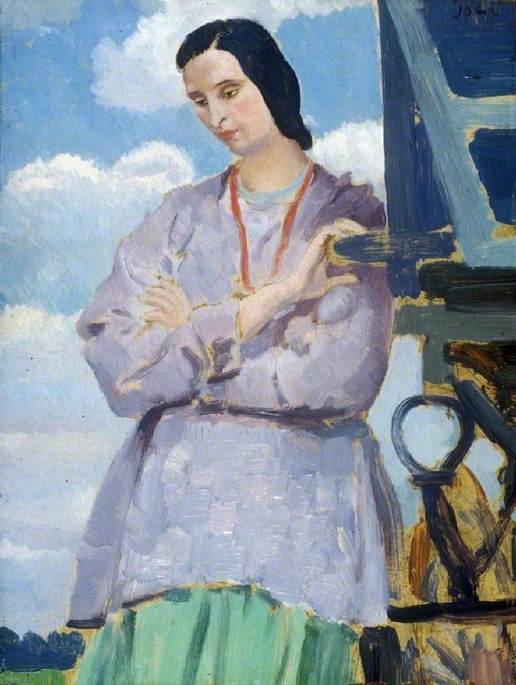
In the evocative portrait Dorelia by the Caravan, painted in 1911, Augustus Edwin John captures a moment of profound stillness and contemplative beauty. The subject, a woman of striking presence, is rendered with a sense of quiet drama that draws the viewer into her private world. Draped in a rich, deep purple dress that commands attention, she stands with hands resting upon her hips, a pose that suggests both confidence and a certain restless introspection. Her long, flowing hair cascades around her features, framing a face caught in a gaze directed toward something unseen beyond the frame. This sense of looking into the distance imbues the work with a narrative mystery, inviting us to wonder what occupies her thoughts as she lingers near the nomadic spirit suggested by the title.
The painting serves as a masterful example of John’s ability to blend the intimacy of portraiture with a larger-than-life, almost mythic atmosphere. As a central figure of the Welsh Bohemian movement, the artist was renowned for his ability to capture the essence of his subjects, often imbuing them with a sense of freedom and unconventional spirit. In this piece, the interplay between the vibrant hue of her attire and the soft, atmospheric background creates a visual tension that is both soothing and stimulating. For the discerning collector or interior designer, this work offers a sophisticated focal point, bringing a touch of early 20th-century romanticism and a sense of historical depth to any curated space.
Mastery of Line and Color
Technically, Dorelia by the Caravan showcases the exceptional draughtsmanship that John honed during his formative years at the Slade School of Fine Art. His brushwork is fluid yet deliberate, utilizing a Post-Impressionist sensibility to define form through light and shadow rather than harsh outlines. The texture of the purple fabric is rendered with a tactile quality, suggesting weight and luxury, while the skin tones are handled with a delicate luminosity that breathes life into the portrait. This mastery of technique ensures that the painting remains visually engaging from every angle, as the subtle transitions in color create a rhythmic movement across the canvas.
The emotional impact of the piece lies in its ability to evoke nostalgia and a longing for a more wandering, uninhibited era. The symbolism of the "caravan" hints at a life lived on the move, away from the rigid structures of urban society, mirroring the artist's own bohemian lifestyle. When considering this artwork for a high-quality reproduction, one finds that its palette—dominated by regal purples and earthy, muted tones—complements a wide variety of interior aesthetics, from classical traditionalism to modern eclectic styles. It is more than a mere depiction of a woman; it is an invitation to experience the soulful, wandering spirit of a bygone age.